
Demystifying Investing

Understanding: Tennancy In Common
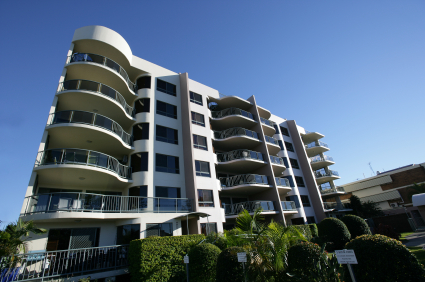
Use TICs to purchase larger assets! Equity advantage, distressed properties, 1031 exchange, multifamily, apartment, best deal in town
Make larger investments by using TICs to pool capital

One strategy of acquiring investment properties is to pool individual owner’s equity stakes and take title as Tenants In Common, or a TIC.  TICs feature an undivided unity of possession, but they may, or may not have unities of percentage of ownership, title, or time of acquisition and disposition. Upon the demise of a co-tenant their interest passes to their devisees/heirs, not the co-tenants. It is critical that an executed Operating Agreement be in place to define critical items including:

*Ownership percentage
*Conditions under which the property will be sold
*How distributions from operations will be made
*Rights and responsibilities of each investor
*How to handle cash calls, should they be required
*How individual TIC owners may dispose of their interest before the property is sold

STRENGTHS INCLUDE: Pooling resources may permit the ownership of far larger assets than could be acquired individually, resulting in economies of scale for management and maintenance.  The investor that owns a 10-plex can’t afford MBO (Management By Others).  4 or 5 TIC  investors that put that each contributed the same amount as the 10-ples owner could afford to have a live-in manager.  Then the job becomes managing the manager…which is far less time consuming. 

Overall flexibility. TICs permit owners to sell, encumber, or convey their interest without permission of their co-tenants. Depending on the structure of the Operating Agreement, TICs may permit General Partners to run the asset, allowing investors to have the benefits of owning an asset without having to be involved in routine operations.

WEAKNESSES INCLUDE: Litigation is more likely. Closings are more cumbersome. Coordinating items that require input from the co-tenants is more involved.  People ask me if its really important to have a lawyer draw up docs for a TIC.  I respond by telling them that, yes the first time they create a TIC they should consult an attorney…and every time thereafter.  It is important to understand the actions you are required to take…and those you may not take…to avoid the creation of a security.

Note: The information contained herein is deemed accurate and reliable, but is not guaranteed. To assess applicability to individual situations please consult your legal professional.  For the additional information about a highly respected Real Estate Law Practice contact me at:  503.577.1034 or rick@rosecitycre.com.

--- END POST ---

Demystifying NOI, Cap, and NOI Multiplier

NOI, Multifamily, Cap rate, portland, apartment, best deal in portland, 1031 exchange, David Moore
It's important to know the basics thoroughly!

My friend Doug Foley, CCIM was kind enough to permit me to co-host a portion of the Northwest Real Estate Investor’s Association (NWREIA) August Multifamily Focus Group on August 18th. I thought that a review of the basics might be a good start…so I included a brief overview of NOI, CAP Rate, and NOI, CAP, and NOI Multiplier.

What is NOI?: Net Operating income

What does it measure?: Measures the revenue generating capacity from operations.

When is it important?: Two times: When you is sellin’…and when you aint. On a more serious note, NOI is the source of payment for debt service, and cash flow distributions to the owners.

What’s the formula?: Current Revenue – Current Expenses (Exclude debt service, capital expenses.)

Example: Current Revenue, June 2009: $100,000.
Current Expenses, June 2009: $ 35,000.
NOI, June 2009 $65,000.

What is Cap Rate?

The capitalization rate is what the yield as a percentage of the initial investment would be in year one if you acquired the property all cash.

Why it is important: First “sniff test” investors use to check out an available commercial property.

What is the formula? NOI/Sale Price = Cap Rate
Example: $65,000/$812,500= 8%.

What is NOI Multiplier?

How much each dollar of NOI would contribute to value if property was for sale.

Why we care: Knowing how much each dollar on NOI is worth helps us evaluate the impact of incremental increases in revenue and expense. (Great for rehab/repositioning!)

What’s the formula? Sale Price/NOI = NOI Multiplier
Example: $812,500/$65,000= 12.50 (Each dollar of NOI creates $12.50 of value.)

NOI, CAP, and NOI Multiplier Problems

Property X had the following revenues in 2008:
• Rent $122,500.
• Extraordinary gain: harvest lumber on property $25,000.
• Pet rent $300.

Property X had the paid the following in 2008:
• Utilities, taxes, management fees, etc. $48,000.
• Cap Ex: Completely rebuild lower parking lot $19,000.
• Re-stripe upper parking lot $125.

QUESTIONS 1 & 2 are based on the information above.

1. What was NOI?    ANSWER:  $74,675  Note: The lumber revenue and parking lot expense were not operating related and were thus excluded from NOI.

2. What is the asset worth if we assume a 6.9 Cap% ?   ANSWER: $74,675 / .069 =  $1,082,246

QUESTIONS 3 – 4 are based on repositioning an 18 unit property we are buying for $1,200,000 at an 8 cap with a 5.9 % loan. Current Annual NOI is $96,000:

3. How much is each dollar of NOI worth? ANSWER: $1,200,000/$96,000 = $12.50.

4. How much more would the property be worth if we could raise the rents in 10 of the units $10/month? (Assume that a year has 12 months, all the units are increased at the same time for the full year…and that we could do this without increasing expenses…without any change in turnover.)  Answer: 10 units X $10 X 12 months equals a $1,200 increase in Annual NOI. Multiply by $12.50 = $15,000 increase in value!


--- END POST ---

Multifamily Focus Group

The Northwest Real Estate Investor’s Association has a Multifamily Focus Group that meets the third Tuesday of each month.  I’ll be co-moderating this month’s meeting with Doug Foley of the Pro Real Estate Team.  Check out the video for details!  See you there!

Many thanks-

Rick Bean, Rose City Commercial Real Estate.  503.577.1034 or, rick@rosecitycre.com

--- END POST ---

Demystifying Selling Multifamily Assets

Apartment, apartments for sale, rose city commercial real estate Rick Bean, portland,multifamily, investment
Preparing To Sell!

While we focus on NOI and Cap Rates when buying apartment investment properties…we still pay close attention to curb appeal…that’s part of what attracts potential tenants. With that in mind, when preparing to sell a multifamily property we want the grounds to look the best they can without breaking the maintenance budget.  If you can’t afford to do everything, do everything you can.


PHASE ONE:  Before listing a multifamily property take a walk around it with a different focus. Try to looking at it as you would a plane when you board. The psychology of safety is that when things look messy, ill planned or in disrepair, we perceive that higher risks are present.   To ease traveler’s fears airlines strive to have passengers enter a clean and neat plane.  The multifamily analog is we stripe the parking lot so it looks sharp, prune tall bushes….particularly those near buildings.  Mowing the lawn is a must. Adding colorful flowers to the landscaping is a good idea. 

Create scenes, viewpoints that best displays the pluses of the property.  The marketing photos and videos will use those to attract attention to the property.  The financials will be what ultimately sell an investor…but the marketing images increase the odds of a buyer taking the time to look close enough to view the financials.

PHASE TWO:   The first items that any investor or buyer’s broker will ask for is a Rent Roll and Profit and Loss Statement.  Those need to be  current and readily available upon request in electronic format.  In this climate actual results must be delivered.  Proformas…”the art of the possible” are acceptable…but only if real numbers are shown as well.  That may be enough information for a potential buyer to submit a Letter of Intent (LOI), but that is only the tip of the research iceberg.  In order to be ready to go to market, Sellers need to have the entire Due Diligence Package complete and ready for submission to the Buyer.   Imagine that you are an interested investor that requests a complete package…only to be told that will be sent in a few days or weeks. 

The best time to forward information requested in the initial interest phase is immediately.  Delays create the impression of increased risk…higher perceived risk inherently reduces perceived value.  Contrastingly, Sellers and Seller’s agents that anticipate questions and answer them in advance of their being asked create trust and value.

In my next article I’ll discuss everything that belongs in competent Due Diligence Packages…and how that package will vary based on the size of property.

Free Offer:  I will give you up to two hours of my time without cost or obligation.  That includes reviewing wealth building strategies, tax deferral opportunities, disposition/acquisition tactics, equity analysis, etc. 

The fine print:  You pay for the coffee.  Contact me at: 503.577.1034 or rick@rosecitycre.com.

--- END POST ---

You Gotta Love Cost Seg!

Investors, tax liability, depreciation, profit,multifamily, Cost Seg

Investors are increasingly turning to Cost Seg.

Not every tool is appropriate for every investor, but my job is to make them aware of what is available to them so they can make  informed decisions.  One of the tools that has been around for years, (but is only now starting to see much application,) is Cost Segmentation.  Most investors use depreciation as part of their tax deferment strategy; cost seg. greatly accelerates the permissible amount of depreciation in the first years of ownership.  The effect is to offset much of the current tax liability from profits of operation.  For some investors it offsets all current profits and provides a hedge for income derived outside of the producing property.

Investors love getting depreciation on appreciating assets!

Cost Seg simply lets them get more of what they want…and earlier.  What’s not to like!  It works like this:  the concrete in a building has a much longer life than a washing machine…even if it’s a Maytag.  It makes sense to permit the apartment owner to use an accelerated depreciation schedule on the washing machine, the drapes, the pool equipment, etc., than the concrete.  For years some accountants have cherry picked a few items that were obvious and used shorter “dep scheds.”  Cost Seg is the same process…but on steroids.  The “bright line” ruling on this is that for Cost Seg studies a “Cost Engineer” (not “Cost Accountant”) must perform a site inspection to determine what components are subject for accelerated depreciation.  There are tables with thousands of components…each with their individual depreciation schedules.  The accumulated list of items sets the basis for what may be used in which years. 

What’s the best time to initiate Cost Seg.?

The most fruitful time to have the experts perform a cost seg study for a project is at acquisition.  Years later it may still make sense…but its aways best from the first year of ownership.  For this reason I believe that it is the duty of a (good) investment broker to inform his clients about cost seg.  Even more so than a tax accountant.  Some tax accountants see cost seg as a threat to their position rather than an adjunct to their valuable services.  The real litmus test should be: “What’s best for the client?”


What does it cost? Where do I sign up?

Costs vary from project to project based on complexity.  That permits it to be a viable tool on $500,000 acquistions as well as mammoth developments.  For every dollar invested in Cost Seg you will likely get a much higher return than you do on the property itself.  Much higher. I talk several times a week with a Director of the largest Cost Segmentation provider in the nation.  One of the services that I offer investors (whether they are my client or not) is a no cost cost seg feasibility study.  I ask for the opportunity to be of service.  Please contact me at: 503.577.1034, or rick@rosecitycre.com.

--- END POST ---

Saluting Excellence In Short Sales

short sales,first time home buyer, Donna Shorr,investor

The future of the residential market is not clear in my crystal ball…but it takes no wizardry to assess the current situation:  There’s a lot of good people hurting right now.  A few of the folks that are upside down have taken foolish risks, but there are many more that  may even have a legacy of success, of winning and good luck…but whose joss just ran out.  Whether they got there for good reasons or bad, the many who are down on their luck are easy prey for charlatans and thieves.   There are real and effective solutions ranging from working out a loan accommodation, to creating a short sale.  In a short sale a homeowner’s bank permits the house to go for less than is owed.  This can result in a much, smaller credit rating hit than bankruptcy or just walking away from the home.  But it needs to be handled by a pro.

Enter Donna

Folks that have had a rough go of it deserve to be helped by someone that is not only compassionate, competent, and trustworthy, but by someone who will be their passionate advocate.  My friend Donna exemplifies these traits.  This specialty is well outside of the capabilities of most homeowners…it also exceeds the training and expertise of most real estate agents.  Donna’s Accomodation success percentage is 4 times higher than the average.  (Her win/win percentage is 100%.)

Perhaps most telling about her character, Donna was the CEO and teamleader of a branch of the third largest real estate brokerage in the US.  She left that position to be of service to those in need.

Who can you help?

  1. Friends, family and acquaintances who need an accommodation workout to save their credit.
  2. Someone who needs a short sale expert to evaluate options.
  3. Those desiring a rapid turnaround on selling their home.
  4. First time homebuyers and investors looking for value priced homes.

Be kind to those you care about and forward this information.  If I was in need…I’d want Donna fighting for my family’s future.  Wouldn’t you?

Take action today:  503.577.1034 or:  rick@rosecitycre.com.

--- END POST ---

Demystifying LTV’s

Commercial Loans,Portland, Commercial Real Estate, Rick Bean, Yogi Berra
Figuring LTV's


Simply expressed, LTV is the loan amount divided by the property’s value, expressed as a percentage.  The value used will be the lower of the sale amount and the appraisal.  Banking theory goes that the lower the LTV the more the investor goes from involved to committed.  Yogi Berra might explain that discrepancy thus:  “In a ham and eggs breakfast the hen that laid the egg was involved, but the pig the ham came from was committed.”

Example: What would a bank with a 60% LTV maximum, loan on a 42 unit multifamily asset under contract at $117,000 per door that was appraised at $4,850,000?  The lesser of:

60% of Purchase =  .6 X ($117,000 per unit  X 42 units) = $2,948,400

60% of Appraisal :  .6 X $4,850,000 = $2,910,000.

The answer is $2,910,000.  That applies to most banks currently lending practices…there are other options.

TRENDLINE:  a year ago the internet was rife with commercial multifamily loans with 90 -95% LTV’s…those are yet another victim of the lending crisis. For most purchases now banks want a minimum of 25% down (75% LTV) but many require 40% down (60% LTV).  I’m working with a lender on a multifamily loan right now that is requesting an additional down payment to be submitted that will bring my client’s effective down payment to 51% (49% LTV.)  Stricter LTV requirements are probably here to stay…at least for awhile.  But to those that think the forces that caused this change are permanent, please remember that $6 trillion bucks of market value was lost when the tech bubble burst…but only a few years later the DJ not only recovered…but went well past the pre-bubble highs.  The recent downturn has again wiped those gains out…but I long ago transferred my 401K and stocks into a self directed program with checkbook control so that I can focus on Real Estate.

In the interest of full disclosure…while I wish LTV’s were lower…I’m definitely not a fan of extremely high LTV loans.  Remember that as the LTV rises resources available to make it through difficulties diminish.  As banks have become more risk adverse they are requiring those taking out loans to have more “skin in the game.”  They want committed investors.  Think of it this way:  A buyer of a $1,000,000 property who puts down 5%  ($50,000) often is creating a no cash flowing deal with no funded reserves.  If the economy in that area goes soft and rents drop $50 per month he’s going to have a “Cash Call” every month.  Then he stops maintaining his property and stops making full payments.  This creates a distressed property that lowers values of competing properties.  If that same property had a 30 or 40% LTV loan the debt service would be less, making it possible to weather the storm better.

I mentioned previously that there are other options…among them are HUD Loans…which I’ll cover in a future post.

If you found this information useful, please use the orange subscribe button to sign up for periodic updates! Or, e-mail me: Rick@RoseCityCRE.com

--- END POST ---

Demystifying Client Centric Service

Investors are risk adverse…and “unknown” is synonomous with “high risk.”  Being aware of this, The Client Centric Solution is to reduce the unknowns, reducing the risk…which delivers an increase in value to the client.  (If there are too many unknowns, the potential buyer will make a very low offer…or not bid at all.)

The Problem…

A colleague had a client that was looking to invest in quads and smaller commercial multifamily properties. One opportunity that caught the investors’s eye was a fully occupied plex that had upgraded units and an assumable loan with stated payments and interest rate.  The owner of the property was loathe to have multiple agents and investors traipse through the units on short notice and upset the tenants.  He was so concerned about losing tenants, that he instructed his agent that potential buyers could only view the inside of a unit after the owner had accepted their offer.  While this is somewhat common, without being able to view the property the investor could not verify the condition of the units, if they had a desirable layout, if they were upgraded, or if they were “repositionable” for increased income.  The potential buyer didn’t know how much time was remaining on the loan.  If it was a 30-year amortization loan with only 1-year left of the 10 year term he wasn’t interested.

The Solution…

I suggested to my friend that he contact the Listing Agent to find out how much time was left on the loan. He did, and found out that there was over 7-years left on the term and the bank was amenable to extending it on a qualifying assumption.  That eliminated one form of risk for the buyer.

Second, I suggested giving the tenants a weeks notice that each unit would be filmed for insurance reduction reasons.  About 1 minute is sufficient per unit. (I would also used that video to see if the insurance company would reduce premiums, so it is not a lie.)  Being able to view the video permitted the potential client to make an informed offer with far fewer unknowns, and less risk.  Should his offer not be sufficient, the owner had something to show future offerers.  

I think my buddy owes me a lunch!  What do you think?

The concept of eliminating unknowns to improve results applies to many aspects of business and life.  I learned this years ago when I watched a co-worker answer the President’s question with:  “I don’t know, and I don’t know when I will know.”  That co-worker was permitted to seek opportunities elsewhere.

If you would prefer Client Centric Service, you can contact me at rick@rosecitycre.com

--- END POST ---

A Client Centric Approach To Problem Solving

The success I’ve enjoyed in my career has been based on solving clients problems.  I was never a “sell ice to Eskimos guy.” A more honorable approach would be to provide our arctic circle friends the opportunity to acquire efficient heating systems and show them how to operate them for greatest comfort and economy.

Years ago I got a call from my boss, the President of a 65-year old company that operated branches from Anchorage to Denver to San Francisco.  He congratulated me on earning the all time highest commission the company had ever paid.  I told him that I had a great crew, and that we actively listened to our customers so we could be more adept at solving their problems.  I told my boss that few want a saleman to contact them, but nobody minds when their problem solver calls.

I was reminded last week of just how important it is to have a customer centric approach.  In setting the appointment, the client said he closed a transaction very late in December, and now wanted to make a 1031 Exchange into a new property.  From the information he provided I gathered he was around 80 years old, vibrant, but in sub-optimal health.  To match that profile I researched several relatively conservative MBO (Managed By Others) investments.  One offers a monthly distribution based at 7% Annualy.  When the property is sold in about 5 years investors will be paid a sum that brings their returns up to 11% anually.  If he or his heirs needed to get their equity out sooner, they could get it in 60 days, but they would only get 7%.  I also looked at some other options.

At our meeting I asked questions to determine if the investment profile I had presumed was accurate.  In little time at all it became clear he had a different path in mind.  We are now looking at multifamily investments that will require refurbishing, re renting and repositioning.  This approach will require more energy, exposure to greater risk, and be less liquid than my initially proposed armchair investment.  But it will also could yield higher profits, and more importantly, its what the client wants.

Without asking the right questions we would have solved the wrong problems! A client centric problem solving strategy is always best.

Rick M. Bean

Rose City Commercial Real Estate

rick@rosecitycre.com

--- END POST ---

Demystifying Cost Segmentation Benefits-Chapter 2

Summary:  Cost Seg. is an underutilized strategy that commercial real estate investors can employ to reduce their taxes, improve their ability to fund new properties and increase their purchases.  Below I have adapted information provided me by one of the nation’s leading authorities on Cost Segmentation Studies.

As we all have enjoyed our Holiday Season, sadly the next event we face involves the perennial tax deadlines.  This year you could apply cost segregation and save considerable money. Cost Segregation is the least utilized and most cost efficient way to save tens and even hundreds of thousands of tax dollars on the commercial properties that you own, represent or manage. Unless you take action soon, you will forgo these tax deductions.

Reasons why you should learn more about Cost Segregation: Cost segregation is the spigot that taps the hidden “cash flow” in every commercial property, including apartments. Less than 10% of all commercial property owners have utilized cost segregation. The reasons vary but in general it is due to a lack of awareness and because the 1997 Supreme Court ruling requires than the cost segregation be prepared by an independent cost-engineer – not an accountant. In addition up until 2001, the cost of cost segregation services were prohibitive – this is no longer true.

Recent court rulings and changes in IRS filing procedures make this tax savings benefit fully accessible to owners of any size commercial property.

Property owners now need only file a single form accompanied by a cost seg report prepared by an independent cost engineer — no costly, formal, multi-stage appeal process is required. You can even file for a previous year’s reduction in Federal and state taxes. All these funds are “hidden cash flow” for the business owner. These monies become a new source of investment capital. In addition to these Federal tax benefits there are other significant monetary gains.

Big Dollar Returns – TRIFECTA of Cost Seg

The cost seg diagnostic results are significant. Almost everyone (95% or more), will be able to immediately save tens of thousands to even hundreds of thousands of dollars on each commercial property. In general, about $15 for every $100 of new construction or existing building acquisition cost is eligible for accelerated depreciation. This means a $3MM building has the potential for $150,000 to $200,000 in Federal tax savings. Besides, the initial tax rebates and cumulative tax savings – the price is right!

The CS reports can also reduce local property taxes. Finally, the increased debt coverage and ROI returns enhance both the refinancing and sales potential of any commercial business. After a cost seg evaluation, a marginal asset based loan candidate becomes a top rated asset based loan candidate. Tax reduction (income and property), enhanced loan financing and increased sales value comprise the famous Cost Seg “TRIFECTA” of winnings! This is how to maximize real estate investment returns.

Cost Seg and Alternative Minimum Tax

Cost Segregation and Alternative Minimum Tax (AMT) Requirements Cost segregation shelters the real estate income of every property owner. Three factors determine the extent of this tax benefit. The first factor is the amount of the assets that qualify for accelerated depreciation. The second factor is whether the property owner is s a passive or an active investor. The third factor is whether the property owner is subject to the alternative minimum tax rules.

Any property owner subject to the AMT would only lose that portion (i.e. up to 15%) of the tax savings required for AMT payments. In other words, AMT requirements reduce cost seg tax savings– cost seg never increases and can only reduce taxes. In a worst case where a property owner was paying no Federal tax other than AMT, the property owner would still realize $85 in tax savings for every $100 of potential “depreciation sheltered” Federal taxes.

Assurance of Success…

The Cost Seg. firm I recommend has a 100% success rate on nearly 5000 IRS filings made after the 1997 Supreme Court ruling. Their perfect IRS track record is unmatched in the industry. They were the cost-engineering firm of record for the landmark 1997 Supreme Court ruling that opened Cost Seg to wide use. Since then, their cost segregation reports became the quality standard for IRS staff review. Although, it has never been necessary, they have a “standing commitment” to defend our conclusion with the IRS staff or in court at no expense to the client. No other cost segregation firm is willing to make this commitment.

Offer of “no cost-no obligation” diagnostic analysis

The best way to demonstrate the significance of cost segregation to the real estate interests of the clients of Rose City Commercial Realty is to offer you the opportunity to evaluate one, two or three of your representative properties.

The results are conservative but accurate. When a client authorizes a detailed study (which includes a site visit), the results will usually be 10-15% higher. This standard practice ensures that you will have long-term satisfaction.

The information requirements for a diagnostic analysis are minimal. They include:

1). The address of the property

2). The date of purchase and the purchase price.

3). Property type (apartment)

4). List of any improvements or and the cost or estimated cost there of.

5) If available, a copy of the most recent depreciation table on the property.

Call me at 503.577.1034 for your no cost, no obligation Cost Seg Feasibility Study.

Rick Bean

RoseCity Commercial Real Estate

Rick@rosecitycre.com

--- END POST ---

Scroll to Top