Good News!

PORTLAND OFFICE MAGNATE MENASHE HAS HEART

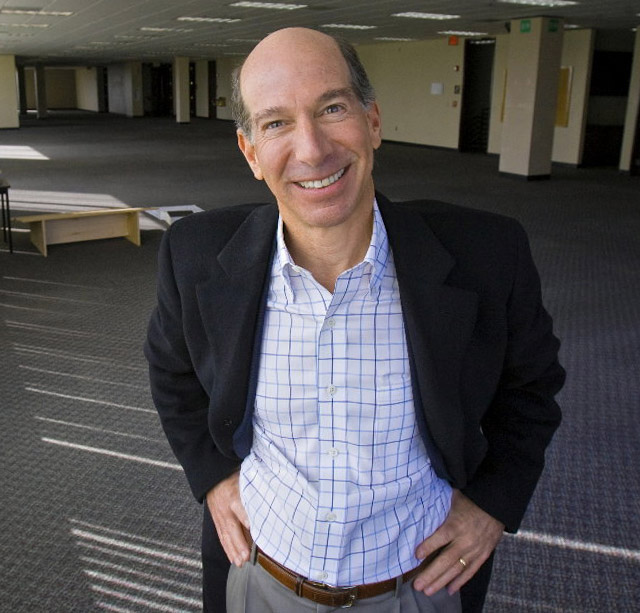
Barry Menashe
Barry Menashe-PDX Office Magnate

HEART: Portland Office news…the driving rain and cold weather have been particularly hard on the Rose City’s homeless population this year.  The Menashe family made local and national headlines last week by donating vacant space in a downtown office building as a temporary shelter for the homeless.  Barry Menashe and his son Jordan announced that they were going to offer the second floor of the Washington Center Building on SW 4th Avenue for use as a shelter for 6 months.

“We’re all human beings and everyone has certain rights.  One of those rights is to be treated like a human being”-Barry Menashe

Barry Menashe was quoted as saying:  “It’s a short-term fix to a long term issue.”  Personally, I think its much more than that.  With room for to keep 150 souls out of Portland’s Winter Storms…it may just be the difference between life and death for someone.  And the beneficiaries are the kind of folks that don’t always get treated with dignity and respect…or even acknowledgment.

CLASS:  I met Barry Menashe for the first time about 8 month’s ago while representing a tenant in procuring a lease.  My client wanted a very specific layout that required a great deal of Tenant Improvements to fulfill.  Barry showed one of his Beaverton buildings to us and brainstormed how we might have him alter the space to meet their needs to a “tee”.  He was energetic, warm, personable, and made it clear that he took care of his tenants.  He called me later to tell me he appreciated my bringing my client by…and said that because my proposed tenant was an established company, that once they paid the first month’s rent and security deposit he would write a check for my commission that day.  That just doesn’t happen.  The more standard situation is to wait for months to get paid…but he is not an average guy.  Ultimately my client was not a match–they had a high concentration of smokers that wouldn’t have meshed well with the rest of the tenants.

GOALS:  I have a number of career goals I continue to pursue…and one of them is to complete a deal with the Menashe Group.  If I get the chance to help my clients while working with folks with class + heart…I have to take it!

--- END POST ---

Exceptional Resource: Acumen Executive Search

Acumen Executive Search Logo1


The reason so many companies rely on Acumen Executive Search to fill their key employee positions is that new hires can alter the direction and fortunes of a company dramatically.

THE GOOD: In 2008 Marvel Comics movie division was just about done.  They were on the ropes. They had some modest hits…and some pretty big misses, but they were going nowhere. They secured Robert Downy Jr. for the role of Iron Man…and have since released multiple series of blockbusters. (Iron Man, Captain America, Thor, and The Avengers). That one change turned them into the envy of the industry.

Rose City Commercial Real Estate likes to highlight people and organizations that are noteworthy. We have no financial interest nor have we received incentives from those we recognize as exceptional.

THE BAD:  Contrast that with Time, Inc.s 2010 executive search that installed Jack Griffin. Although he is not the source of the phrase: “You don’t know Jack!”, his 5 month tenure as CEO suggests that the search team didn’t understand the dynamics present in the organization.  (Or that THEY didn’t know Jack!) His brusque management style did not match the friendlier, warmer approach of his predecessor.  He was noted for making sexist remarks and frequent references to his religion in total contrast to the prevailing company culture.

THE UGLY: When a new hire comes into a key position and demonstrates a lack of understanding of the existing corporate culture, it doesn’t really matter how extensive their skill sets are.  Its forgivable that many companies try to use their HR dept exclusively without seeking collaboration with outside resources.  Its penny-wise and pound foolish…but forgivable.

THE BEAUTIFUL:  The truth is that Acumen Executive Search does a better job.  After 8 years, 92.5% of their placed employees are retained.  That’s beyond incredible.  I believe the secret to their success is they take the extra time to learn about the company, how it operates and what kind of personality is a good fit.  If you want to emulate the success of Marvel Comics…you’ll need a cohesive unit.  Acumen Executive Search can help you put together a winning team!  Contact Suzanne Hanifin at 503.430.0294 or Suzanne@AcumenESearch.com


BE A GENIUS IN 5 YEARS: Now is the time to invest wisely in commercial real estate.  Contact Rick M. Bean at Rose City Commercial Real Estate at 503.577.1034 or rick@rosecitycre.com.

--- END POST ---

Portland Ranks Second In Nation For Jump In Rents

Portland Multifamily Rents Jump Second Most in the NationBy Ross Coulter of Axiometrics

DALLAS–(BUSINESS WIRE)–Effective rents (true rents net of concessions) have increased nationally by 4.65% for the year ending February 2011, further evidence of market strength that could lead this year to one of the largest pricing jumps in more than a decade, according to a report issued by Axiometrics Inc., a provider of data and analysis on the multi-family sector.

“The outlook for the remainder of the year looks strong, with job growth increasing and supply still at historical lows. In certain submarkets, growth far surpasses even these strong national averages.”

Rose City Commercial Real Estate has been predicting a huge upswing in Portland’s mulifamily investment market for some time.  We further predict that even without job growth we will see major rent increases continuing as a result of underbuilding of new multifamily units. The time is now to get into the Portland market before prices shoot up.  Stop reading and start dialing now:  503.577.1034…or contact us at rick@rosecitycre.com.

Axiometrics also reported that the national occupancy rate increased to an average rate of 93.24% in February.

“2010 was a strong year for rent growth, but the data in these first two months indicate 2011 could be the best year since we started reporting on the apartment market in 1996,” said Ron Johnsey, president of Axiometrics Inc. “The outlook for the remainder of the year looks strong, with job growth increasing and supply still at historical lows. In certain submarkets, growth far surpasses even these strong national averages.”

Axiometrics’ analysis indicated that effective rents increased 0.72% nationally between January and February. The growth in February was better than for every month of 2010, except one. In addition, the year-to-date increase in effective rents of 0.96% was also ahead of last year’s figure of 0.79%.

Top and Bottom Performing Markets – Annual Effective Rent Growth

Northern California remained the hottest region of the country in terms of annual effective rent growth. San Jose (10.51%), Oakland (7.75%), and San Francisco (7.36%) all ranked in the top 12 for annual rent growth. However, Southern California was at the other end of the spectrum, with San Diego (1.73%) and Los Angeles (1.47%) ranking among the bottom performing markets in the country.

Many submarkets demonstrated even stronger growth than the national averages, with more than 60 having annual effective rent growth of at least 10%. Some of the highest performing include south central Austin (19.2%), San Jose/Santa Clara (15.7%), and Portland/Beaverton (13.5%). Notable submarket performance was also recorded in Washington, D.C./Woodley Park/Cleveland Park/Van Ness (13.0%), Chicago/The Loop (13.7%), New York/Hudson Waterfront (12.4%), Nashville/Downtown/West End/Green Hills (11.7%), Phoenix/North Tempe (10.1%), and Denver/Lakewood-South (9.9%).

       
Effective Rent Growth: Top 10 Markets     Effective Rent Growth: Bottom 10 Markets
       
Market   Rate         Market   Rate    
    Monthly   Annual   Rank         Monthly   Annual   Rank
San Jose, CA   2.44%   10.51%   1     Augusta, GA   -0.40%   1.86%   79
Portland OR   1.58%   10.43%   2     Tucson, AZ   1.29%   1.85%   80
Savannah, GA   -0.40%   9.68%   3     San Diego, CA   0.46%   1.73%   81
Chattanooga, TN   0.67%   9.67%   4     Virginia Beach, VA   0.53%   1.61%   82
Greenville, SC   0.08%   9.35%   5     Reno, NV   0.93%   1.50%   83
Boulder, CO   -0.59%   8.46%   6     Los Angeles, CA   0.71%   1.47%   84
Oakland, CA   1.05%   7.75%   7     Little Rock, AR   0.59%   1.42%   85
Naples, FL   1.50%   7.73%   8     Cape Coral, FL   0.25%   1.35%   86
Greensboro, NC   0.51%   7.66%   9     Detroit, MI   -0.62%   1.04%   87
Washington, DC   0.93%   7.45%   10     Las Vegas, NV   -0.03%   -2.53%   88
National   0.72%   4.65%                  
                           

Occupancy Rate

In February, the national occupancy rate increased for the first time in five months. The rate improved 15 basis points from 93.09% in January to 93.24% in February. Occupancy had declined by a total of 55 basis points the previous four months.

In 13 of the top 88 markets, the occupancy rate increased by more than 50 basis points. Interestingly, some of the top markets for occupancy gains were bottom performing markets for rent increases. For example, Detroit and Reno showed strong monthly and annual occupancy increases, but for more than a year their rent growth has been particularly weak.

 
Occupancy Rate
Market   Rate   Basis Point Growth
        Monthly   Annually
Detroit, MI   90.39%   171   275
Oklahoma City, OK   94.35%   138   355
Cape Coral, FL   92.28%   112   239
Montgomery, AL   87.64%   70   -86
Tacoma, WA   94.18%   70   302
Fort Lauderdale, FL   94.26%   68   49
Reno, NV   95.94%   66   267
Albuquerque, NM   95.14%   65   170
Corpus Christi, TX   92.69%   63   11
Augusta, GA   93.28%   62   -44
West Palm Beach, FL   93.79%   55   -14
Phoenix, AZ   92.51%   54   275
Sacramento, CA   94.60%   53   51

National

  93.24%   15   125
             

About Axiometrics

Axiometrics Inc. measures the performance of the apartment sector every month. The company tracks individual properties or portfolios owned by both private and publicly traded apartment REITs (Real Estate Investment Trusts), as well as properties owned and managed by private investors, developers, and management companies in more than 300 markets, totaling over 16,500 properties and 4.4 million units. Axiometrics delivers its data and analysis through a set of affordable, sophisticated tools that enable clients to improve property and investment performance at a fraction of the cost of the additional revenue generated. Learn more at www.axiometrics.com or call 214-953-2242.


--- END POST ---

Equity Residential Buys the Most in 2010 – Dispositions And Transactions, Reits – Multifamily Executive Magazine

 I’ve attached an article about the great year that multifamily giant Equity Residential had in 2010.  For those more focused on the Portland scene, Equity closed on half a billion dollars of Class A assets in Jamuary 2101.  Some of the deal were market transactions not bottom fishing expedititions.  This was the first sign that in some markets fundamentals were starting to improve.  When you see Sam Zell spending money…and I mean big money…it makes you start to think that someday soon the sun may shine again. 

Multifamily prices are down from the heady 4 and 5 Cap days of just a few years ago…and some cities have fundamentals that support jumping back in. One of the largest brokerage houses also has an extensive market research dibvision.  They are predicting a 4.3% jump in Economic Rents in Portland for 2011.  Another key player, Integra Realty Resources predicts a double digit rise in multifamily values in Portland of the the next two years. 

Brandishing deep pockets, a well-known mogul, and a penchant for high-barrier markets, Equity Residential made buying units in 2010 look like child’s play. And if the REIT has its way, the industry should expect more of the same in 2011.

By:Les ShaverRelated ArticlesSave / Share

Credit: Tim Klein/AuroraIt is possible to step inside the offices at Two North Riverside Plaza in Chicago, listen to Equity Residential president and CEO David Neithercut and vice president of acquisitions and dispositions Alan George talk about their 2010 deal flow, and never once hear the name Sam Zell. Indeed, Neithercut and his team have gained the confidence of Wall Street over the past five years. Despite this, Zell’s shadow still looms large.

Take Equity’s $475 million acquisition of three of New York developer Harry

Macklowe’s assets last January. While the deal had been shopped to a number of people in a number of different forms, one call from Macklowe to Zell is what really got the ball rolling. “By working with Sam Zell, our presence is everywhere,” Neithercut says. “If we wanted to buy deals in Ecuador right now, we could.”

Equity, the third-largest owner on the 2010 Multifamily Executive Top 50 list with 137,007 units, didn’t need to go to Ecuador in 2010 to close 16 apartment deals (plus six land deals), making it the largest apartment buyer in the industry last year. Indeed, Equity scooped up more than $1.4 billion of assets from San Diego to New York in 2010. [See “Trophy Assets”]

Of course, helpful to that achievement is the presence of Zell, who, along with Neithercut, George (called a “tireless buyer” who “knows his markets cold” by one competitor), and two board members, sits on an investment committee that signs off on all deals. But the real story behind Equity’s dealmaking success in 2010 is deeply ingrained, highly experienced teams in acquisitions, finance, and even operations, all of which allow the company to recognize market improvements before others in the industry do—and then capitalize on it.

via Equity Residential Buys the Most in 2010 – Dispositions And Transactions, Reits – Multifamily Executive Magazine.

--- END POST ---

Signs of Hope Seen in Investment Sales Activity

Large investors are moving back into real estate2010 Institutional-Quality Property Sales Showing Year-over-Year Improvement in Many Categories

By Mark Heschmeyer

Large dollar property sales seem to be emitting faint sparks of hope for the commercial real estate outlook so far in 2010, particularly in the multifamily and hospitality sectors.

To be certain, the number of property sales with price tags of $5 million or more still declined 16% in January from the number of sales in January 2009, according to CoStar Group Inc. And that was a steeper decrease than seen in November and December.

However, that decrease in dollar volume can be attributed to fewer deals and smaller properties being sold. The average size of the properties sold this past January was 5% smaller than a year ago, and the number of deals was down 15%. That helped raise, the average price per square foot being paid for institutional-quality properties from $141 per square foot to $149 per square foot January to January, the third month in a row that the average price paid was more than it was in the year-earlier period.

What’s more, multifamily sales in the $5 million and up category increased 50% over the year earlier. This was the second month out of the last three that multifamily sales had increased month over month. Apartment sales were up in November and flat in December.

Hospitality property sales also took a huge upward turn in January – up more than 250% over the year-earlier period. Although, it was the first monthly increase since the recession started, the trend over the last four months has clearly been improving for hotel properties. They were down 58% in October 2009 compared to October 2008, but down only 1% in the December-to-December period.

While no one is jumping to the conclusion that the results clearly indicate commercial real estate has turned a corner, they do appear to lend more credence to the belief that a painfully slow rebound may be in progress.

“We’ll see more transactions involving institutional quality property because buyers are beginning to understand that prices for top-quality properties may be at or near a bottom,” said Bob Bach, chief economist at Grubb & Ellis. “I think we’ll see a gradual increase in sales this year of perhaps 20% to 30% or possibly considerably more.”

“We’ll also see [more activity in] Class B and C troubled assets in secondary and tertiary markets because lenders realize there’s no reason to hang on for better prices because these properties will be the last to recover,” Bach said. “Prices are expected to drift moderately lower, more into the strike zone where buyers and sellers will start to make deals. But the pricing correction is [still] probably [only] two-thirds to three-quarters over with.”

In addition to attractive pricing and lenders more willing to sell, confidence from the resumption of job growth is also expected to stimulate the willingness among investors to seek outsized returns by taking on greater risk.

As CoStar’s Property and Portfolio Research (PPR) noted in its 2010 Predictions white paper, “Once we start getting a couple of months of positive job numbers, particularly if there is an accelerating trend, we’re going to see a lot of investors interested in cashing in on the opportunities that are out there, whether this means acquiring half-empty buildings or taking on assets with big lease-roll exposures.”

According to PPR, the best-performing opportunity funds from a vintage standpoint have been those that are executed in the last year of a recession or the first year of the recovery. Looking back to the last downturn, 2001 and 2002 vintage funds were the best-performing opportunity funds over the previous eight years.
Multifamily Investment Sales

“There has undoubtedly been an uptick in transaction velocity in multifamily deals, and I believe it is due to a variety of factors,” said Darron Kattan, partner and senior multifamily broker for Franklin Street Real Estate Services in Tampa, FL. “Multifamily is always the top choice of investment dollars and therefore there are a lot of buyers looking for deals. Nothing new in this cycle versus previous where multifamily is the first to recover due in large part to the availability of buyers. Multifamily was actually the first to hit the distressed radar screen, with the shortest term leases (outside of hotels), and therefore became the first to get hit hard by the downturn and land on asset managers’ desks at lenders and servicing companies, and therefore are the first working through the system.”

In addition, Kattan noted that AIMCO and Equity Residential were large net sellers in 2009 due to balance sheet and stock pricing issues. That, he said, opened the door for attractive deals to hit the market.

Tim Wang, vice president, senior investment strategist for ING Clarion in New York noted that Freddie Mac, Fannie Mae, and HUD have been dominating the multifamily financing.

“This is the only property sector that you can still lever up to 75% loan to value and have positive leverage to juice up investment returns,” Wang said. “The Fed plans to end its $1.25 trillion mortgage debt purchase program by the end of next month, which could potentially lead to an increase in GSE mortgage rates. So, there is a rush in the marketplace to take advantage of the attractive financing terms and do multifamily deals before this deadline.”
Hospitality Investment Sales

“Hotel demand is highly correlated with economic growth,” Wang said. “Historically, it is one of the first property sectors to recover after recession. The sector is definitely improving, albeit from probably the steepest downturn in the U.S. lodging industry history. We are seeing generally stabilized occupancy while the average daily room rate is still declining but at a slower rate. The major difference in this downturn is that there was excess hotel supply delivered to the market in 2008-2009. Consequently, the revenue per available room recovery this time around could be slower than in the past.”

Gordon L Wicker, chief operations officer for AXIA Real Estate Appraisers in Tucson, AZ, said, “with respect to the hospitality market statewide, average daily room rates and average daily occupancies remain well off 2007 numbers, so most sales activity in the larger regional/national market appears to be an increase in activity from REITs both as a long-term investment, and also due to a lack of attractive investment alternatives.”

Timothy D. Chamberlain, principal at Koda Ventures LLC, and senior director at Lee Kennedy Co. Inc. in Quincy, MA, also noted that hospitality, while still distressed, is becoming appropriately priced.

“Hospitality is discounted enough to start to move and apartments represent stabilized cash flow, which is what the market wants today,” Chamberlain said. “All other classes are getting kicked down the road and are not yet priced appropriately for a reasonable risk adjusted return.”
Office, Industrial and Retail Investment Sales

“There will be an uptick in volume in 2010, but not much,” Chamberlain said. “2011-’12 will be an active years for the industrial, office and retail food groups.”

Of the three primary commercial real estate property sectors, 2010 investment sales numbers seem to indicate that office properties have improved the most over 2009. For starters, the pace at which sales have been declining has slowed dramatically. October 2009 sales were 50% fewer than they were in October 2008. That dropped to 24% fewer for December 2009 over December 2008. And in January of this year, office property sales of $5 million and up were off just 6% from what they were a year earlier. Notably, the average price per square foot is down dramatically from what it was a year ago: $158 compared to $202.

Retail and industrial property sales were still way down from year earlier numbers. Retail sales in January totaled 38% less the year-earlier period and industrial sales declined 68% month over month.

“Retail will generally continue to struggle until investors can get a feel for when occupancy rates and net operating incomes will stop deteriorating,” said Mac McCall, senior director of Franklin Street Real Estate Services in Atlanta, GA. “With many retailers continuing to see declining sales, especially mom and pops, vacancy rates will continue to tick up without the added boost of increased employment in the overall economy.”

“Additionally,” McCall continued, “if you factor in the potential of bank-owned retail properties hitting the market in the coming years, buyers of this product will be able to get away with charging lower rents because their acquisition basis is much lower than their neighboring properties which were either built or acquired during the peak of the cycle and therefore have to charge higher rents to justify their mortgage payments. Both of these key factors make it a tough sell to a potential investor to invest in an asset with so much uncertainty regarding future cash flows.”

Manish Rajguru, who oversees the evaluation of CMBS and other CRE debt instruments at Red Pine Advisors LLC in New York, said that, “the industrial [property sector] should increase, especially those related to trade (exports in particular). The office and retail property sectors should continue to lag given uncertainty of growth in office using employment and consumer respectively (and General Growth Properties’ fallout as some malls will have to be repositioned/closed).”
Buyer Demographics

The buyer profile of institutional quality properties has shifted in the last four months from what it was a year earlier. Developer/owner and investment manager buyers continue to be the primary buyers of properties and, in fact, have increased their outlay year over year. Developer/owner purchases were up to about $7.3 billion in the last four months compared to $6.8 billion in the same period a year earlier; and investment manager buys were up to $5.5 billion from $3.7 billion.

REITs and corporate buyer have decreased their buying activity in the last four months from a year ago. REIT activity was down slightly from $5.4 billion to $5 billion; and corporate buying activity was down from $3.5 billion to $2.6 billion.

Notably, it appears that banks and financial institutions have stepped up their foreclosure activity. Bank/finance firms accounted for $1.9 billion in purchases in the last four months up from $480 million in the same period a year earlier.

--- END POST ---

More Good News For Multifamily Investors!

Portland multifamily, portland, multifamily, marcus and millichap
Horray For Portland Multifamily!!

Hats off to Marcus & Millichap…who are both my friends and competitors! Linwood C Thompson, Hessam Nadji and William Hughes (all M&M segment Directors) laid out their long term vision of US economic, capital, and apartment markets.  It was highly informative…and the take-away for me was very clear.  The age of everyone trying to own their home has peaked.  While many may be able to afford the new lower SFR prices…many will also opt not to.  US Census Bureau stats show that the home-ownership percentage appears to have peaked around 2005 at 70%, and the long term trend is downward.   Combine that with the precipitous decline in multifamily construction start (normally 350Kunits/yr. but only 200K  units last year) and you’ve got a significant rental housing shortage in the near future.  I personally suggest buying before prices start going up…but everyone is responsible for developing their own strategy.  What’s your approach?


Contact Rick M. Bean at www.rosecitycre.com, or call: 503.577.1034

--- END POST ---

LOOKING FOR GOOD NEWS?

SolarWorld Group not only reaffirmed their commitment to the Portland area, they’re increasing their investment in a major way.  So reports Brian K. Miller in today’s Globe Street:

 SolarWorld , good news, investment, Rose City Commercial Real Estate, Rick Bean, GreenHILLSBORO, OR-SolarWorld Group said Friday it plans to expand its five-month-old, 480,000-square-foot operation here with a new 210,000-square-foot building. The existing building serves as a production facility for the Germany-based solar panel manufacturer. The new building, slated for completion in November, will be primarily a distribution facility.

“We are fully committed to not only marketing the proven renewable energy of photovoltaic technology in the United States but also manufacturing it here,” Boris Klebensberger, SolarWorld’s chief operating officer and president of SolarWorld Industries America, said in a prepared statement. “This project further demonstrates our resolve.”

This is welcome news to an area that’s 10.9% unemployment rate is almost 2 points higher that the national average. 

www.Globest.com is a great source for business news.  They offer updates on local, regional, national and international developments that impact business owners and investors.  Globe St.’s feeds can be tailored to focus specifically on Retail, Multifamily, etc.  When you want to up to date information, think Globe St.  For excellence in Real estate, think Rose City Commercial Real Estate.

--- END POST ---

What Does Outback Steakhouse have to do with Real Estate?

Outback Steakhouse, bloomin onion, Jakes Famous Crawfish,SERVICE! SERVICE! SERVICE!

Outback is a perfect example of a business that is a huge success because of its focus on value and customers. From top to bottom Outback does a better job of listening to their customers and providing a great meal at competitive prices.

They were one of the first to offer a usable curbside service that had specially designed containers to ensure your meal gets home steaming hot. Their to go system is particularly efficient, and they offer all the condiments and extras that their competitors scrimp on. They open the door and smile broadly when you enter, and again when you leave.

Did I mention that they listen to their customers? Outback is coming out with a new menu next week that offers a whole new range of tasty, value priced dishes. This is in response to feedback they received from their clientele wanting additional lower priced options. Their signature steaks will still be around, and their patented “Bloomin Onion” will still be satisfying hearty appetites…but because they listened, they will also offer some lower priced items.

SE 82nd St. OUTBACK RESTAURANT

While I salute the customer centric focus of Outback in general, their 9500 SE 82nd Portland, OR restaurant takes customer care and service from science to art. I don’t mean good service, I mean great service. The kind of legendary service that John Sheridan (The Sultan)of Jakes Famous Crawfish gave. I used to have clients call me from Dallas, TX to tell me they were coming to town and wanted me to check when John was working so they could see him again. He’s that good…and so is the team that Outback proprietor Adam Mayer has assembled at his SE 82nd restaurant. Food just tastes better when it’s delivered by someone who serves up a smile as well as a great cup of chowder. (By the way…their chowder is better than Jakes and on a par with Salty’s.) The last time my wife and I went there we had eaten a late lunch…so we split a sandwich. Our waiter Mike brought it out on two separate plates…he even split our meal in the kitchen and put a garnish on each one. At most restaurants they would snarl when you made the split request, then we would have had to wait for the server to come back to ask for an extra plate. But that’s not the way it works at the SE 82nd Outback…where its: “No rules…just right!”

If you would like to get a good value and client centric service from your broker, contact Rick Bean: rick@rosecitycre.com 503.577.1034

--- END POST ---

Scroll to Top