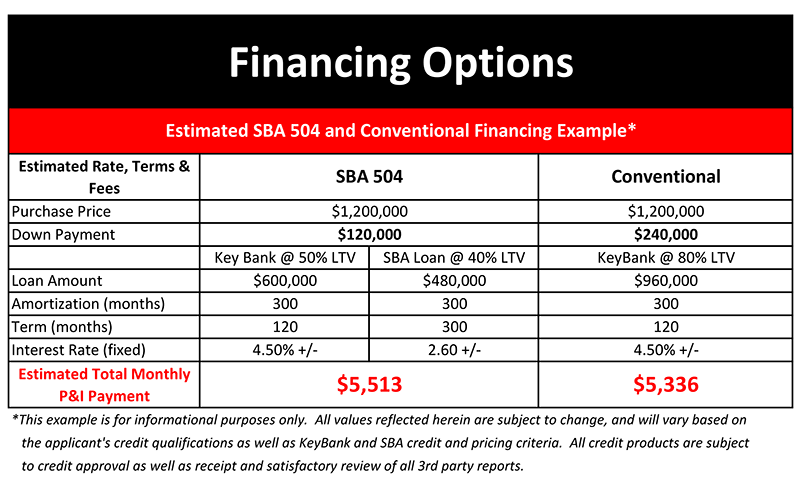
While agency lending is a great source for multifamily loans, their programs aren’t for every one in every situation. Credit markets remain tight for all commercial subcategories. They tend to ameliorate risk through shorter terms rather than higher interest rates. Well qualified borrowers can find 6% interest money…but it often is based on 15 or 20 year amortization schedules and 3 to 5 year terms. While loan paydown is accelerated, the borrower practically needs to leave the closing table to start looking for their next loan. I feel that a broker has not fully supported their client’s best interest if they don’t at least caution them about short terms.
It is important to use the proper financing tools to acquire investments for maximum profit. Let Rose City Commercial Real Estate assist you. Contact us at 503.577.1034.
Loan assumptions provide an alternative to taking out new short term debt. There are benefits and risks associated with this that are well detailed in the article below from multifamily legals specialists Dobens Law, LLC. For more information, visit their website at: www.dobenslaw.com
By Charles Dobens of Dobens Law, LLC:
So many investors think that purchasing a multi-family property through an assumption process is quick and easy. The financing component, in their mind, has already been taken care of by the seller. Now all they need to do is step into their shoes and take over where the seller left off.
Not so fast.
It doesn’t work quite like that and an investor needs to understand the entire assumption process before jumping in with the sharks. This article is going to provide you with a “peeling-back-of-the-onion” view of buying property through an assumption. It is also going to provide you with contract wording that you should add to your offers and contracts to protect you every step of the way. Nevertheless, this is a guide. It is no replacement for sound legal advice. Make sure you get advice throughout the entire process.
What Is an Assumption?
The textbook definition of a mortgage assumption is the agreement between the buyer and the seller where the buyer takes over the payments on an existing mortgage from the seller. Sounds simple, doesn’t it? But let’s get more in to the details.
According to one set of loan documents, the provision allowing the transfer of ownership of the property through an assumption process is found in the section entitled “Transfers of the Mortgaged Property or Interests in Borrower”. After you get through all the discussions regarding Events of Default, you come upon a clause that states the following:
Lender shall consent, without adjustment to the rate at which Indebtedness secured by this instrument bears interest or to any other economic term of the Indebtedness, to a Transfer that would otherwise violate this Section 21 if, prior to the Transfer, Borrower has satisfied each of the following requirements: . . . . . .
And there you have it. Sounds simple, doesn’t it? Well, let’s go through how this all plays out when you buy a property.
Who Brought The Guy With The Gun?
When you enter into a purchase and sale contract for real estate, the parties involved are typically the buyer and the seller. Any changes or modifications to the deal are negotiated between these two parties. When you enter into a purchase and sale agreement using an assumption, you now have a third party involved in the contract that, in normal deals, is a sideline player, but in an assumption, they control EVERYTHING.
That new party is “the Bank.”
You are instantly at a competitive disadvantage in the negotiation process. You now no longer have the ability to negotiate terms for the loan based upon your abilities. You now have to take those terms that the seller negotiated (probably years ago) and make them your own.
My advice to you is to use this to your competitive advantage in the negotiation process. The Seller is not doing you any favors by requiring you to take over his note. On the contrary, you are doing him a huge favor and don’t you ever forget it.
Here’s why.
Why Can’t I Just Use My Own Money?
Why does a seller require the buyer assume the existing note and pick up where he left off? The answer is – because the Seller made a deal with the devil and now he wants his soul back.
If you go back to the documents referenced above and look at the loan documents (before we were strictly looking at the mortgage) there exists a provision that states, in part, the following:
Schedule A
Prepayment Premium
Any prepayment premium payable under Paragraph 10 of this Note shall be computed as follows:
What follows is a very complex formula that takes in to account the number of months left in the term of the loan and the Yield Rate. In other words, the seller has a huge pre-payment penalty if he sells the property outright and pays the bank back.
Enter you, stage left, the solution to his problem.
How Do I Know I am Getting Myself into an Assumption Deal?
First off, it will be plastered all over the broker’s material claiming that this is an assumption. If it isn’t, then I can usually tell within the first 30 seconds of looking at a broker’s package whether this is an assumption or not. Here’s how.
Most brokers run pro forma numbers based upon either a 20, 25 or 30 percent money down analysis; easy round numbers. When you are looking at a property package that does an analysis using a “funny” number, like 12% down, then you know that you are looking at an assumption. No one puts 12% down unless they can. (Now before all of you get excited and think “wow, I can buy a property with 12% down if I do an assumption?” Hold your horses. Keep reading. It’s not that easy.)
The note amount is already set for you. It is whatever exists at the time of the purchase. The purchase price, then, becomes the variable. Set the purchase price and subtract the note value and there is your down payment amount. Reduce the purchase price and you have reduced the amount of money that you have to put down.
So Why Is This Such a Challenge?
Because there is a new party at the table that nobody controls and he’s got a gun.
Seriously, though, let’s go back to the provisions in the mortgage detailed above that define how an assumption is conducted. I will take each pertinent provision step by step and explain what this means in “real life”:
1. “Lender shall consent, without adjustment to the rate at which Indebtedness secured by this instrument bears interest or to any other economic term of the Indebtedness.”
Sounds good, doesn’t it? You enter into a P&S with the seller and you already know what the terms of the note are going to be. Right? Wrong. Even though this is what the contract says, it doesn’t mean the bank will abide by that.
For those of you reading this now and thinking that I don’t know what I am talking about, believe me, this is experience speaking. Here’s what happened to me.
We were approved for the loan assumption under one condition; we had to put an additional $600,000 in reserve with the bank. Here’s how the conversation went:
Bank: “Congratulations, you’ve been approved.”
Me: “Great. When can we close?”
Bank: “Once you sign all the documents and transfer $600,000 into the reserve account.”
Me: “Huh? Who said anything about $600,000? That’s not part of the deal. That’s a new economic term”
Bank: “Then you are not approved.”
Me: “Huh. You just said I was approved.”
Bank: “Yes and congratulations.
The circular conversation continued from there.
Do you see where I am going with this? It didn’t matter that the contract said that they could not change any economic term. It also didn’t say that the bank would agree to me buying the property with only 12% down. They own the gun. So if we wanted to get the deal done, we had to add $600,000 to the amount we needed to put down. Needless to say, the cash on cash returns changed drastically.
2. The transferee meets all of the eligibility, credit, management and other standards (including any standards with respect to previous relationships between Lender and the transferee and the organization of the transferee) customarily applied by Lender at the time of the proposed Transfer to the approval of borrower in connection with the origination or purchase of similar mortgages, deeds of trust or deeds to secure debt on multifamily properties
So what does this mean exactly? This means that you, the buyer, have to look as good on paper as the seller in the eyes of the bank. That begs the question, what does the seller look like?
No one knows.
Some sellers anticipate this issue when they apply for a loan so they only tell the bank exactly what it wants to hear in order to get the loan. The problem is that you don’t know what that is. I know some investors who have put together a fantastic team and would have had no problem getting a new money loan but were turned down by the bank because they did not look as strong on paper as the existing borrower. So the bank “dinged” them. Had it been a new money purchase, they would have sailed right through underwriting.
See what I mean about there being another party at the table.
3. In addition, Borrower shall be required to reimburse Lender for all of Lender’s out-of-pocket costs (including reasonable attorney’s fees) incurred in reviewing the Transfer request, to the extent such expenses exceed $3,000.
This one absolutely sent me through the roof one time. Two days before the close, the bank provides us with a source and use of funds statement documenting how much we will need to close. Hidden amongst all the bank fees was a $15,000 legal bill for the lender’s attorney. The lawyers representing the buyers and the sellers were shocked that they could get away with that type of charge, but guess what? We had no choice and had to pay it.
The bank showed up to the negotiating table with a gun.
Here’s What You Need to Do To Be Successful in an Assumption
So, still want to do an assumption?
If the answer is yes, and it should be, provided you follow my rules for success that I am about to detail here, then here are the things you need to do to be successful:
Remember what was discussed in the chapter on negotiations. Never lose control of the process. Always remember that you are in control. Do not give up the driver’s seat to anyone. ONCE YOU DO, YOU LOSE.
Make sure that the following provision is in either your Letter of Intent or your Purchase and Sale contract:
In the event written approval of the Lender to the Loan Assumption is not obtained in writing on or before sixty (60) days after the Effective Date, or if Lender notifies Seller or Purchaser of its disapproval of the Loan Assumption, and so long as Purchaser has supplied all requested information to Lender and used best efforts to obtain Lender Approval, Purchaser may terminate this Contract by written notice to Seller and the Earnest Money shall be returned to Purchaser, and neither party shall thereafter have any obligations one to the other except for obligations which expressly survive termination of this Contract. If Lender approves the Loan Assumption, but imposes economic requirements as an additional financial obligation of Purchaser, then Purchaser shall advise Seller of such requirement and Seller and Purchaser shall attempt in good faith to allocate the responsibility for such obligation between them, failing which, Purchaser may terminate this Contract by written notice to Seller as set forth above. If Lender approves the Loan Assumption, but imposes no additional economic requirements, then Purchaser has no termination right, this condition shall be deemed satisfied and the Earnest Money shall be released to Seller immediately after the expiration of the sixty (60) day period or on the date Lender Approval is obtained, whichever is earlier.
Why do you need this provision? Because the bank does not care one bit about the schedule that you and the seller have agreed to in the P&S. They are going to get around to your deal on their time frame. That means that there is the possibility, and it is a strong one, that your money will go hard before the lender has made a final determination. If they end up approving you but it is conditional upon some new economic term, you can’t walk without losing your earnest money. You lose.
Put a stipulation in the P&S that you will only pay closing costs up to a certain amount. Anything above that amount is the responsibility of the Seller. Hey, it’s his bank. Let him pay the fees above the normal closing costs.
Put a provision in the P&S that states the Seller has to disclose the financial package that he provided to the bank so that you know what you are dealing with when comparing yourself to the seller. If he is not willing to provide it then I can assure you, you are wasting yours and your investor’s time and money.
Finally, Who Loves ‘Ya Baby?
When you apply for a mortgage, your mortgage broker loves you. He has to because he doesn’t get paid unless he has success. Therefore, he will do everything in his power to close that deal.
With an assumption, you are standing out there all by yourself and you are going to be pulled and pushed in every direction that the Lender decides to go in. No one is looking out for your best interests. No one really benefits by you closing this deal or not.
FULL DISCLOSURE: I have never worked with the company I am about to recommend but I spoke with the owner and she explained to me how they operate. Boy, I wish I had known about them before ever trying an assumption.
1st Service Solutions (www.1stservicesolutions.com) of Grapevine, TX is a company made up of former CMBS lenders who are now specializing in the representation of buyers and sellers through the assumption process. This is a well needed service.
I recommend that you contact Ann Hembly to discuss how they operate and how you should include her fees in the P&S so that you do not bear the brunt of them yourself. Remember, when you do an assumption, you are doing a huge favor to the Seller. Let him pick up the costs of the process.
Charles Dobens of Dobens Law, LLC represents new and intermediate investors through the entire process of acquiring and managing multi-family property. From analyzing deals, negotiating contracts, putting the financing in place and closing the escrow, Dobens Law is with their clients every step of the way. In addition to providing legal representation, Charles Dobens owns and operates over $20,000,000 of multi-family property around the country. He can be reached at 781-987-4765.
Here’s What You Need to Know About Assumptions-Dobens Law, LLC | Dobens Law, LLC.
--- END POST ---

 Equity Advantage is celebrating 30 years of 1031 Exchange excellence this year. David and Tom Moore were exchange pioneers back in the days when 1031 Exchanges weren’t particularly well known…and the IRS had only recently codified the current process. We recommend different banks on acquisitions based on the lending institutions’ strengths….but we always recommend Equity Advantage. It’s critical that the Commercial Broker identify properties that meet the investor’s criteria, but that’s a beginning, not the end. Depending on the deal, the role played by the inspector, lawyer, CPA, environmental testing contractor, and other resources can have increased (or diminished) importance…but the 1031 Exchange Accommodator is always critical.