
Multifamily Management

Pro Tips for Multifamily Management
Off market properties can be a source of profits.FRIENDS DON’T LET FRIENDS…MANAGE THEIR OWN APARTMENTS! Friendless (smart folks) shouldn’t do so, either! I feel that using an independent third party is the only way. “Managing the Manager” is the unsexy, often overlooked way to maximize profits from operating multifamily assets. One of the long-time challenges of Multifamily Property Management is that Property Management companies are almost always paid on Gross Income. It takes considerably more time, effort and tenaciousness to keep a property rented a full market.  For half the work… Being $50 or more a month below the market pays darn near as much. Admittedly $50 is not a huge sum…around what you would pay for a nice lunch at the Chart House, or Salty’s Restaurant. But on your 25-unit multifamily asset that would reduce Monthly Cash Flow by $1,250.  Per month. But much worse…it would reduce the value at time of sale by $300,000! Staying on top of the Property Manager is a must for optimizing profits.


PICKING A PROPERTY MANAGEMENT COMPANY

There are two entities to vet here…1)The Property Management Company and, 2)The On-site Property Manager.  The Property Management Company decision will ensure that you have selected the resource that will be responsible for one of the most valuable assets you own. They will control all revenues from the asset, as well as paying the expenses and providing timely, accurate performance reports.

  • Is there a training manual for Asset Managers, Site Managers, Leasing Specialists, Maintenance?
  • At what number of units, what conditions do they recommend on site Managers?
    • On-site Maintenance?
    • Practices are changing as far as the number of units at which on-site management is required/recommended.
      • Some Portland, OR management companies now have up to 50 units without an on-site Manager.
      • Some states (CA for example) require on-site management for as few as 20 units.
  • What software does the company use to track operations?
    • Can tenants pay their rent through the app?
    • Can tenants make maintenance requests through the app?
  • Do they use cash or accrual in their accounting system?
  • How do they market vacant apartments?
    • How effectively do they use Craigslist?
    • Do they support subscribing to apartment leasing aids like Rents.com, Apartments.com, etc.


  • How do they market vacant apartments?
    • How often do they update/re-post Craigslist ads?
    • Do they subscribe to Rent.com, Apartments.com, Rentometer.com or other similar services?


  • Ask them to estimate what the cost of being $50 below market is for a 50-unit property in this market? (Both from a cash flow and potential sale price viewpoint.)


  • What is their recommended credit/criminal history research process?


  • How do they charge for coordinating vendors?


  • Do they recommend concessions?


  • Do they have a formal client retention program?


PICKING ON-SITE PROPERTY MANAGERS

Selecting the property on-site Property Manager is important, too.  I remember being on the Acquisition Team for a $45,000,000 multifamily asset in Las Vegas.  The Seller recommended keeping the existing on-site person. The Buyer asked how much are they getting paid?  I think the answer was something like $35,000/year.  The Buyer said: I may keep her…but I can’t have someone in charge of a $45M apartment getting $3k a month. The Manager was kept, along with a new incentive program that would reward good profits handsomely.  Not all properties have enough units to warrant an on-site Manager.   In Oregon  on-site Management is not required at any preset number of units, other than good sense. Some of the items a good on-site Property Manager will know over time:

  • Which apartments will comfortably fit a queen bed and nightstand and which wall is best for that?
  • What nearby properties are the closest competition—and what their rents are?
  • Where is the nearest ATM from the apartment? Restaurant, Dry Cleaners, Grocery Store?
  • What Elementary, Middle, and High Schools do residents of the apartments go to—and how are they rated?
    • Are their private schools nearby?
  • Does the Manager know the current rules/laws/regulations that apply to rent raises, Section 8 Tenants, evictions, etc.


--- END POST ---

Rick’s Tips: Multifamily/Apartment Management

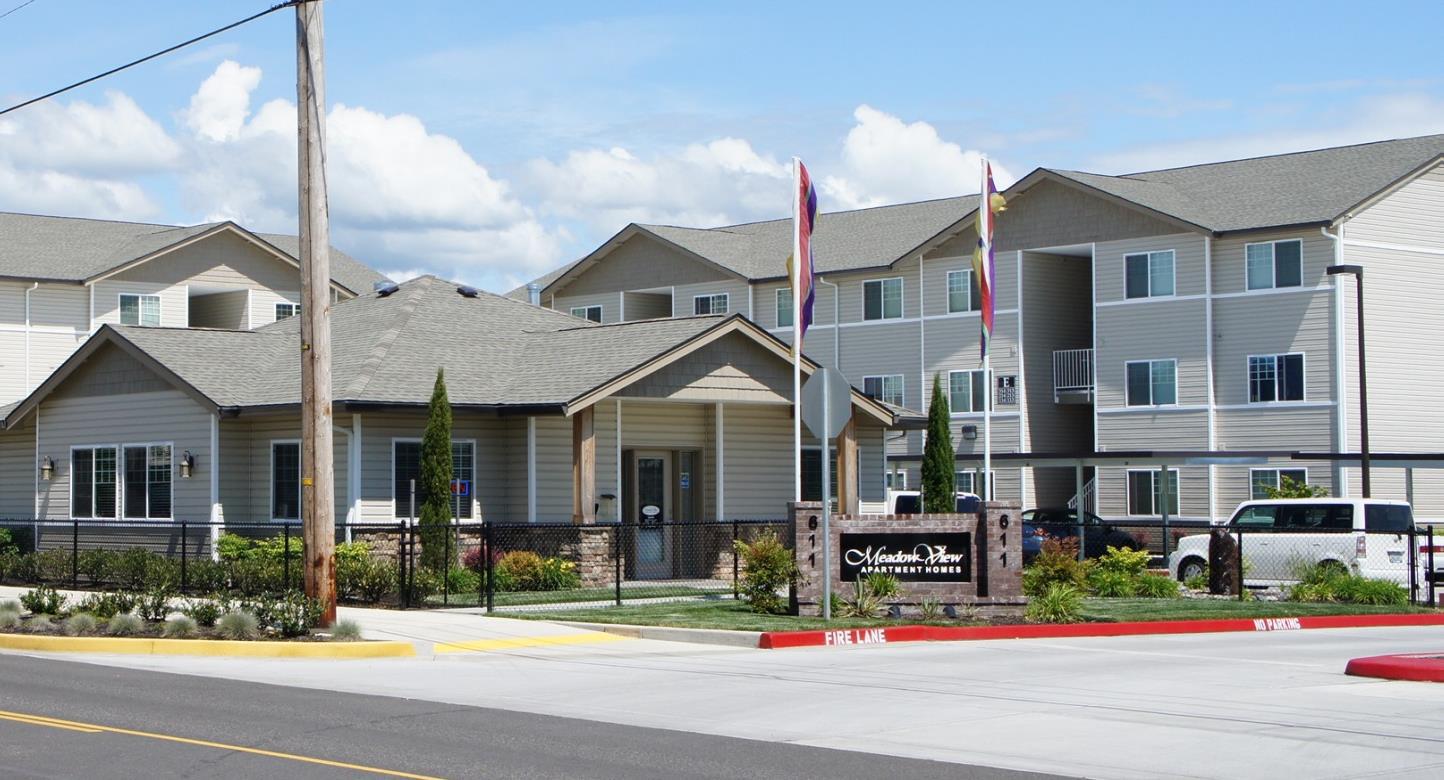
Apartment complex exterior on a spring day

FRIENDS DON’T LET FRIENDS…MANAGE THEIR OWN APARTMENTS!

Friendless (smart folks) shouldn’t do so, either! I feel that using an independent third party is the only way. “Managing the Manager” is the unsexy, often overlooked way to maximize profits from operating multifamily assets. One of the long-time challenges of Multifamily Property Management is that Property Management companies are almost always paid on Gross Income. It takes considerably more time, effort and tenaciousness to keep a property rented a full market.  For half the work… Being $50 or more a month below the market pays the management company darn near as much. Admittedly $50 is not a huge sum…around what you would pay for a nice lunch at the Chart House, or Salty’s Restaurant. But on your 25-unit multifamily asset that would reduce Monthly Cash Flow by $1,250.  Per month. But much worse…it would reduce the value at time of sale by $300,000! Staying on top of the Property Manager is a must for optimizing profits.

PICKING A PROPERTY MANAGEMENT COMPANY

There are two entities to vet here…1)The Property Management Company and, 2)The On-site Property Manager.  The Property Management Company decision will ensure that you have selected the resource that will be responsible for one of the most valuable assets you own. They will control all revenues from the asset, as well as paying the expenses and providing timely, accurate performance reports.

  • Is there a training manual for Asset Managers, Site Managers, Leasing Specialists, Maintenance?
  • At what number of units, what conditions do they recommend on site Managers?
    • On-site Maintenance?
    • Practices are changing as far as the number of units at which on-site management is required/recommended.
      • Some Portland, OR management companies now have up to 50 units without an on-site Manager.
      • Some states (CA for example) require on-site management for as few as 20 units.
  • What software does the company use to track operations?
    • Can tenants pay their rent through the app?
    • Can tenants make maintenance requests through the app?
  • Do they use cash or accrual basis in their accounting system?
  • How do they market vacant apartments?
    • How effectively do they use Craigslist?
    • Do they support subscribing to apartment leasing aids like Rents.com, Apartments.com, etc.
  • Ask them to estimate what the cost of being $50 below market is for a 50-unit property in this market? (Both from a cash flow and potential sale price viewpoint.)
  • What is their recommended credit/criminal history research process?
  • How do they charge for coordinating vendors?
  • Do they recommend concessions?
  • Do they have a formal client retention program?

PICKING ON-SITE PROPERTY MANAGERS

Selecting the property on-site Property Manager is important, too.  I remember being on the Acquisition Team for a $45,000,000 multifamily asset in Las Vegas.  The Seller recommended keeping the existing on-site person. The Buyer asked how much are they getting paid?  I think the answer was something like $35,000/year.  The Buyer said: I may keep her…but I can’t have someone in charge of a $45M apartment getting $3k a month. The Manager was kept, along with a new incentive program that would reward good profits handsomely.  Not all properties have enough units to warrant an on-site Manager.  I think CA has the lowest threshold…16 units.  In Oregon I’m not aware of any state required level at which on-site Management is required, other than good sense. Some of the items a good on-site Property Manager will know over time:

  • Which apartments will comfortably fit a queen bed and nightstand and which wall is best for that?
  • What nearby properties are the closest competition—and what their rents are?
  • Where is the nearest ATM from the apartment? Restaurant, Dry Cleaners, Grocery Store?
  • What Elementary, Middle, and High Schools do residents of the apartments go to—and how are they rated?
    • Are their private schools nearby?
  • Does the Manager know the current rules/laws/regulations that apply to rent raises, Section 8 Tenants, evictions, etc.

REMEMBER:

Its much easier for a 3rd party manager to raise rents than it is for the owner to tell his tenants the same thing.  Managers tend to come across as “doing their job” whereas an owner raising the rent the same amount may appear as a “greedy slumlord”.

Recommendations:

If you need a recommendation for your property management resource, contact us at (503)-577-1034, or: sales@rosecitycre.comYour bottom line will thank you!

--- END POST ---

Multifamily Excellence: Princeton Property Management

We want, expect, maybe even demand good…but excellence in multifamily property management deserves special attention, doesn’t it?  It is the policy of Rose City Commercial Real Estate to celebrate excellence.  I have worked with a number of fantastic property management firms in my career.   Today I want to salute one of them.

I like to see an organization do something just because its the right thing to do for their clients…not just trying to improve their operational metrics.  Princeton Property

No one associated with this blog is a stakeholder, nor have they received payment from anyone cited for excellence.  Previous posts have celebrated Holly Bray/Love Funding, David Moore/Equity Advantage, John Adams/Logo Products, Montage Restaurant, Chinook Construction, and more.  If you think what someone is delivering is excellent not just good…let us know and perhaps we’ll celebrate them here.  Contact Rick Bean at: 503.577.1034 or rick@rosecitycre.com.

Management’s aggressive approach to lowering property taxes for it’s client’s properties is an example.  They’ve done a superior job of supporting tax reduction advocacy.  And they have taken the extra effort to be certain that each asset they run is reviewed for possible reductions.  The irony is that most of  Princeton Property Management’s clients won’t even know about the extra effort that Princeton has expended…but that’s why I’m citing Princeton for multifamily management excellence.

Remember that the norm is for management companies to get paid on gross revenue.  While successful property tax reductions pay off handsomely for the owner, the property management firm is not compensated or even acknowledged.  Office Manager Amy Acala is heading up the effort, but she also  has enlisted and received the support of the entire organization in pursuit of lowering property taxes.  That’s how things ought to be done!

From what I’ve observed, the overused word “excellent” is appropriate when discussing Princeton Property Management!

--- END POST ---

Property Management: Keeping Residents Happy and Apartment Profits Up!

Lower profit killing turnover costs!Property management professionals know that two profit killers remain:

1. Unmanaged property tax liability. This is an item that needs an annual review by a professional. As an example, exception value in Oregon can only be appealed the first year it appears. No, they don’t identify it…so failure to appeal can cause a permanent increase in taxes.  There are a few exceptional professional property management companies that consider property tax minimization as part of their mandate to run the property.  Many do not!

2. Resident retention…and turnover costs when we fail to do so. Many multifamily property management folks don’t focus on this so much, after all the next renter is just around the corner. While the vacancy component of total turnover cost is lower than it used to be, the costs of turnover can be huge, particularly if retention rates drop. Below is another great article from Keat Foong of Multi-Housing News Online. Interesting reading that challenges commonly held beliefs about renter behavior.

“There is no magic wand for improving resident retention. Despite contrary opinions, our research consistently shows it is not about creating a sense of community, a community Facebook page, or having social activities; these have value as icing on the cake, but are not retention drivers. It has to do with boring things such as submitting an order immediately when the resident calls about a broken toilet, and following up with residents after the work is done. It’s a culture of responsiveness that has the greatest impact on renewals,” says Doug Miller, founder and president of the resident satisfaction specialist firm SatisFacts Research.
Concerned about maximizing your apartment portfolio’s profitability?  Contact Rick M. Bean of Rose City Commercial Real Estate for an evaluation.  We’ll discuss low hanging fruit as well as more involved projects.  Phone: 503.577.1034, or e-mail me at: rick@rosecitycre.com.

According to Miller, being able to successfully keep your residents has to do with paying attention to basic “blocking and tackling” tactics on the operational side of apartment property management. “What we have found is that when prospects are first enticed to a community, they are interested in how the community looks and all the bells and whistles. Once in there, their focus shifts, to the service level and the value they are getting. The question for them becomes how easy it is to be a resident in the community, to get calls returned and things fixed,” says Miller.

For a recent national survey conducted in June and July, “Getting Inside the Head of Today’s Online Renter—Behaviors, Preferences and Implications,” SatisFacts surveyed about 85,000 residents in communities of all classes managed by 20 companies. Topping the list of what is most important to residents when shopping for their next apartment is the perception of quality customer service, the ability to pay rent or submit service requests online, and the ability to provide resident feedback. At the bottom of the list is having a community Facebook page, or the ability to rent Zipcars.

Biggest reasons for turnover

The Towbes Group boasts a relatively high resident retention rate, and its turnover rate does not exceed 45 percent, even with the recent implementation of a rent increase program. That number is 10 to almost 20 points below the average industry resident move-out rate of 58 percent to 63 percent. Jim Carrillo, vice president, residential properties, for The Towbes Group, says “communication with the residents is always transparent and two-way. Nothing of importance is kept from the residents, positive or negative.” The company also surveys other communities in the markets it serves to observe the level of service provided at its competitors’ properties. Then the company establishes a standard above that.

As a way to preempt potential move-outs, in October of 2008 The Towbes Group informed all its market-rate residents that rents would be frozen through 2009. Rents were again frozen in 2010. And the company did not participate in lease renewals, but rather, allowed all leases to convert to month-to-month after the initial 12-month lease. This led to a low annual turnover rate averaging 39 percent—in the midst of the economic recession following the financial crash. Since then, the company has implemented a renewal program that is seeing some of the first increases in nearly three years, says Carrillo.

Lowering the rent or refraining from raising it, although necessary in downturns, may be a costly way to keeping residents in communities, however. Instead, Jen Piccotti, SatisFacts senior vice president of education and consulting services, recommends that property management professionals pay attention to providing great service at all stages of the lifecycle of the apartment renter. SatisFacts’ research shows that residents tend to feel neglected towards the end stage of the lease cycle. “You have to show the love 365 days a year,” not just at the beginning of the lease term, says Piccotti.

“Every property has its chronic complainers. You get to know your high maintenance residents, and the human tendency is to start hiding and looking busy when you see them coming, but you have to make sure every resident feels welcome. They are, after all, paying your salary,” says Piccotti. “Keep that smile, welcome everyone, and bend over backwards every time someone walks in the door. We need to assume that as soon as they leave the office, they go to their mailbox and find a lease renewal/rent increase letter awaiting them.”

Creating an appealing environment

The visual appeal of an apartment community can also play a role in retaining residents, according to designer Rebecca Jones, ASID, principal of RD Jones & Associates Inc. “Overall, the client base is hesitant to invest in design the way it should, but clients that do are reaping the rewards,” she adds. For example, The Bozzuto Group hired Jones to design the interior spaces of The Fitzgerald in Baltimore, which garnered a 2011 MHN Excellence Award and is, according to Bozzuto, the fastest-leasing apartment community (25 units per month) in the history of Baltimore.

The Fitzgerald was designed with a boutique hotel aesthetic, reminiscent of a hot spot you’d find in New York City, such as The Gramercy, says Jones. “If you design something really cool, that sets you apart from the competition,” she adds. The fashionable design makes the residents “feel good about the space, about themselves and about their living environment.”

Self esteem is important to the sociable Generation Y, and they like to bring their friends to their trendy buildings—they see the common areas and the entertainment spaces as extensions of themselves, she says. “They want to be able to say, ‘this is my personal space that I can enjoy and use with my friends,’” Jones notes.

Don’t underestimate the role that functionality in the design plays in holding onto residents, says Jones. Flow, access and convenience are important. You do not want the garages to be in a location that is too much of a trek. And make sure there are enough elevators interspersed through the property. “We see a lot of buildings in which you have to hike a football field to get to your space,” she notes. People may express dissatisfaction with such daily inconveniences by moving.

--- END POST ---

Demystifying Oregon Property Tax Appeals at CCIM Luncheon

Scott PhinneyW Scott Phinney and I, co-founders of Prime Property Tax Negotiation will be the featured speakers at the next Oregon/SW Washington CCIMLuncheon November 2nd, 2011 at the MAC from noon to 1:15 PM.

Following the passage of Measure 5, Oregon State transferred its property tax appeals from the Dept. of Revenue to The Courts.  A whole new system had to be created including rules, laws, procedures and the appeal process itself.  The Chief Hearings Officer for the State of Oregon, Scott Phinney, was one of the co-creators of the Magistrate Court and much of the current property tax appeal system.  Since then Mr. Phinney has spent 2 decades in private practice expanding his sphere of excellence to include property tax appeals in Oregon, Washington and California.  He has worked on successful property tax appeals on single assets and multi-billion dollar portfolios for a “Who’s Who of Big Business”:

Mr. Phinney’s talk will cover the broad strokes of the Oregon Property Tax Appeals system; I will use CCIM type techniques to quantify the potential short and long term values of appeals.  We’ll also show how real estate and accounting pros can promote appeals as a client development tactic.  We will also dispel misconceptions and bust myths about Oregon Property Tax appeals:

  • “It’s not possible to win a property tax appeal in Oregon” (Wrong.)
  • “You have to get the Market Value down to the Assessed Value to earn a compression refund.”  (Wrong.)
  • “You just can’t win apartment appeals.” (Wrong.)
  • “There is no system to appeal personal property assessments. (Wrong.)
  • “I have to pay lots of money upfront to appeal my property taxes. (Wrong.)

Time permitting Scott will also talk about the most frequently overlooked property tax break that is missed by over 80% of the qualifying projects.  In one case Scott found overpayments of $506,000 on a single project.

Please contact Rick M. Bean at 503.577.1034 or rick@primeptn.com for pricing and details.

--- END POST ---

The Multifamily Industry’s Best Training Comes From Grace Hill

Next week I’ll be testifying as an expert witness in a property tax appeal case for an 120+ unit multifamily asset in Salem, OR.  Part of my research is to interview the on-site property manager.  I was very impressed with how well she knew her area, the asset she managed, historical vacancy rates, concession rates…she was a pro.  Some people have an innate talent for property management and she is clearly one of them.  Others may need some top notch training to fulfill their potential.  I am an unabashed fan of Grace Hill Training for multifamily pros.  They offer low and no cost programs that your management staff will benefit from.  Multifamily management is not easy.  One asset owner I talked to thought training was over rated.  I responded:  “You’ve got a highly motivated  person willing to put in long hours on your behalf to help you optimize the profits on a $10 million dollar asset.  Give them tools so they have them the greatest chance to create positive outcomes on your behalf.”

The next GracHill Offering has that FREE pricepoint that value conscious owners like:

GRACE HILL & MproTV PRESENT LET’S TALK TRAINING – In their second episode of Let’s Talk Training, you’ll discover new and innovative ways to keep your maintenance teams trained and motivated by using new methods of learning.  They will discuss challenges and benefits of several methods:

  • Online training
  • Hands on training
  • On the job training
  • Training facilities
  • Videos/podcasts
  • Outsourcing

If you are an owner, trainer or supervisor, join them on Wednesday, October 12, 2011 at 2:00 PM ET for Maintenance Team Training and MotivationClick here to reserve your spot now.  Let’s Talk Training is always free of charge, so it will fit nicely into your training budget!

When you think of top notch multifamily training, think of Grace Hill.  To optimize your multifamily portfolio contact Rick Bean of Rose City Commercial Real Estate at: 503.577.1034 or rick@rosecitycre.com

Other articles you may like:


The Importance of Due Diligence in Multifamily Profits – Phase II – Books and Records | Rose City Commercial Real Estate

Demystifying multifamily cap rates, NOI, and investing basics | Rose City Commercial Real Estate

Multifamily real estate investment basics – part 1 of a series | Rose City Commercial Real Estate

Attractive cap rates attract investors to multifamily properties in Portland | Rose City Commercial Real Estate

Prospects for multifamily sector improve greatly | Rose City Commercial Real Estate


--- END POST ---

Increase Multifamily Cashflow and Profits With These Simple Tips

Failure to review each property’s profit profile annually is roughly the same as burning money.  There are a number of ways to increase the profitability and cashflow of a single commercial asset or portfolio.  Remodel, Repaint, Reposition, and Repurpose are obvious choices…that typically require significant equity and allocation of resources to accomplish.  Revamp the rent schedule is another…although being too aggressive can actually increase vacancies and turnover costs.  In this post we’ll cover low and no cost solutions, such as lowering property tax, utility and insurance costs, plus enhancing revenue through captive cable programs.

REMINDER: In a 6 Cap rate market every dollar in reduction of expenses (tends) to increase the value of the asset by $16.66, in addition to the increasing NOI.  Permanently shave $15,000 off your operating expenses and you’ll increase the cash flow to the owner by $1,250 per month and increase the value at time of sale by $250,000.

PROPERTY TAXES

Property taxes are the second largest single expense item for many multi family assets.  The truth is that the assessor gets it right much of the time.  But if someone has to pay more than their fair share of taxes it wont be my client.  I became a believer in property tax appeals working on profitability improvement projects in Las Vegas, NV and Tempe, AZ.

Las Vegas, NV:  The REIT I worked for had approximately 200 total 3 and 4 bedroom homes in Clarke County, NV that they purchased from a builder as a bulk sale.  They were on only one tax lot so it was pretty obvious that they were being operated as a multifamily asset.  Part of what we were working on to create additional value was getting them individually platted so we could sell them as condos.  Shortly after the plat was recorded tax bills were delivered and they went up collectively $200,000.   The reason I tell you this is that I called the Clarke County Assessor’s office and told them that I thought the property should be taxed as it was being operated…as an apartment.  I followed up with a formal letter…they agreed and changed back to apartment values, saving the firm $200k per year. 

Tempe, AZ:  When the market started cooling in Phoenix we felt one of our assets was grossly over valued by the Maricopa County Appraiser.  We worked with a vendor and reduced the assessed value by $13,000,000.  That raised the cashflow significantly due to adding $150,000 to NOI.  At the prevailing Cap at that time this would have created a $3,000,000 increase in sales price if the property was to be marketed.

Full Disclosure:  I saw how important property tax appeals were that it inspired me to found a company that does just that.  Prime Property Tax Negotiation appeals property taxes on commercial assets in the US with a focus on OR, WA, and CA.  More information is available at: www.primeptn.com .  You can contact us at:  info@primeptn.com or 503.577.1034.

MULTIFAMILY INSURANCE

One of the best bargains in multifamily is insurance.  Coverage is far more affordable now than it was 5 years ago.  Price per door has actually dropped.  It’s also important to review your coverage.  You should have the higher of what your loan agreement requires, and replacement cost.  This is not a place to go cheap.  The three really good providers are usually well priced…I recommend using them instead of second or third tier vendors.  (If you want my opinions on the best companies and agents please contact me at 503.577.1034 or rick@rosecitycre.com.)  Second thing to remember if you have a portfolio of properties is that you may be able to improve your coverage and reduce your average per door cost of insurance by getting bids based on the portfolio rather than the individual properties.  I worked for a local investor on a portfolio approach and reduced his cost per unit, increased cash flow by $10,000 per month and increased the aggregate value at time of sale by $2.6 million dollars.

RUBS

Utility cost increases that are borne by the owner are a silent profit killer.  When Renters Utility Billing Service (RUBS) is used the landlord pays the utility and bills back to the tenant their portion.  The way to cut the water usage in half is to make the tenant pay for using it.  All of a sudden a toilet that flushes continuously will be reported, as will the under sink leak.  Billing amounts may be derived from sub-metering, or apportioning, and in some cases the landlord actually breaks even or makes a buck.  Be aware that some municipalities have laws regarding the methodology permitted.  This program is good from day one…and will help the landlord from absorbing future utility increases.

CAPTIVE CABLE REVENUE SHARING

A number of  cable signal providers want to shut out their competition.  To secure sole provider rights they offer revenue sharing programs to multifamily property owners.  Most of the ones I’ve checked into require 100 to 200 doors as a minimum.  this can be as a single asset or as a portfolio.  Typical contracts range from 4 to 8 years with an initial payment of $100 to $125 per door and additional quarterly payments totalling $400 over the life if the contract.  When the contract is up you can renew or change vendors.  (Note the numbers cited are for one example…other offers may be higher or lower.) This works out to be roughly $1oo per door per year additional revenue.

HOW MUCH MONEY ARE YOU BURNING?

Contact Rose City Commercial Real Estate for additional information on how to tune up the profitability of your multifamily investments, or to expand your portfolio: Rick Bean, rick@rosecitycre.com. Phone:  503.577.1034.

--- END POST ---

Demand For Apartment Investment Property Rises, Despite Economy

I prefer to buy at the bottom of the market…how about you?

The time to buy apartment investment property is now…its a refrain that I’ve been offering for several months.  But there is a difference…now it makes sense for stock holders to move their equity into multifamily.  Rose City Commercial Real Estate can show you how to invest your IRA…and not create a taxable event!  Let me show you how by calling 503.577.1034 or contacting Rick Bean at: rick@rosecitycre.com.

The latest data shows Portland at a 3.5% average vacancy rate…yet multifamily building permits for the period  fell.  Why? The costs and risks of development are still high

If you want to be a genius in 5 years…make smart multifamily investments today.

relative to the returns available at the current revenue structure.   (Particularly when the costs and risks of building are compared to buying existing multifamily assets.) For those that have only been in the multifamily arena for a few years that may not mean much.  What it says to the others is that:

A.)  We are poised for significant increases in rents even without macroeconomic improvement.  Our population continues to grow, yet the market has not responded by starting more apartments.  If the economy does turnaround rents will really head up.

B.) There will be downward pressure on Cap Rates. This will raise asset prices.

HOW I SAY IT:  “The next few years will be a golden age for Portland apartment owners.”

Below I have attached a great article from Investor’s Business Daily:

By JOE GOSE, FOR INVESTOR’S BUSINESS DAILY Posted 08/25/2011 03:51 PM ET

 Rising renter demand is filling apartment buildings around the U.S., in defiance of the economic malaise.

Vacancy rates are shrinking all over, in tight markets such as Minneapolis and loose ones like Phoenix.

It’s an unusual situation. Job creation typically drives apartment demand. But this time the tenant top-up is largely about a lack of new supply — in the face of paltry employment growth. Meanwhile, demographic trends and the single-family housing slump are creating tenants, says Hessam Nadji, a managing director at Marcus & Millichap Real Estate Investment Services.

“The demand for apartments is at levels that we haven’t seen since economic boom years like those in 1999 and 2000,” he said. “It is clearly decoupled from the economy.”

The property brokerage projects that asking rents will grow an average of 3.5% this year in the U.S.

After the Big Apple at just a 2.8% vacancy rate, the tightest areas are now Minneapolis, San Jose, Calif., and Portland, Ore., all under 4%.

Widespread Improvement

Some 3 million young adults age 24-34 that moved back in with family or roommates in the last five years are now moving into their own places as their employment prospects improve, Nadji says. Hiring has sputtered over recent quarters, but this age group captured 65% of the new jobs created in 2010.

Other factors are creating tenants too, Nadji notes: A double-dip in single-family home values has made house hunters wary of buying. Tougher mortgage qualification requirements deter purchases. And homeowners who lost houses to foreclosure have become renters.

Together, those trends helped to lower the U.S. average apartment vacancy rate to 5.9% at the end of the second quarter. That was a 1.9 percentage point improvement from a year earlier, as noted by Marcus & Millichap.

While bellwethers like New York and Boston are among markets with vacancies below average, Minneapolis, Milwaukee and other markets also beat the average, largely due to decent job creation and scant new construction. Minneapolis employers added 7,000 workers in the first half of 2011. They had let go 6,200 a year earlier.

Among very tight markets, Minneapolis and Portland vacancy rates fell 2.2 percentage points from a year ago in the second quarter.

Even markets that were battered by rampant speculative home and apartment construction in the last decade have seen rapid improvement. Vacancy in Las Vegas, for example, plunged to 8.1% at the end of June from 11.1% a year earlier.

Continuing weakness in the Las Vegas housing market contributed: One in every 99 homes in the metro received a foreclosure notice in July. But now the jobs picture is improving slightly. Employers are expected to hire 16,200 workers this year, which would mark the first year of job growth since 2007.

A glut of empty single-family homes reverting to rental houses in Sin City and other overbuilt markets could slow further occupancy gains, Nadji says. But he and other observers point out that single-family homes don’t appeal to most renters ages 24 to 35. Instead they want places that provide maintenance, amenities and services.

Terry Considine, CEO of Denver-based Apartment Investment and Management Co. (AIV), told analysts during the second-quarter earnings call in July that foreclosed homes and rental houses were “not really competitive with professionally managed apartments.”

A sign beckons renters near Tampa, Fla., where vacancy has fallen to 6.9%. APA sign beckons renters near Tampa, Fla., where vacancy has fallen to 6.9%. AP View Enlarged Image

“They serve different market segments where customers have different interests and preferences,” said Considine, whose company owns or manages more than 600 multifamily properties in 38 states, Washington, D.C., and Puerto Rico.

Buying Splurge

Encouraged by improving fundamentals, investors are flocking to apartments. Some $21.6 billion in multifamily properties changed hands in the first half of 2011, more than double a year earlier, says Real Capital Analytics, which tracks sales of more than $5 million.

Capitalization rates slid to an average 6.4% in the second quarter from 6.6% in the first. They tell a property’s initial yield, falling as prices rise.

Sellers in major coastal markets are fetching prices that reflect cap rates of 5% or less, says Jeffrey Baker, executive managing director in the New York office of global brokerage Savills. That’s sending some institutional investors to secondary markets, where yields are higher.

It also is sparking new construction, which can ultimately generate higher yields of 6.5% to 7.5% for investors. Savills recently arranged equity financing for The Victor, a $140 million luxury apartment project in Boston that just broke ground. It’s the first big multifamily development in the city since the financial markets collapsed in 2008.

“There certainly will be some measured development that’s going to happen over the next couple of years,” Baker said.

Opportunities also exist for mom-and-pop investors in most markets among smaller properties, yet to appreciate at the same rate as top-tier assets, Nadji and Baker say.

While buyers typically need to do minor upgrades to justify rent increases in such properties, the reasons to pursue acquisitions have become more compelling, particularly with interest rates around 4.5% on a 10-year loan, Nadji adds.

“The turmoil in the stock market has made people think harder and more aggressively about buying apartments,” he said.

__________________________

If you would like to talk about transitioning your equity from a volatile stock market into the relative stability of multifamily investing please contact Rick Bean today at 503.577.1034 or rick@rosecitycre.com

--- END POST ---

Multifamily Excellence: Princeton Property Management

We want, expect, maybe even demand good…but excellence deserves special attention, doesn’t it?  It is the policy of Rose City Commercial Real Estate to celebrate excellence.  I have worked with a number of fantastic property management firms in my career.   Today I want to salute one of them.

I like to see an organization do something just because its the right thing to do for their clients…not just trying to improve their operational metrics.  Princeton Property

No one associated with this blog is a stakeholder, nor have they received payment from anyone cited for excellence.  Previous posts have celebrated Holly Bray/Love Funding, David Moore/Equity Advantage, John Adams/Logo Products, Montage Restaurant, Chinook Construction, and more.  If you think someone is delivering excellent not just good…let us know and perhaps we’ll celebrate them here.  Contact Rick Bean at: 503.577.1034 or rick@rosecitycre.com.

Management’s aggressive approach to lowering property taxes for it’s client’s properties is an example.  They’ve done a superior job of supporting tax reduction advocacy.  And they have taken the extra effort to be certain that each asset they run is reviewed for possible reductions.  The irony is that most of  Princeton Property Management’s clients won’t even know about the extra effort that Princeton has expended…but that’s why I’m citing Princeton for multifamily management excellence.

Remember that the norm is for management companies to get paid on gross revenue.  While successful property tax reductions pay off handsomely for the owner, the property management firm is not compensated or even acknowledged.  Vice President Liz Zuanich is heading up the effort, but she also  has enlisted and received the support of the entire organization in pursuit of lowering property taxes.  That’s how things ought to be done!

From what I’ve observed, the overused word “excellent” is appropriate when discussing Princeton Property Management.

--- END POST ---

Free multifamily training improves property performance

I was unbelieveably lucky when I was learning the multifamily ropes.  My first job was assisting the Asset Manager, and doing market research and  for a privately owned multifamily REIT with thousands of units.  I was part of a group of roughly a half dozen real estate pros that focused on acquisitions, dispositions and profitable holding of multifamily assets.   There is no doubt that much of the success of the organization was and is attributable to the charisma of it’s dynamic principal.  But there was also a sense of team that fostered an incredible confidence.  When we went under contract on an asset we closed.  That meant that we were offered deals below market prices that our competition wasn’t…because our team would perform.

There simply aren’t enough opportunities like I had to create the next group of multifamily pros.  That’s why I’m a huge fan of low and no cost training.

Here’s a free opportunity to hear a presentation from a woman regarded as both a multifamily and team-building pro, Jackie Ramstedt.  Jackie had over a thousand people attended her last webinar with rave reviews!  Jackie will talk about creating strong, productive teams with individuals eager to learn and grow, no matter what position they hold! This webinar is for all levels of property management, whether you are on site or at the corporate office.

How much? Free, thanks to the sponsors, Discover True North and RentMineOnline

When? Friday, April 22nd at 2pm EST (1pm CST, Noon MST, 11am PST)

Register now! https://www1.gotomeeting.com/register/540449329

Rose City Commercial Real Estate encourages team training for on-site staff.  We ask our leasing agents and maintenance staff to do a great deal…let’s give them the tools and training to increase their capabilities! Rose City Commercial Real Estate will give you a free assessment of your property, multifamily portfolio, and your multifamily training program.  Contact me at: 503.577.1034 or rick@rosecitycre.com.

--- END POST ---

Scroll to Top