
Rick M. Bean

Intro to Demystifying Residential Multifamily Investing:

Residential Multifamily (RM) definition:  Typically regarded as 2 to 4 units, or “doors”, with 5 units and up being considered Commercial Multifamily (CM).  Many multifamily investors start by purchasing a duplex, triplex or quad; living in one unit and renting out the balance.

Residential Multifamily Pluses and Minuses: One advantage of a plex investment strategy is that lower downpayments are permitted by banks…sometimes as low as 5-10%.  RM loans close much more quickly with fewer requirements than CM loans.  It’s easier to keep a watch on your renters when they’re next door, too.  Prices per door are lower than single family homes…an area where starter homes are $225,000 is likely to have duplexes and even triplexes for not much more.

The inherent nature of plexes is that their pluses are also a source of their weakness:  living next to your renters means they always know when you’re home.  From the renter’s perspective you are always available to discuss their maintenance problems and “wish list” of improvements they would like you to make (without compensation.) You are more likely to become “friends” rather than business associates.  It’s harder for most to enforce rent timeliness on friends.

Plexes tend to produce low Cash Flow, a reason they are eschewed by some investors.  Cash Flow is simply the monthly amount remaining from:  (All Income) – (All Expenses, including taxes, insurance and debt service).  With fewer units to amortize expenses over, plexes can’t compete with the functional efficiency of commercial complexes.  As a result, the plex investor focuses primarily on returns gained over time from appreciation.  Those gains are that are reaped at resale or refinancing of the property.  Contrast this with the investor of larger investments that expects to make a higher downpayment (20 to 40%) and recieve monthly distributions from profitable operations.  (In addition to appreciation.)

Valuing Residential Multifamily Assets: The local submarket  for single family residences (SFR) is the strongest fundamental in determining values of plexes.  Without adding in other factors, most potential renters will not pay more for the inconvenience of living close to neighbors than they would pay for of a SFR which would likely have more privacy. RM purchasers use the Gross Rent Multiplier (GRM) to compare properties.    GRM = Purchase Price ÷ Annualized Gross Rent. GIM, or Gross Income Multiplier is also used interchangeably.  It’s intended to reflect that rent is not the sole source of income; late payment fees, NSF charges, garage rent and other revenue sources need to be considered.  A triplex that rents for $600 per door and produces $400/year in other income that is for sale for $279,000 is available at a 12.7 GRM.  Proof:  $279,000 ÷ $22,000 = 12.7.

GRM Limitations: As it is based solely on the Gross Income, there is no accounting for vacancies, concessions or expenses.  What if ther property has occupancy problems due to poor maintenance?  What if the landlord is giving a lease concession of two months free rent, thereby reducing revenues by 10/12’s or 16.7%?  What if expenses are managed poorly?  In each of these examples the value of the asset is lessened, yet the GRM would remain the same.  Use GRM only as a rule of thumb when investing in plexes to see if a more thorough investigation is warranted.  All competent investment advisors will offer a proforma including expected profits based on actual income and expense.

1% Rule: This archaic valuation factor was derrived from the notion a property’s value would  equal 100 times a month’s rent.  Rent rates have not increased at the same rate as home values.  A $250,000 house would rent for $2,500/month under this scenario.  If someone cites the 1% rule they are telling you: “I don’t know what in the heck I’m talking about.”

--- END POST ---
Mark Barry, MAI To Present 2009 Portland Apartment Forecast

FOCUS ON MULTIFAMILY: Mr. Mark Barry will be the featured speaker at the Portland CCIM’s monthly luncheon on January 7, 2009 at the MAC Club. His focus will be current local apartment trends and 2009 projections. With over 4,000 appraisals completed, he is widely held as the leading apartment appraisal specialist in the area; Mark’s opinions carry great weight in the commercial real estate community.

TIME: 12:15 to 1:30 PM on Wednesday, January 7, 2008.  Luncheon is open to all: Members $35/Guests $45; $5 off early registration.

LOCATION: The Multnomah Athletic Club is located at 1849 SW Salmon St.  At over 550,000 Sq. Ft., The MAC  is the worlds largest indoor athletic club.  Phone: 503.223.6251  Web: www.TheMac.com

CCIM: There are fewer than 9,000 professionals worldwide that have earned the designation; many industry insiders refer to CCIM as the “Doctorate of Real Estate.”  The CCIM Institute provides cutting edge training on a broad range of Real Estate Investment topics, as well as signifcant networking opportunities.  The Portland Chapter meets at the MAC on the first Wednesday of each month.  Brokers network and share “Haves and Wants” from 10:00 am to noon; top tier industry specialists speak at the luncheon, 12:15 to 1:30 PM.

CONTACT RICK BEAN: PH-503.577.1034; EM- rick@rosecitycre.com If you would like:

  • A copy of Mr. Barry’s 2009 Apartment Trends Report.
  • Information on joining the CCIM Institute.
  • To list your multifamily property.

--- END POST ---

Intro to Demystifying Cost Seg. (Cost Segregation)

One of the ways we deliver value to investors is to inform them of the benefits of Cost Segregation and to offer a free Cost Seg Feasibility Study. CS doesn’t apply in every situation, but the possibility of saving clients tens or hundreds of thousands of dollars is too much to pass up.

In essence, CS employs greatly accelerated depreciation on commercial real property assets. The improvements (not raw land) of a commercial real property are broken down into their components and then rated for their cost and remaining life. The building improvements are classified as either Section 1245 or Section 1250. S-1245 (basically tangible personal property) is the primary source of Investment Tax Credit savings. I will differentiate property types and the process of Cost Seg in a series of future posts.

This process is typically performed by Cost Engineers, not Cost or Tax Accountants.

Properties are normally depreciated at 27.5 years (multifamily) or 39 years (commercial and industrial improvements.) Clearly a washer and dryer have a shorter useful life and…cost seg permits depreciating that at a pace that reflects its actual remaining useful life.

Disspelling Cost Seg myths:

MYTH 1: “Cost Seg will increase my Alternative Minimum Tax payments.” Wrong! AMT will reduce the positive impact of Cost Seg slightly..but only slightly. It certainly does not increase AMT. My opinion: If I can save a lot on taxes, I’m in!

MYTH 2: “CS is not fullytested.” Wrong! There is significant case law on this item; the IRS is well aware of the provisions.

MYTH 3: “It will increase my odds of being audited.” Wrong!

MYTH 4: “CS only applies to new buildings.” Wrong! As an example, Cost Seg can be used on a recently acquired 1906 era hotel.

MYTH 5: “This is only applicable to certain types of commercial/industrial property.” Wrong!

MYTH 6: “I have to pay for the program before I know if I will enjoy savings.” Wrong! Reputable firms will provide a feasibilty study at no cost, including a conservative savings estimate.

MYTH 7: “It takes forever!” Wrong! To properly study the property for all savings available, a site visit will need to be scheduled…but this process takes days not months.

MYTH 8: Cost Seg is for Casinos and huge assets only. WRONG: In many cases Cost Seg Treatment produces savings on smaller commercial assets in the $1M range

QUALITY: Use a respected Cost Seg Specialist…just like you would use only a top tier 1031 Exchange Accomodater.

To request more information, or a no cost/no obligation Cost Seg Feasibility Study please contact:

Rick M. Bean

503.577.1034

--- END POST ---

Review-The New Rules of Marketing & PR

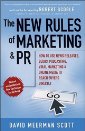
The New Rules of Marketing and PR: How to Use News Releases, Blogs, Podcasting, Viral Marketing and Online Media to Reach Buyers Directly

by David Meerman Scott

See this book on Amazon »

I read this book on the Kindle Learn more

ThumbsUp Recommended

A must read for anyone trying to market a company…if they can’t afford Super Bowl ads!
Spend fewer resources, get better results…I liked this book. A lot! Old world marketing included deliverables, mindshare and the opportunity to spend lots of money. In the old world of marketing we spent lots of time promoting our company directly. David Meerman Scott outlines the paradigm shift that has created the new rules of viral marketing. We’ll spend less time selling, and more effort on informing our current and potential clients. Using the new rules of Marketing and PR:  if we do our job well, others will take up our cause on our behalf.

--- END POST ---

Demystifying Tenants In Common

One strategy of acquiring investment properties is to pool individual owner’s equity stakes and take title as Tenants In Common or a TIC.  TICs feature an undivided unity of possession, but they may, or may not have unities of percentage of ownership, title, or time of acquisition and disposition.  Upon the demise of a co-tenant their interest passes to their devisees/heirs, not the co-tenants.

It is critical that an executed Operating Agreement be in place to define critical items including:

*Ownership percentage
*Conditions underwhich the property will be sold
*How distributions from operations will be made
*Rights and responsibilities of each investor

STRENGTHS INCLUDE:

  1. Pooling resources may permit the ownership of far larger assets than could be acquired individually, resulting in economies of scale for  management and maintenance.
  2. Overall flexibility. TICs permit owners to sell,  encumber, or convey their interest without permission of their co-tennants.
  3. Depending on the structure of the Operating Agreement, TICs may permit General Partners to run the asset, allowing investors to have the benefits of owning an asset without having to be involved in routine operations.

WEAKNESSES INCLUDE:

  1. Litigation is more likely.
  2. Closings are more cumbersome.
  3. Coordinating items that require input from the co-tenants is more involved.

Note:  The information contained herein is deemed accurate and reliable, but is not guaranteed.  To assess applicabilty to individual situations please consult your legal proffesional.

--- END POST ---

Welcome

A truly client centric broker delivers greater value and earns loyalty…and that’s how I run my business:

  • Offering more than just “services for commissions.”
  • Assisting clients with developing their risk profile, and investing accordingly.
  • Evaluating their portfolio, seeing if they have adequate equity build-up to warrant re-investment.
  • Helping them assess their property manager, property tax rates and insurance costs.
  • Performing Cost Segregation Feasibility Studies on both held and newly acquired assets.
  • Actively seeking to lower costs to boost NOI…directly increasing asset values.
  • Assisting with Due Diligence.
  • Providing a knowledge base of lenders with the best rates and terms for the specific needs of the client.

I have included links to properties we have available on this site…but most of our space is devoted to assisting visitors in staying current with market conditions…not selling.  That’s why we’ve added a word of the day, a spot to review real estate and investment books and more.

Feel Free to finish your Holiday shopping from home by using my direct link to Amazon.com.

We hope you enjoy our blog and invite you to return to review our daily updates.

Sincerely,

Rick M Bean

--- END POST ---

Scroll to Top