
Rick M. Bean

Forget About Investing In Residential Real Estate!

Before a lynch mob is dispatched…let me clarify: I’m still a huge proponent of real estate investing!  It’s just that residential investments rarely cash flow…you have to wait to make your money at sale from appreciation.  And you can’t afford to have someone else manage the units for you in most cases.  Banks limit you on how many residential investment loans you can have…but they don’t care how many commercial loans you have active.

Take Off Your Training Wheels-

Rumor on the street is that banks are again permitting a prospective borrower to have up to 10 residential loans. Legally you

portland investments, rick bean, Rose City Commercial Real estate, Investment,
Heather Joy, An 8-unit Investment

can have as many as you want of course…its just that lenders won’t underwrite loans past 10 residences. (This is a reversal from a year ago when Freddie Mac tightened up standards to permit only 4 loans.  Fannie Mae adopted the stricter rules shortly thereafter.)

Will the banks  change course again and tighten up standards anew? Rather than shout: “Hurray!” and buy more residential investment properties, I advocate a different strategy.

Convert your multiple residential property equities into a single commercial investment.

Here’s an example:  I have a friend that has 10 single family homes, nine of which are investments. He holds many of them “free and clear” while others have small balances.  He can sell off some of the homes and use a 1031 Exchange to defer taxes, converting the proceeds into equity for a commercial property downpayment.  He can also put new loans on the remaining house to add still more.  Banks are currently writing loans of up to 70 to 80% LTV on investment properties where cash is being taken out at refi.  When this is done my friend will easily be able to acquire sufficient funds ($250-350,000) to buy a commercial property like Heather Joy, currently listed at $779,000.  The advantage of Heather Joy is that he will be able to manage 8 units by going to a single address…a significant improvement in efficiency.
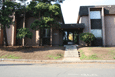
292067352
South Towne, An 18 Unit Investment

The next step up would be to take an even greater portion of his existing portfolio equity and purchase a larger asset like the 18-Unit South Towne. That $1,150,00 property would require approximately $350-450,000 in equity to purchase.  It has enough units that we could now afford MBO…Management By Others.  That means that my friend would transition from running all over town to manage 9 single family homes to reviewing the results created by the management company.
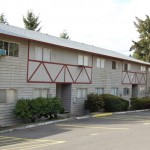
Los Verdes, A 53 Unit property
Los Verdes, A 53-Unit Investment

To take this further…if my friend’s holdings were enough that he could combine equities to add up to $1,200,000…he could purchase Los Verdes, available for $3,200,000.  That property is large enough to not only have management by others…but an on-site manager.  Contrast owning 53 units in one spot that are managed by someone else vs. running all over town to manage and maintain 9 single family homes.

Summary:  You will make more money, receive it earlier, and have fewer headaches…when you transition to Commercial Real Estate Investments.

Call Rick Bean at Rose City Commercial Real Estate for a no cost, no obligation assessment of your investment options.

--- END POST ---

What Does Outback Steakhouse have to do with Real Estate?

Outback Steakhouse, bloomin onion, Jakes Famous Crawfish,SERVICE! SERVICE! SERVICE!

Outback is a perfect example of a business that is a huge success because of its focus on value and customers. From top to bottom Outback does a better job of listening to their customers and providing a great meal at competitive prices.

They were one of the first to offer a usable curbside service that had specially designed containers to ensure your meal gets home steaming hot. Their to go system is particularly efficient, and they offer all the condiments and extras that their competitors scrimp on. They open the door and smile broadly when you enter, and again when you leave.

Did I mention that they listen to their customers? Outback is coming out with a new menu next week that offers a whole new range of tasty, value priced dishes. This is in response to feedback they received from their clientele wanting additional lower priced options. Their signature steaks will still be around, and their patented “Bloomin Onion” will still be satisfying hearty appetites…but because they listened, they will also offer some lower priced items.

SE 82nd St. OUTBACK RESTAURANT

While I salute the customer centric focus of Outback in general, their 9500 SE 82nd Portland, OR restaurant takes customer care and service from science to art. I don’t mean good service, I mean great service. The kind of legendary service that John Sheridan (The Sultan)of Jakes Famous Crawfish gave. I used to have clients call me from Dallas, TX to tell me they were coming to town and wanted me to check when John was working so they could see him again. He’s that good…and so is the team that Outback proprietor Adam Mayer has assembled at his SE 82nd restaurant. Food just tastes better when it’s delivered by someone who serves up a smile as well as a great cup of chowder. (By the way…their chowder is better than Jakes and on a par with Salty’s.) The last time my wife and I went there we had eaten a late lunch…so we split a sandwich. Our waiter Mike brought it out on two separate plates…he even split our meal in the kitchen and put a garnish on each one. At most restaurants they would snarl when you made the split request, then we would have had to wait for the server to come back to ask for an extra plate. But that’s not the way it works at the SE 82nd Outback…where its: “No rules…just right!”

If you would like to get a good value and client centric service from your broker, contact Rick Bean: rick@rosecitycre.com 503.577.1034

--- END POST ---

Demystifying Property Valuation: Cap Rate

Cap Rate, commercial properties, investment,NOI, Rick BeanThere are over three dozen metrics for commercial properties that we use to evaluate assets as potential acquisitions, and to gauge their operational performance. Some are relatively intuitive: Rent/Sq. Ft., Cost per Door, Expense Ratio, Gross Income, etc. Commercial investors eschew using GRM (Gross Rent Multiplier) as that measures the income side only.

The first measurement investors look at to see if a potential investment warrants further investigation, is the Capitalization Rate Derivative, or Cap. The Cap is simply the percentage of Net Operating Income to the Purchase Price.

Cap %= Net Operating Income/Price.

As an example, an asset selling for $1,500,000 with $75,000 NOI is at a 5-Cap. ($75,000/$1,500,000 = 5%.) Understanding this ratio and its implications are key to informed investing, as well as managing operations. If you know that assets in a particular area are trading at 7-Caps you have a pretty good idea of what a property is worth if you know its NOI. Before we proceed further it’s important to clarify what NOI is.

Net Operating Income is: Ordinary Revenue – Ordinary Expenses.

The intent with NOI is to evaluate the efficiency of operations exclusive of other factors. On the income side we want to include actual rent, pet rent, late fees and other day to day items. On the expense side we want to include water, sewer, etc…the day to day operation expenses.

Exclude extraordinaryitems from NOI calcs. Examples include revenue (+) from selling timber rights, or the expense (-) of replacing a roof. These are still material when we look at a property in total…but they are not relevant in computing NOI. Also excluded from NOI are finance charges. Why? Because we use NOI to measure the effectiveness of operations. Example: A 3.87% loan with a 35-year amortization would make a poorly managed property look pretty good. Conversely, a well run property with a high interest loan might appear to be poorly operated.

I’ll discuss Net Operating Income Multipliers, the reciprocal of Cap in my next post.


--- END POST ---

Demystifying TICs: The SEC

People often ask me about The Securities Exchange Commission and Securities in connection with creating Tenancy In Common (TIC) Agreements for real estate investments.  I give them an overview, and tell them to see an attorney…a good attorney.  In Portland Oregon, that means calling Reeves Kahn & Hennessy @ 503.77.5473.  They’ll help you with TIC formation, Operating Agreements, and advice…at a fraction of the cost of other good lawyers.

The old joke is that The SEC is like the IRS…without a sense of humor. 

But the reasons for creating the SEC and their mission offers no comedic relief:

“In the 1920s, some companies sold stocks and bonds on the basis of glittering promises of fantastic profits – without disclosing any meaningful information to investors.  In some cases these statements were exagerations or puffery; in other casese the term fraud applies. These conditions contributed to the disastrous Stock Market Crash of 1929. In response, the U.S. Congress enacted the federal securities laws and created the Securities and Exchange Commission (SEC) to administer them.”

There are two primary sets of federal laws that come into play when a company wants to offer and sell its securities to the public. They are:

  • The Securities Act of 1933 (Securities Act), and
  • The Securities Exchange Act of 1934 (Exchange Act).

There are investments that, having met very specific criteria, are exempt from the above.  Use  a recommended attorney like R,K&H to structure your first TIC…and then everytime after that.  Your attorney will give you detailed information about how the deal will be may legally be offered, restrictions on marketing, and advice to never even think the word “syndication.”

“With all the concern about SEC Regs, why do people even mess with TICs?”

The answer is simple.  Half a dozen investors can combine their equity to acquire much larger assets than they could purchase individually. There are economies of scale that occur multiple times through the size range of multifamily properties. I know of one investor that started with an office whose desk was a door removed from the hinges…and twenty years later is doing $100 million deals.  His effective use of TIC’s is a fundamental part of his success.

I’ve heard of several TIC Companies having troubles!

What you’ve read is true.  But remember that a TIC is merely a way in which a group can hold an asset.   Investments make money on their own merits and are not dependent whether it is held individually, as a partnership, or as a corporation.  I suggest focusing on acquistion price, costs of operation, cash flow and appreciation at disposition.

In forming TICs, many investment coordinators insist on working with Accredited Investors exclusively.  I’ll explain further in Chapter 3.  I’ll also cover Operating Agreements in an upcomming post.

Are you ready for Client Centric Service?  Contact Rick M. Bean now to begin investing…or to start learning about investing.

Rick M. Bean

Rick@rosecitycre.com

--- END POST ---

Demystifying Client Centric Service

Investors are risk adverse…and “unknown” is synonomous with “high risk.”  Being aware of this, The Client Centric Solution is to reduce the unknowns, reducing the risk…which delivers an increase in value to the client.  (If there are too many unknowns, the potential buyer will make a very low offer…or not bid at all.)

The Problem…

A colleague had a client that was looking to invest in quads and smaller commercial multifamily properties. One opportunity that caught the investors’s eye was a fully occupied plex that had upgraded units and an assumable loan with stated payments and interest rate.  The owner of the property was loathe to have multiple agents and investors traipse through the units on short notice and upset the tenants.  He was so concerned about losing tenants, that he instructed his agent that potential buyers could only view the inside of a unit after the owner had accepted their offer.  While this is somewhat common, without being able to view the property the investor could not verify the condition of the units, if they had a desirable layout, if they were upgraded, or if they were “repositionable” for increased income.  The potential buyer didn’t know how much time was remaining on the loan.  If it was a 30-year amortization loan with only 1-year left of the 10 year term he wasn’t interested.

The Solution…

I suggested to my friend that he contact the Listing Agent to find out how much time was left on the loan. He did, and found out that there was over 7-years left on the term and the bank was amenable to extending it on a qualifying assumption.  That eliminated one form of risk for the buyer.

Second, I suggested giving the tenants a weeks notice that each unit would be filmed for insurance reduction reasons.  About 1 minute is sufficient per unit. (I would also used that video to see if the insurance company would reduce premiums, so it is not a lie.)  Being able to view the video permitted the potential client to make an informed offer with far fewer unknowns, and less risk.  Should his offer not be sufficient, the owner had something to show future offerers.  

I think my buddy owes me a lunch!  What do you think?

The concept of eliminating unknowns to improve results applies to many aspects of business and life.  I learned this years ago when I watched a co-worker answer the President’s question with:  “I don’t know, and I don’t know when I will know.”  That co-worker was permitted to seek opportunities elsewhere.

If you would prefer Client Centric Service, you can contact me at rick@rosecitycre.com

--- END POST ---

A Client Centric Approach To Problem Solving

The success I’ve enjoyed in my career has been based on solving clients problems.  I was never a “sell ice to Eskimos guy.” A more honorable approach would be to provide our arctic circle friends the opportunity to acquire efficient heating systems and show them how to operate them for greatest comfort and economy.

Years ago I got a call from my boss, the President of a 65-year old company that operated branches from Anchorage to Denver to San Francisco.  He congratulated me on earning the all time highest commission the company had ever paid.  I told him that I had a great crew, and that we actively listened to our customers so we could be more adept at solving their problems.  I told my boss that few want a saleman to contact them, but nobody minds when their problem solver calls.

I was reminded last week of just how important it is to have a customer centric approach.  In setting the appointment, the client said he closed a transaction very late in December, and now wanted to make a 1031 Exchange into a new property.  From the information he provided I gathered he was around 80 years old, vibrant, but in sub-optimal health.  To match that profile I researched several relatively conservative MBO (Managed By Others) investments.  One offers a monthly distribution based at 7% Annualy.  When the property is sold in about 5 years investors will be paid a sum that brings their returns up to 11% anually.  If he or his heirs needed to get their equity out sooner, they could get it in 60 days, but they would only get 7%.  I also looked at some other options.

At our meeting I asked questions to determine if the investment profile I had presumed was accurate.  In little time at all it became clear he had a different path in mind.  We are now looking at multifamily investments that will require refurbishing, re renting and repositioning.  This approach will require more energy, exposure to greater risk, and be less liquid than my initially proposed armchair investment.  But it will also could yield higher profits, and more importantly, its what the client wants.

Without asking the right questions we would have solved the wrong problems! A client centric problem solving strategy is always best.

Rick M. Bean

Rose City Commercial Real Estate

rick@rosecitycre.com

--- END POST ---

Demystifying Cost Segmentation Benefits-Chapter 2

Summary:  Cost Seg. is an underutilized strategy that commercial real estate investors can employ to reduce their taxes, improve their ability to fund new properties and increase their purchases.  Below I have adapted information provided me by one of the nation’s leading authorities on Cost Segmentation Studies.

As we all have enjoyed our Holiday Season, sadly the next event we face involves the perennial tax deadlines.  This year you could apply cost segregation and save considerable money. Cost Segregation is the least utilized and most cost efficient way to save tens and even hundreds of thousands of tax dollars on the commercial properties that you own, represent or manage. Unless you take action soon, you will forgo these tax deductions.

Reasons why you should learn more about Cost Segregation: Cost segregation is the spigot that taps the hidden “cash flow” in every commercial property, including apartments. Less than 10% of all commercial property owners have utilized cost segregation. The reasons vary but in general it is due to a lack of awareness and because the 1997 Supreme Court ruling requires than the cost segregation be prepared by an independent cost-engineer – not an accountant. In addition up until 2001, the cost of cost segregation services were prohibitive – this is no longer true.

Recent court rulings and changes in IRS filing procedures make this tax savings benefit fully accessible to owners of any size commercial property.

Property owners now need only file a single form accompanied by a cost seg report prepared by an independent cost engineer — no costly, formal, multi-stage appeal process is required. You can even file for a previous year’s reduction in Federal and state taxes. All these funds are “hidden cash flow” for the business owner. These monies become a new source of investment capital. In addition to these Federal tax benefits there are other significant monetary gains.

Big Dollar Returns – TRIFECTA of Cost Seg

The cost seg diagnostic results are significant. Almost everyone (95% or more), will be able to immediately save tens of thousands to even hundreds of thousands of dollars on each commercial property. In general, about $15 for every $100 of new construction or existing building acquisition cost is eligible for accelerated depreciation. This means a $3MM building has the potential for $150,000 to $200,000 in Federal tax savings. Besides, the initial tax rebates and cumulative tax savings – the price is right!

The CS reports can also reduce local property taxes. Finally, the increased debt coverage and ROI returns enhance both the refinancing and sales potential of any commercial business. After a cost seg evaluation, a marginal asset based loan candidate becomes a top rated asset based loan candidate. Tax reduction (income and property), enhanced loan financing and increased sales value comprise the famous Cost Seg “TRIFECTA” of winnings! This is how to maximize real estate investment returns.

Cost Seg and Alternative Minimum Tax

Cost Segregation and Alternative Minimum Tax (AMT) Requirements Cost segregation shelters the real estate income of every property owner. Three factors determine the extent of this tax benefit. The first factor is the amount of the assets that qualify for accelerated depreciation. The second factor is whether the property owner is s a passive or an active investor. The third factor is whether the property owner is subject to the alternative minimum tax rules.

Any property owner subject to the AMT would only lose that portion (i.e. up to 15%) of the tax savings required for AMT payments. In other words, AMT requirements reduce cost seg tax savings– cost seg never increases and can only reduce taxes. In a worst case where a property owner was paying no Federal tax other than AMT, the property owner would still realize $85 in tax savings for every $100 of potential “depreciation sheltered” Federal taxes.

Assurance of Success…

The Cost Seg. firm I recommend has a 100% success rate on nearly 5000 IRS filings made after the 1997 Supreme Court ruling. Their perfect IRS track record is unmatched in the industry. They were the cost-engineering firm of record for the landmark 1997 Supreme Court ruling that opened Cost Seg to wide use. Since then, their cost segregation reports became the quality standard for IRS staff review. Although, it has never been necessary, they have a “standing commitment” to defend our conclusion with the IRS staff or in court at no expense to the client. No other cost segregation firm is willing to make this commitment.

Offer of “no cost-no obligation” diagnostic analysis

The best way to demonstrate the significance of cost segregation to the real estate interests of the clients of Rose City Commercial Realty is to offer you the opportunity to evaluate one, two or three of your representative properties.

The results are conservative but accurate. When a client authorizes a detailed study (which includes a site visit), the results will usually be 10-15% higher. This standard practice ensures that you will have long-term satisfaction.

The information requirements for a diagnostic analysis are minimal. They include:

1). The address of the property

2). The date of purchase and the purchase price.

3). Property type (apartment)

4). List of any improvements or and the cost or estimated cost there of.

5) If available, a copy of the most recent depreciation table on the property.

Call me at 503.577.1034 for your no cost, no obligation Cost Seg Feasibility Study.

Rick Bean

RoseCity Commercial Real Estate

Rick@rosecitycre.com

--- END POST ---

Demystifying The Four Ways Multifamily Investors Benefit From Ownership

When investors buy any commercial real estate they are acquiring a revenue stream.  Admittedly there are a few signature buildings that are so iconic that they are a “pride of ownership” acquisition, but most properties are valued solely for their future economic potential.  There are four primary ways in which investors benefit from their acquisitions:

1. Cash Flow

is the sum of:  Cash In – Cash Out.  The primary source of inflow cash is rent.  Pet rent, late fees, laundry and owner contributions are also part of the cash in stream.  Cash Outflows include taxes, expenses and distributions to owners.

Owner types vary widely on the importance they place on distributions:

  • Residential Multifamily properties (2 to 4 units) and smaller Commercial Multifamily properties cast off little cash.  Their owners tend to focus more on equity gained at the time of disposition.
  • Investors of larger properties often use cash flows (distributions) as a primary source of spendable income.  They certainly expect gains at sale, but they often will use that gain to step up in basis to acquire a larger asset in the hope of increasing the monthly cash-flow.
  • The bane of all investors is the much dreaded Cash Call.  When cash out ‹ cash in to the extent that operations are impacted, the property owner(s) are forced to add cash to keep expenses current.  Because of their focus on maintaining regular, dependable distributions, the owners of larger properties tend to have lower LTV loans.  This doesn’t eliminate cash calls, but it does make operations inherently more stable, reducing the likelihood of requiring additional cash.

2. Appreciation

is Future Disposition Price – Original Acquisition Price.   A 53 unit complex that is purchased for $3.2 million is 2007 appreciates $700,000 if it is sold for $3.9 million several years down the road.

  • Appreciation gains can occur from (external) market forces such as a downward trend in Cap rates, or from increases in rent relative to expenses due to high demand.
  • Gains can also be “forced” by internal forces.  This occurs when we reposition a property.  Renters will pay more for upscale amenities and newer looking accommodations.  Success requires having the amortized costs of improvements be exceeded by the increased rents.  In some cases we merely seek to raise the rents on the existing renters; other times we are using the upgrades to attract a new tenant profile.

3. Loan Paydown

is determined by subtracting the initial loan amount from the remaining loan balance at any given time.  Suppose a $3,200,000 property is acquired with a roughly 65% LTV loan at 6% with a 30-year amortization.  Day one the beginning loan balance would be $2,000,000.  42 months later (3-1/2 years) the loan balance would be $1,909,649.  The loan paydown amounts to $90,351 for that period.

4. Tax Shelters and Tax Avoidance Benefits

The final benfit to investors is the tax sheltering of income.  Cost Recovery (Depreciation) is the primary example.  Industrial and retail properties are depreciated on a 40-year basis; housing is depreciated using 27.5-years.   Note: Land is not depreciable.  Using our previous example of a $3,200,000 community, let’s assume that land was 25% of the value, leaving a deprecable amount of $2,400,000 to be depreciated over 27.5 years, or $87,27.73 per year.  That will act as a tax deduction to reduce profits by that amount for tax basis purposes.

A more rapid depreciation methodology is provided by Cost Segmentation, or familiarly, Cost Seg.  This is performed based on findings of a cost engineer during their on-site inspection and review of the property. There is great acceptance of this approach by the IRS, but it is not fully understood by investors and many Tax Accountants.  Cost Seg. on Assets under $1 Million is not always cost effective due to the fixed costs of the on-site inspection.  Savings on multimillion dollar properties are substantial, and can change a 1.1 DSCR property into a 1.25. That means that Cost Seg utilization can be the difference in some loans being approved!

Duties of Professional Investment Brokers

It is incumbent on the Real Estate Professional assisting a client with a multifamilty acquisition to have an understanding of that client’s risk profile, investment horizon plus target cash flow and appreciation rates.  It is also beneficial to have an awarenes of how important their client deems tax shelter options.

--- END POST ---

2009 Apartment Projections Presented At PDX CCIM Meeting

2009 Multifamily Market Projections Available

Hats off to Mr. Mark Barry, MAI…he’s closing in on 5,000 completed Apartment Appraisals.  Mr. Barry’s practice is based in Portland, OR, but his projections are followed nationwide. Mark was the featured presenter at Wednesday’s January meeting of the Portland CCIM Chapter.  Some quotes from his report:

  • “The apartment market is better positioned to hold its own in 2009 than other commercial real estate markets.”
  • “The days of 75% to 80% LTV, low debt service coverage rations and underwriting on proforma are now over.”
  • “…what happens with the national economy and the Obama administrations success in dealing with the financial crisis will impact all real estate markets in 2009.”

Please e-mail me to get a copy of the report in its entirety:  rick@rosecitycre.com

Best of luck to all of us in 2009.

Rick Bean-Rose City Commercial Real Estate

--- END POST ---

Demystifying Why Investors Switch From Residential To Commercial Properties (Part 1)

  1. Single Family Residences (SFRs), duplexes, triplexes and quads are maintenance, management and hassle intensive per unit of profit.
  2. SFRs and residential multifamily (less than 5 units) rarely “pencil out.”  They sometimes make fine “buy and hold” properties, but rarely cash flow well. Today’s sophisticated investors know that if they combine a number of small investment properties they can afford a commercial multifamily asset.  (They may even be able to take advantage of Cost Segmentation for accelerated depreciation…impossible for smaller investments.)
  3. Of course, as we trade up to more and more units at a property, we get to the point where we can pay someone else to manage the property.  Then our role transitions to “managing the manager.”
  4. Explanatory note: While by definition we typically say 5 units and up are Commercial Multifamily, in practice 8 to 10 units is when the first tier of economies of scale appears.
  5. In the past, up to 10 properties could be owned by an investor, including their primary residence…but about 10 months ago Freddie Mac stopped loaning to borrowers with more than 4 residential loans.  Fannie Mae has followed suit.  There is no legal prohibition against owning more properties…but borrowers no longer qualify for many loans if they exceed the new number.  (I do work with one lender who will still loan on up to 10 properties…call me at 503.577.1034 for information.)
  6. In order to move up to larger opportunities, some investors will refinance multiple houses and residential multifamily assets.  Lenders may approve 3% down loans on owner/occupied homes, and be comfortable writing 20% down for investments, but on “cash out” loans many require at least 30% down (70% LTV).

--- END POST ---

Scroll to Top