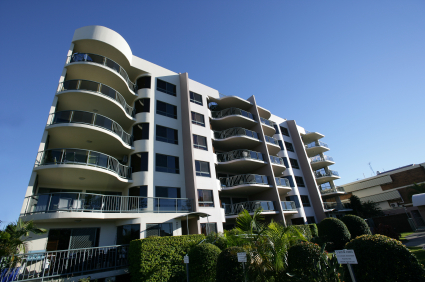
The way real estate should work

Two things to get out of the way: 1.) I’m fully aware that being highly complimentary of a competitor runs contrary to the way many prefer to operate in Real Estate. 2.) I’ll get back to our normal focus on commercial and investment Real Estate articles on my next posts.

For high end office leasing…Bill Smith and Monique Clousser of NAI Norris Beggs and Simpson do a hell of a good job…and have much to be proud of. Call: 503.273.0313.

I primarily practice investment real estate with an emphasis on working with cash buyers, but my partner needed help. He needed leave town to work on his out of state real estate assets. At the same time he was racing to lease some high end office space for a boutique CPA firm.  Stone and Associates CPA’s business focuses on high net-worth individuals and small companies…their practice is expanding rapidly and they need to be in new digs and settled well before the end of year busy season.  By the way…Mike Stone, the founder, is both a CPA and an Attorney.  That’s education’s equivalency to a royal flush.  No wonder others are looking for smaller spaces while his needs are growing.

Bill Smith, Vice-President of NAI Norris Beggs & Simpson showed us a nice space in One Centerpointe, a beautiful office in Lake Oswego’s Kruse Woods.  We negotiated a myriad of details, each of us fighting to get the best for our clients, each of us acknowledging disagreements, neither being disagreeable.  Putting this all together hours before the start of the Labor Day weekend raised the bar.  At one point Bill Smith came off his vacation and got his contractor to come off his vacation to put together tenant improvement bids. To get the TI’s fast tracked to meet our move-in deadline, another Norris Beggs & Simpson Vice-President, Monique Clousser closely coordinated the contractors, worked through insurance issues, etc.  While I wont bore you with all the details, I will say that it was a real pleasure to work with true professionals to take care of a great client.  That’s the way Real Estate should work!

Next post:  I double checked it…the IRR was 145%!

--- END POST ---

Best Practices in Distress Investing: No Single Strategy Prevails

When it Comes To Seizing Recessionary CRE Opportunities, Investors Don’t See a Specific Market or Property Type Holding a Special Advantage

September 15, 2010
When it comes to commercial real estate investment, distress is all the buzz. It’s the catchword that seems to always precede the word ‘asset’ and is currently the archetypical investment craze. There has been a downpour of money targeting distressed property, and according to CoStar Group data, almost one in every four commercial property
Whether you’re looking to invest in Portland multifamily assets, Vancouver distressed properties, or Salem Industrial land…this CoStar interview with key players shows how the pros are looking at this market. I’m going to serialize it…its too good to miss. To work with an investment pro contact me at: Rick@rosecitycre.com.
sales done so far this year fits in some sort of distress category, whether it’s an REO or foreclosure sale, delinquent or underwater loan, or a property with negative cash flow.

CoStar sampled a number of commercial real estate executives asking them what strategies they found to be the best in pursuing distressed deals. In general, investors almost universally agree that a distress opportunity must have clear value and make sense for the buyer’s specific investment goal; the more uncertainty an opportunity presented, the less sense it made. Beyond that, there was only one consistent answer:

“There are as many strategies as there are investors,” said David W. Popp, senior vice president, Transwestern in Bethesda, MD. “Just as each investor may have their own distressed asset strategy, each property or portfolio must be considered independently on their own merits.”

“We don’t approach any given assignment with a preconceived bias in terms of quick flip, stabilize and hold, discount rate to achieve occupancy, etc,” Popp said. “Achieving the specific goals and objectives specified by our client is paramount and these may change based on the characteristics of the property, loan terms, strength of mortgagor, etc.”

Jeffrey Rogers, president and chief operating officer of Integra Realty Resources in New York concurred, saying no clear-cut strategy has emerged as the best practice. It all depends on what type of investor you are.

“The type of investor you are largely depends on the type of investment capital you have to deploy,” Rogers said. “For example, if you are running an investment fund raised with institutional money, which requires a certain return (typically in the double digits now) that needs to be achieved before the investor can share in the profits, you need to look for situations which offer adequate yields. In such a situation, the stronger markets like New York and Washington, DC, are not as attractive because of the relatively higher prices and lower yields.”

“If you are a REIT paying a dividend of 4%-6%, the stronger markets appeal to you because you can afford to focus on quality and take less risk in a secondary market,” Rogers continued. “The big REITs may earn a lower yield, but the return to investors is a lot lower. So, it really depends on where you get your investment capital and on your time horizon.”

There was no specific market or property or asset either that jumped out as having any particular advantage either.

“If investors want stability and a relatively safe investment, they would tend to prefer multifamily in 24-hour markets such as New York City,” Rogers said. “If the investors are willing to take on greater risk for a higher yield, they might prefer retail in this current market. The vacancy rate in retail is generally higher than the vacancy rate in multifamily in this market, but the upside is greater as well.”

Or an investor may not even prefer property, Rogers added.

“Properties acquired between 2003 and 2007 with significant leverage are underwater and no longer have equity. Thus, the target is the debt not the property. The goal is to buy the debt at discount. Depending upon your ultimate strategy, once you own the note, you can negotiate with the owner or you can move to foreclose to gain control of the property.”

Want the whole article? Come back for more…or go to By Mark Heschmeyer (As seen on CoStar.com)

--- END POST ---

Distressed Multifamily Update

A new strategy for CMBS Loan WorkoutsAnother great article by National Real Estate Investor!

A court decision in Arizona may provide a blueprint for special servicers across the nation as they seek to recover the value of defaulted loans rolled into commercial mortgage-backed securities (CMBS).
In a landmark case, the Arizona Superior Court allowed San Diego-based receiver Trigild Inc. to sell seven Arizona apartment complexes — over the objections of the borrower — without requiring the special servicer to foreclose on the properties.

A first for Arizona, the Aug. 2 ruling enabled buyer Standard Portfolio to assume the portfolio’s existing CMBS loan, which carries more favorable lending terms than newly issued loans in today’s turbulent debt market.

Rose City Commercial Real Estate is currently working on a multifamily project… a distressed property in Salem.  We are taking back up offers…the price is under $28K/door.  For more information contact Rick Bean: rick@rosecitycre.com.

Thanks to the buyer’s low cost of leverage, the $123 million purchase price exceeded the highest all-cash bid for the same portfolio by more than $53 million, according to Bill Hoffman, president of Trigild.

“This was unprecedented and a major victory for special servicers,” says Hoffman. “A sale by the receiver brings the properties to market much sooner than a foreclosed property, and allows the special servicer to provide assumable financing for the new owner.”

A common predicament

Special servicers know that foreclosing on a CMBS loan in today’s weakened market is a losing proposition. For one, the potential to recoup an outstanding loan balance through foreclosure and an asset sale is often slim because buyers in today’s depressed market conditions can’t, or won’t, pay high prices for an unstabilized asset.

Leveraged buyers have limited access to capital because lenders are generally offering loan-to-value ratios between 60% and 70%. And few lenders will fund a loan to buy real estate with the kind of vacancy and deferred maintenance issues that usually come with foreclosed properties.

That leaves cash buyers to dominate the market for foreclosed assets. Cash buyers tend to bid lower than leveraged buyers due to an expectation of higher annual returns to compensate for the increased risk of equity investments.

Add in the special servicer’s holding and property operations costs that come with the months it takes to foreclose, make repairs and reposition a property for sale after taking the title, and the prospects for recovering the remaining principal on a CMBS loan grow downright dismal.

Offering assumable financing gives today’s leveraged buyers access to the low cost of capital that comes with loans originated in the less austere lending environment that existed before the financial crisis, according to attorney Mark Weibel, a partner in the Dallas office of law firm Thompson & Knight.

“Because the banks today aren’t loaning money at attractive terms, we’ve had to find another way to get people to buy these assets that are in default,” says Weibel, who heads the firm’s capital markets group and worked with Trigild on behalf of the special servicer in the Arizona case. “By doing assumable financing, we’re getting a higher price.”

In the Arizona case, the borrower financed the seven multifamily projects with a $164.5 million CMBS loan at 5.7% interest in 2007, according to New York-based Trepp LLC, which closely tracks the CMBS market. Bethany Properties abandoned the seven multifamily projects and their residents in April 2009, leaving behind unpaid employees and suppliers and deferred maintenance on the 2,759 apartments.

The court appointed Trigild receiver in April 2009 and the company restored order, made repairs and increased occupancy to position the assets for a profitable sale. In the court case, the borrower insisted that the special servicer, who acts as the lender on the loan, would have to foreclose to obtain the property’s title before it could be sold.

In her Aug. 2 ruling, however, Judge Eileen Willett determined that the sale proposed by Trigild offered the “best possible recovery for the receivership property.”

The unpaid balance on the loan, which will be modified for the sale to Standard Portfolio, is more than $162 million, according to Trepp. The newest property in the Arizona portfolio is Alante at the Islands, built in 1996 in Chandler, Ariz., while the rest were built in the 1970s and 1980s.

The other assets include Laguna Village and Santana Crossing in Chandler, Whispering Meadows and Tuscany Palm in Mesa, Sienna Springs in Phoenix and Verrado Park in Glendale.

CMBS complications

If assumable financing can recover the most funds possible, why aren’t special servicers offering the collateral properties from defaulted CMBS loans for sale with assumable financing? The chief reason is that laws regulating CMBS don’t give them that option.

For special servicers and other debt holders, the very act of foreclosing in order to gain title of an asset for sale wipes out the original debt, so there is no longer a loan to assume. In other words, foreclosure removes the possibility of assumable financing.

Special servicers can’t offer seller financing by creating new debt in the CMBS pools they manage because laws regulating real estate mortgage investment conduits (REMICs) preclude the addition of new debt to completed CMBS transactions. The only way for a new owner to take advantage of the low-cost debt in an existing CMBS pool is to take the place of an existing borrower on an existing loan.

“Once a REMIC trust does a foreclosure, the debt is extinguished and you can’t have new debt in the REMIC trust,” explains Weibel. “We have to keep that (original) debt alive.”

Bringing in a new borrower to take the place of a non-performing borrower is good for CMBS bondholders because the loan continues to generate payments of principal and interest. In most states, however, laws either prevent or don’t specifically allow receivers to modify CMBS loans in order to designate a new borrower. That’s why the Arizona case couldn’t move forward without the superior court’s ruling.

That court record provides a basis for similar receivership sales in Arizona. Receivers like Trigild want other states to allow sales out of receivership, which could provide flexibility to deal more quickly and effectively with a mountain of defaulted CMBS loans.

Weibel of Thompson & Knight says his capital markets group has worked on receivership sales issues in Texas, Minnesota, California, Colorado and Utah within the past six months, and the group has at least 25 cases pending.

Hoffman estimates that about 10 states already allow receivers to modify CMBS loans for assumption when they sell properties, while most states lack clear laws regulating the process and some specifically prevent it.

The practice is growing more common, however, and Hoffman expects other states to follow Arizona’s lead. “We’ll see a tremendous increase over this next year or so, because this problem’s not going away quickly.”

--- END POST ---

Multifamily Surges Back!

By Randyl Drummer

September 8, 2010

Multifamily property in major metro markets remains the asset of choice for many commercial real estate investors, with momentum fueled by a number of large late-summer sales transactions following a solid first half of 2010.

Public and private REITs have landed the largest deals of late, but private equity, pension funds, insurance companies, owner-developers and even private

Rose City Commercial Real Estate is forecasting a broad resurgence of capital back into multifamily.  As Investors bid cap rates down and values up.  Right now is the best time to buy Portland multifamily Investments.  Contact: Rick  Bean at: Rick@rosecitycre.com.

individuals are all getting into the action for both core and distressed multifamily projects in large metros around the country, according to CoStar Group sales data.

“Investors are continuing to hunt down deals in the apartment space,” said CoStar real estate economist Dan Egan, citing plans announced this week by apartment real estate investment trust UDR Inc. (NYSE: UDR) to acquire six apartment communities in Massachusetts, Southern California and Baltimore for $455.1 million in one of the largest portfolio deals of the year.

UDR’s purchase includes the $157.5 million purchase of the 583-unit Marina Pointe in Los Angeles’s posh Marina del Rey, and the $98 million purchase of 160-unit Garrison Square at the intersection of Boston’s Back Bay and South Hill neighborhoods at a stellar $612,000 per unit.

“Those are all really nice assets, and it speaks volumes about the sentiment of investors with regard to apartments,” Egan said. “We haven’t seen that kind of trading and confidence in the office market.”

The UDR sale includes three communities recently developed by The Hanover Co. and acquired at a substantial discount to their cost, including the 266-home1818 Platinum Triangle in Anaheim, acquired for $70.5 million, or $266,000 per unit; Ridge at Blue Hills in Braintree, MA, 186 units, $40 million, or $215,000 per unit; and the 180-unit Domain Brewers Hill in Baltimore, $46 million, or $255,600 per unit.

Monthly rental income for all six communities acquired by the REIT averages just under $2,000 per occupied unit. UDR said it will finance the 1,614-unit portfolio with cash, funds from its credit facility and the assumption of $92 million of first mortgages on the Marina del Rey and Braintree properties.

UDR’s entry into Boston “exemplifies our strategy of owning [properties] in markets characterized by low home affordability with superior growth prospects,” said Tom Toomey, president and chief executive officer. “Collectively, these acquisitions will further enhance the overall quality of our portfolio as measured by average monthly income per occupied home, age and home size,” Toomey said.

Other significant apartment property and portfolio sales of more than $100 million over the last several weeks include the following:

  • Grubb & Ellis Apartment REIT agreed to acquire nine multifamily properties totaling 2,676 units in three states from Oakton, VA-based MR Holdings LLC, as well as all of the assets of Mission Residential Management LLC, in a $182 million deal.
  • Cornerstone Real Estate Advisers LLC and Kettler sold the Metropolitan at Pentagon City, a 325-unit multifamily complex at 901 S. 15th St. in Arlington, VA, to Invesco for $125 million.
  • Eagle Rock Management LLC acquired seven apartment communities totaling 1,666 units in Carle Place, Hicksville, Mineola, Nesconset and Woodbury in the Long Island market’s largest multifamily transaction this year. Fairhaven Properties Inc. sold the properties in an off-market deal for $229.75 million.

Mid-America Apartment Communities Inc. (NYSE: MAA) continued its multifamily buying spree, making at least four acquisitions over the last month. Mid America acquired the 313-unit Times Square at Craig Ranch near Dallas from the development loan lender for $31.25 million. The Memphis-based REIT in August also announced the acquisition of the Verandas at Sam Ridley, a 336-unit gated apartment community in the Nashville area, for $32 million; the Hue, a 208-unit apartment community in the Raleigh, NC area, acquired from the construction lender for $33.6 million and the 270-unit La Valencia at Starwood in the Dallas area for an undisclosed price. On Sept. 2, Mid-America completed the purchase of The Venue at Stonebridge Ranch, a 250-unit apartment community in McKinney, for an undisclosed price.

While the super-heated Washington, D.C. market had been the undisputed capital for multifamily investment earlier in the year, Boston and San Francisco are among a number of metros cited by CoStar economists as strong prospects for investors seeking to catch the next wave of value appreciation.

“Investors seeking to capitalize on the recovery in [Washington] D.C. have likely missed the boat by a few quarters, and as capital is beginning to fan out across the country, it’s time for opportunistic investors to shift their attention elsewhere,” Egan said.

CoStar studies show that sales transaction dollar volumes picked up significantly in multifamily, among other property types, during second-quarter 2010. While many investors are swooping in for core and core-plus assets, about 28% of all multifamily sales show signs of distress, eclipsed only by hotels at 35%, according to the CoStar Commercial Repeat-Sale Indices (CCRSI).

Meanwhile, an analysis of investment conditions by the Real Estate Research Corp. found that investors rated institutional-quality apartment assets a full point higher on a scale of 1 to 10 during second quarter 2010 from the previous quarter. The rating for apartment sector investment conditions increased from 6.1 in the first quarter to 7.1, the highest among the property types surveyed by RERC and the strongest multifamily rating in the survey since second-quarter 2001’s 7.4.

“I wouldn’t say the apartment sector is ‘recession-proof,’ but it is the sector that is regarded as most safe and also seems to garner the most demand when times are tough, whether it is in this recession or the last one,” said RERC President Ken Riggs.

CoStar’s Egan found appealing markets for opportunistic and value-add investors in looking at the increase in sales transaction dollar volume between 2009 and 2010, along with forecasted changes in property values between fourth-quarter 2010 and fourth-quarter 2014. Value appreciation of 25% and up is expected in Florida, Arizona and Texas, along with well-established coastal metros in the Northeast and the West. Investors may have to look hard, however.

“Since capital has not yet found its way to markets such as San Jose, Seattle, and Boston in 2010, investors would be wise to scour them for attractive pricing, as they will be rewarded with impressive value growth over the forecast,” Egan said. However, with a bright recovery pending in those markets, most current owners don’t want to sell at the bottom of the market unless they absolutely have to, Egan said.

Stepped-up sales activity and tighter bid-ask price gaps, however, suggest that opportunities may be more abundant in Phoenix, San Francisco, Atlanta, Orlando, Tampa and Dallas-Fort Worth. Growth markets such as Phoenix and Orlando in particular have seen transactions pick up in the first half and should also see above-average recovery in values over the next four years, Egan said.

That said, “if you’re looking to invest in these markets, you should sharpen your pencils quickly; values in many of these markets are recovering rapidly,” Egan noted.

The bullishness of investors is driven by the ongoing belief that home ownership and demographic trends will continue to drive demand for apartments and keep fundamentals strong. Lower average capitalization rates suggest that income growth potential is relatively high for multifamily versus office, industrial, regional mall and hotels, RERC’s Riggs said.

“This, along with the relatively low risk associated with this sector as compared to other property sectors, makes it a particularly attractive investment,” he said.

In other significant transactions:

  • A joint venture of The Prado Group and Angelo, Gordon & Co. this week acquired four buildings in San Francisco from a holding company of lender UBS in a distressed debt deal for $30.3 million The assets were part of a 51-building portfolio owned by Lembi Group and taken back by UBS in a deed-in-lieu of foreclosure transaction early last year. The properties totaling 250 units in Lower Nob Hill/Union Square, Hayes Valley, Lower Polk, and the Civic Center neighborhoods received extensive upgrades and renovation under prior ownership and are 97% occupied. “They are quality housing properties in well-located San Francisco submarkets,” said Dan Safier, president of San Francisco-based Prado Group. “The properties fit squarely within our strategy to acquire and develop residential and mixed-use properties in vibrant, supply-constrained, 24/7 markets like San Francisco.”
  • Private-equity firm The Bascom Group, LLC acquired The Retreat at Canyon Springs Apartments, a 32-acre, 360-unit luxury Class A property in San Antonio constructed in 2001, in a deal that closed Aug. 26. Bascom has been actively buying distressed multifamily properties in Arizona, California, Colorado, Georgia, Hawaii, Nevada, Texas, Utah and Washington. Terms of the deal were not disclosed.
  • Jackson Square Properties purchased the 200-unit multifamily property at 3185 Garrity Way in Richmond, CA, from Prudential Real Estate Investors for $32.76 million.
  • The Shoptaw Group of Atlanta sold the 336-unit Brassfield Park apartment complex in Greensboro, NC, to Bell Partners for $22.8 million.
  • New York-based REIT Home Properties Inc. purchased the Annapolis Roads Apartments at 1101 Lake Heron Drive in Annapolis, MD, from Dubin Development Co. for $32.5 million.
  • Chicago-based Heitman America Real Estate Trust purchased the Addison Park multifamily complex in Charlotte, NC, for $33.3 million.
  • Waterton Associates acquired the Brier Creek Apartments in Raleigh, NC, from Flaherty & Collins Properties for $28.3 million.
  • Hamilton Zanze & Co. of California acquired a seven-property, 1,566-unit multifamily portfolio in Arizona out of receivership for $46.5 million, or about $29,700 average per unit. Six of the properties are located in Tucson and one is in Sierra Vista.
  • BRE Properties Inc. purchased the Fountains at River Oaks in San Jose, CA, from FRG Fountains LLC for $50.3 million. BRE assumed an existing secured mortgage loan of $32.5 million for the acquisition.
  • Also in Silicon Valley, a private owner sold the Commons Apartments in Campbell, CA, to Essex Property Trust for $42.5 million.
  • Cornerstone Real Estate Advisors acquired The Highlands at Westwood, located at 7101 Cenrose Circle in Westwood, NJ, for $59.5 million, or about $278,000 per unit.

--- END POST ---

Back to Basics to Stay Strong in Real Estate

Investment BasicsBy Ron Pressman
GE Capital Real Estate

To succeed in this real estate market, investors and managers need a new kind of toolbox. While financial implements are still critical, more traditional tools of the trade, a hammer, paintbrush and the number of a good plumber, for example, have joined them.

As the industry experiences one of the worst downturns in decades, real estate investors and managers are reconsidering strategies for success. Many of them have embraced a back-to-basics approach that provides a path for staying strong in a difficult economy. A key part of that approach: actively maintaining their properties.

Rick Bean:  One of the big stories of 2010 is the volume of acquisitions by Sam Zell’s Equity Group.  But almost unreported is the huge sums of money Equity is putting into upgrades.  That’s a sign that they believe strongly in the value of the upgrade play in this market.  If you’re ready to make a strong move contact me:  rick@rosecitycre.com

Gone are the days when making a profit in real estate involved a financial transaction and little else. Now, in an effort to remain viable, real estate professionals are focusing on 1) protecting and enhancing the value of their assets; 2) adapting to a changed investment climate; and 3) reallocating precious resources.

And despite the rough sledding, there is a good likelihood that these strategies, taken together, will yield success. To be sure, a meaningful recovery is not imminent. But there is a growing list of companies lining up to take advantage of the recovery when it occurs, giving perhaps the first indication that a slow turnaround may be beginning, at least in some sectors.

Generating Value through Maintenance, Management and Realigning Resources

This current approach is based, in part, on the value of the properties themselves. This cycle differs from prior ones in that a severe lack of liquidity has made it very difficult to sell. The only way to generate value, therefore, is to preserve the value of the portfolio, minimize loss and outperform on a management level.

For those reasons, savvy investors, landlords and managers are more proactive than ever, with the goal of avoiding negative absorption. Depending on the situation, managers may offer new lease terms to existing tenants, actively solicit new ones, and anticipate and address any physical issues, from lighting to elevators to cleanliness. In fact, though it may seem counter-intuitive in a time of stretched budgets, there is a renewed emphasis on capital expenditures, with tenants being attracted to buildings that can offer tenant improvements.

As it turns out, the financial pressure felt by many commercial real estate investors impacts them very differently. For example, highly leveraged organizations find it much harder to come up with the tenant improvement dollars required to attract tenants. Others, however, find that conservative decisions made in the past leaves them in a position to maintain and improve their properties, thereby retaining and even attracting tenants, even in this difficult market. And, the cash flow this eventually generates translates directly into property value.

Organizations are also adapting by becoming more flexible and realigning their resources. For example, they are shifting people from less-active areas, such as origination and deals, to asset management positions that have an immediate impact.

The Quest for Proven Partnerships

Equally important, the back-to-basics approach is being seen in a much-altered investment client. Driving the changes are both the experiences of investors – many of whom incurred losses in general real estate and private equity funds – and a critical lack of capital. Taken together, this means investors are being much more careful, opting to invest in groups rather than as single entities. Many are also more hands-on, personally evaluating and scrutinizing opportunities rather than having fund managers direct their investments. Overall, the marketplace is characterized by a more disciplined approach and stricter underwriting practices. This is in marked contrast to the past several years, when an apparent limitless supply of capital drove some investors to continue doing deals, despite dropping returns.

Another shift involves the types of partners investors are seeking. They’re now looking for partners who have the ability to protect, manage and improve an asset as the need arises. That could mean finding tenants or more effective marketing, for example. Moreover, investors are seeking partners with proven track records and deep expertise. There is a growing understanding in the industry that many financial players simply don’t have the knowledge and experience to proactively manage properties with their myriad needs.

As the market roil continues, it’s important to remember there is a way to stay strong and position one’s assets and financial profile for future success. Combining a back-to-basics approach and adapting to changed market and investment conditions can help make this cycle a catalyst for growth and create a more sound foundation for the future.

--- END POST ---

Multifamily outlook is up!

From: National Multi Housing Counsel

WASHINGTON, DC – The apartment market’s rebound continues to gain momentum, according to NMHC’s latest Quarterly Survey of .

While the National Multi Housing Counsel focuses on the nationwide market for 50+ unit properties, the trends they have identified apply to the full spectrum of multifamily investments.  If you’re looking for Beaverton multifamily investments, or Vancouver Apartments…contact Rose City Commercial Real Estate:  rick@rosecitycre.com, or 503.577.1034.

Sales volume is up, debt and equity are more available and markets are tighter. Indexes for both sales volume and equity financing registered all-time highs.  The biggest improvement came in debt financing, which jumped from 58 to 81.

“Apartment market conditions continue to improve across the spectrum,” said NMHC Chief Economist Mark Obrinsky. “Indeed, the average for all four NMHC indexes set a new record for the second quarter in a row.”

“The strong responses in each of our last two surveys indicate widespread improvement over the last six months,” Obrinsky continued.  “Demand for apartment residences has substantially increased thanks to modest improvements in the jobs market and the continuing decline in home-ownership rates.  While the level of transactions remains subdued compared with the boom years of 2005-2007, activity is gradually growing from the low levels of late 2008-early 2009.”
“Going forward, the near-term outlook for the apartment industry is likely to be tied to the pace of job growth,” Obrinsky added.  “Over the longer term, positive demographic trends are likely to keep the demand for apartments growing.”
Key findings include (for all four indexes, figures above 50 indicate improving market conditions):
  • The Debt Financing Index increased dramatically, from 58 to 81, meaning borrowing conditions have improved. A full 64 percent of respondents said conditions for multifamily borrowing were better this quarter than last. This is the second-highest debt financing figure in the history of the series. Only three percent reported worse conditions.
  • The Market Tightness Index, which measures changes in occupancy rates and/or rents, rose from 81 to 83. Fully 69 percent of respondents said markets were tighter (meaning lower vacancies and/or higher rents). This was the sixth straight quarter in which this measure has risen, and is the highest figure since July 2006.
  • The Sales Volume Index increased from 72 to a record-setting 78. Sixty-one percent of respondents indicated sales volume was higher. This was the second consecutive record level in this index, and an indication of widespread improvement.
  • The Equity Financing Index increased again from a prior record 71 to a new
    record 73,
    indicating that equity financing is more available. Nearly half—48 percent—indicated that equity financing was more available; another record.  This is the seventh straight quarter of improvement for this index.

--- END POST ---

Apartments Stage Comeback-Renters Return in Surprising Numbers

Apartment Renters Return...In Surprising Numbers!by Ben Johnson from NREI

After two years of rising vacancies and slumping rents, apartment owners have reason to be cheerier these days.

According to the latest survey of 169 markets across the U.S. by researcher Reis, the national apartment vacancy rate peaked at a record 8% in the fourth quarter of 2009 and remained unchanged in the first quarter of 2010. Asking rents increased by a scant 0.1% in the first quarter, but that was the first gain since the third quarter of 2008.

When you hear that 1Q 2010 absorption rates were the best the nation has seen in a decade, Portland apartments, Vancouver multifamily…investment properties in the area are looking like better and better deals.

One economist has opined that he sees cap rates falling as more and more investors return to the market.

The best way to be a genius in five years is to make wise investments today.  Contact us:  503.577.1034.

Some 20,000 apartment units were absorbed in the first quarter of 2010, which is the strongest first-quarter showing in the past 10 years, according to Victor Calanog, director of research at Reis. “The multifamily market appears to be on the cusp of recovery. If so, pricing and transaction activity will rise and the window of opportunity for landing good deals may close soon,” says Calanog.

Rental demand drove the occupancy rate for downtown Chicago apartments higher in the first quarter, to 93.6% from 91.4% in the fourth quarter of 2009, according to consulting firm Appraisal Research Counselors.

The latest results surprised long-time industry watchers, including Robert Bach, senior vice president and chief economist at Grubb & Ellis. However, Bach is concerned about the abundant supply of empty condos and single-family homes that are entering the rental market in hard-hit areas like South Florida and Phoenix. He believes they are casting a shadow over traditional apartment communities, and siphoning off potential renters.

“I’m surprised the apartment fundamentals have bottomed out this quickly, but as long as there are these shadow units out there, then it’s going to be interesting to see if the apartment market can recover independent of that,” says Bach.

The rest of 2010 will be a telling barometer, notes Calanog. “The next two quarters will offer critical perspective as to whether positive rent growth is sustainable.” Calanog does expect the vacancy rate to improve over the next five years, dropping to 6.6% in 2014.

Unemployment stings young Americans

Certainly one of the most closely watched keys to the short-term apartment market turnaround is the jobs picture. According to the U.S. Bureau of Labor Statistics, the U.S. economy added 290,000 jobs in April, the largest gain since March 2006. That followed a revised 230,000 increase in March. Still, the overall unemployment rate rose from 9.7% in March to 9.9% in April, a sign that more Americans are starting to look for jobs.

According to some observers, danger lurks at the deep end of the renter pool. The primary renter market base, people aged 20-30, comprises 70% of the total U.S. apartment market, and that segment is recovering more slowly than others.

As an example, the unemployment rate among Americans aged 20-24 was 15.8% in March, but jumped to 17.2% in April. “The unemployment rate for young people has climbed faster than it has for the labor market in general,” says Sam Chandan, global chief economist and executive vice present at researcher Real Capital Analytics.

According to Chandan, the rental pool is not being supported by new entrants of young people graduating with jobs. “We need job growth among the younger age groups to drive apartment demand. There’s got to be some replacement there.”

Compounding the situation, one of the biggest challenges to recovery in this market is older, more skilled workers who are willing to take lower paying jobs just to find work. Typically this segment is more inclined to own rather than rent. “This is an issue that’s going to weigh on the performance of the apartment market,” says Chandan.

--- END POST ---

Apartment Sales Volume Up; More Money Available

Not only thawing, but heating up!

This is another great CoStar multifamily article by Mark Heschmeyer:

The apartment market continues to rebound from the “Great Recession” according to the National Multi Housing Council’s (NMHC) latest Quarterly Survey of Apartment Market Conditions.

Sales volume is up, debt and equity are more available and markets are tighter, according to respondents. For the first time since October 2005, all four survey indexes recorded better market conditions than three months ago. Indexes for both sales volume and equity financing registered all-time highs.

Contact Rose City Commercial Real Estate today to bring the recovery to Portland:  503.577.1034 or rick@rosecitycre.com

The biggest improvement came in market tightness, which jumped from 38 to 81.

“There is clear improvement in apartment market conditions on all fronts,” said Mark Obrinsky, NMHC chief economist. “We saw a sharp increase in the market tightness index, which fits with the surprisingly strong (for a seasonally weak period) effective rent growth. And the all-time highs recorded by the sales volume and equity financing indexes offer even more reason for optimism.”

“Even so, a sustained recovery in the apartment market needs a firm economic and demographic foundation,” Obrinsky added. “While the long-term prospects for the industry are bright, in the near-term the industry’s prospects still depend upon a stronger rebound in both the job market and household formation.”

Other key findings:

— The market tightness index, which measures changes in occupancy rates and/or rents, rose sharply from 38 to 81. This was the highest figure in nearly four years. Fully 64% of respondents said markets were tighter (meaning lower vacancies and/or higher rents). Only 2% reported looser markets. This is the sixth straight increase for this measure.

— The sales volume index increased to a record-setting 72 from 56. 48% of respondents indicated sales volume was higher. This is the highest ever reported and represents a nearly complete reversal from a year ago, when 43% said it was lower.

— The equity financing index increased further from 66 to a record 71, indicating that equity financing is more available. Nearly half indicated that equity financing was more available; another record. Only 3% thought equity financing was less available. This is the sixth consecutive quarter this index has improved.

— The debt financing index also increased, from 49 to 58, meaning borrowing conditions have improved. 18% said conditions for multifamily borrowing were better this quarter; nearly 80% indicated that borrowing conditions were unchanged. Only 2% said conditions were worse.

--- END POST ---

1031 Exchanges Come Back…In A Big Way

Streetwise Investor, Robert Knakal
Savvy like Trump...but better hair!

Having completed over $6 Billion in real estate deals makes Robert Knakal someone to listen to and learn from.  I subscribed: Robert Knakal’s Streetwise.

Welcome back old friend! Yes, we have seen a re-emergence of the blessed 1031 tax-deferred exchange in recent weeks, and what a welcome sight it is.

The opportunity to protect hard earned equity in the sale of an investment has been available to investors since 1921. However, this part of the tax code was so complex that only a small segment of the investment community took advantage of this mechanism.  In 1990, the Omnibus Budget Act provided more widespread access to a broader set of investors as this option was clarified and simplified. Section 1031 exchanges are often mischaracterized as “tax free” when they are actually “tax deferred”.

Contact the team at Rose City Commercial Real Estate to begin investing in Portland’s future…and your own:  rick@rosecitycre.com or 503.577.1034.

The theory behind this mechanism is that when a property owner has reinvested the sale proceeds into another property, the economic gain has not been realized in a way that generates funds to pay taxes. Only the form of investment has changed, therefore, it would be unfair to collect a tax on a “paper” gain.  When an investor utilizes this mechanism, the deferred gain is payable when the replacement property is sold and is not part of yet another exchange. At that point, the original deferred gain, plus any additional gain realized since the purchase of the replacement property, is subject to tax.

1031 exchanges in the investment property market have been growing in popularity since the mid-90s and fueled a majority of transactions in the mid to late 2000s. With falling property values and transaction volumes beginning in late 2007, we saw a significant reduction in 1031 transactions.

In previous StreetWise columns, I have gone into detail about the supply / demand imbalance and the fact that the volume of sales was so low due, mainly, to lack of supply as opposed to waning demand. The supply of available properties for sale is generally fed by discretionary sellers. When value falls, as it has done since 2007, discretionary sellers withdraw from the market and the supply is then fed by distressed sellers. Distressed sellers have not fed the supply in numbers which were expected because everything that has occurred from a regulatory perspective has allowed these sellers to avoid dealing with their distressed assets.

Recently, we have seen the flow of distressed assets begin to loosen as banks and special servicers are beginning to clean up their balance sheets and portfolios. Simultaneously, we have seen discretionary sellers returning to the market. The tangible evidence that this is actually happening can be seen in the 1031 activity we have seen recently. Distressed sellers are rarely left with any equity to reinvest in the form of a 1031 exchange. Discretionary sellers, on the other hand, often have significant equity to redeploy via this tax-deferred vehicle. We are, once again, seeing sellers ask for flexibility in closing periods to provide them with better chances of being able to effectuate an exchange.

During the past 4 weeks alone, we have signed 12 contracts with purchasers who are investing 1031 funds. Moreover, we are receiving multiple calls each day from investors who are looking for properties to complete exchange transactions. This is certainly reminiscent of 2006 and 2007 when so many transactions were motivated by tax-deferment. The demand side has been very strong for quite a while as institutional capital has returned to the market, joining the high-net-worth individuals and families which have dominated the horizon for the past couple of years. Foreign high-net-worth investors are present in rapidly growing numbers and the re-emergence of 1031 capital adds more pressure to already overwhelming demand for investment properties.

Don’t mistake my perspective as I am not suggesting that market conditions are back to the go-go, bubble inflating, years of 2005 to 2007. I am, merely, passing along a trend that we are seeing which has, for the most part, been absent for quite a while. It is yet another sign that the recovery is upon us.

From an intermediary’s point of view, or anyone’s, who is reliant upon transaction volume for their livelihood, it is positive to see this type of activity returning to the market. To the extent that distressed sellers continue to dispose of assets and discretionary sellers return to the market, transaction volume has no choice but to increase. As sellers with real equity sell, each transaction is likely to stimulate another transaction as a 1031 is contemplated.

This trend certainly bodes well for our projection that transaction volume will increase by about 40% this year over last year. Welcome back old friend, indeed!

Mr. Knakal is the Chairman and Founding Partner of Massey Knakal Realty Services in New York City and has brokered the sale of over 1,050 properties in his career having a market value in excess of $6.2 billion.

--- END POST ---

That’s Why I Prefer Real Estate Investments!

Investing in Real estate just makes more sense!The following article is emblematic of the reasons I feel that real estate should be a key component of any long term net worth building program.  Don’t get me wrong…it’s OK to put part of your money on Mr. Hare…I just think you should put most of it on Mr. Tortoise. -Rick M. Bean

From: Pittsburgh Business Times – by Patty Tascarella

The Securities and Exchange Commission announced Tuesday that stock-by-stock circuit breaker proposals are being filed in response to the market disruption of May 6.

Stocks lost $1 Trillion in a half an hour?  That’s why I’m in real estate investing!  They’re proposing to limit losses to 10% in a 5-minute period.  Ouch!  To employ your wealth building strategy on a local level, contact us at Rose City Commercial Real Estate.  503.577.1034 or rick@rosecitycre.com

The national securities exchanges and the Financial Industry Regulatory Authority are filing proposed rules under which they would pause trading in certain individual stocks if the price moves 10 percent or more in a five-minute period.

The SEC is currently seeking comment on the proposal, which would take effect as a pilot program running through Dec. 10, 2010.

The fastest, abruptest market slide in Wall Street history plunged the Dow Jones Industrial Average a fraction short of a 1,000-point drop on May 6. The exchange regrouped just as quickly to a 347.80 point loss by the end of trading.

.

It came down to an error stemming from a lack of communication between the six exchanges operating in the United States — The New YorkStock Exchange, Nasdaq, BATS, Direct Edge, ISE and CBOE. Each operates with different rules. So when the New York Stock Exchange put a hold on trading on a number of stocks, chaos ensued with traders and computer systems. The SEC has been meeting with the various exchanges to develop a structural framework for strengthening circuit breakers and handling erroneous trade.

“I don’t know if that’s the ultimate solution, but it’s a step in the right direction to avoid large issues like we just had,” said Dale Dominick, managing director of BenchMark Financial Network’s Pittsburgh office.

Circuit breakers could be “a good safeguard,” he said, “Until they figure out a better solution —if there is a better solution.  Anyone can make an error and it can cause a rippling effect through the whole industry.”

Senior reporter Patty Tascarella covers banking, finance, legal, marketing and advertising and foundations at the Pittsburgh Business Times.
Contact her at ptascarella@bizjournals.com or (412) 208-3832.

Read more: SEC proposes rules to curb market mayhem – Pittsburgh Business Times

--- END POST ---

Scroll to Top