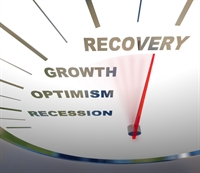
When To Take Multifamily Investment Opportunities: Recovery, part 2

Over the last few months I’ve been telling folks that if they wanted to be a genius in 5 years they should take advantage of smart real estate investment opportunities now.  My other refrain is that they were in no danger of profiting from multifamily investments until they take action.  The focus of this article is the fundamental question: “When should I invest in multifamily?”

Just as in nature where Fall is followed by Winter which is in turn followed by Spring, multifamily investment opportunities follow a cycle.  And cities have an investing climate, too.  Las Vegas tends to be real hot or real cold.  The same with Phoenix. A great deal of institutional money is being pumped into those two cities.  The amount of money to be made and risked is much greater than in more moderate investment climates like Portland and Seattle.

RECOVERY

Recovery is to Investing what Spring is to Nature.  They are both about great potential being born.  There’s no guarantee that your garden will grow…but it has the best chance if planted at the proper time.  It’s a great time to invest too.  Many investors sit on the sidelines during the Recovery phase to make sure that things have really hit bottom.  As a result they buy during the Expansion phase and don’t reap all of the rewards that are available for “trigger pullers.”  The Recovery Cycle is characterized by:

  • Decreasing Vacancy Rates
  • Low build rates
  • Moderate absorption
  • Low to moderate employment growth
  • Low to negative rental rate growth
  • LOW prices relative to potential upside

A broad spectrum of investment strategies are viable during Recovery. “Buy and Hold”, Refurbish, Flip, Repurpose, Build and “Convert” all have their place at this time.  Unlike Nature, the Recovery Cycle is not set in the time it will take to move into the next phase, Expansion.  But just as we know the rains of Spring will yield eventually to the sunshine of Summer, so shall Recovery turn into expansion.

NEXT POST: We’ll cover the attributes of the Expansion Phase of the investment cycle.

More posts in our Timing Your Multifamily Investment Series:


--- END POST ---

Multifamily Real Estate Investment Basics, part 1 of a series

Apartment Investors Return...In Surprising Numbers!There’s no doubt that improvements in the long term fundamentals for multifamily investments have made them the darlings of commercial real estate.  I was talking yesterday  with a researcher at REIS, one of the nation’s most respected real estate tracking firms.  His company is predicting the  East Portland and Gresham submarkets apartment values to increase by a minimum of 4% a year for years to come.  To my delight Portland multifamily investments are starting to thrive.  But it goes much further than that. I’ve recently been contacted by several investors who have been notably successful in other investment arenas who are looking at multifamily as a vehicle for future equity expansion. One felt that it would be hard to maintain the pace of growth he had enjoyed in the stock market and was looking for another venue.  I think the stability of

Rose City Commercial Real Estate works with first timers and seasoned institutional investors.  Two reminders.   First, if you want to be a genius in 5 years make smart multifamily investments now.  Second, you’re in no danger of profiting until you take action.  Call 503.577.1034 to develop a customized investment plan that meets your needs.

multifamily was enticing as well.  I often tell people that real estate never went down by a trillion dollars in twenty minutes like it did May 6th of 2010…but I digress.  Another investor who was heavily invested in bonds asked me for some guidance on what he could expect from multifamily investments.  He was concerned that his current yield of 2.95% (annually, not monthly)  would more than be eaten up between taxes and inflation.

I realize that these are just two datapoints…but I think they are emblematic of a trend I have been expecting for some time.  There’s something like $6 trillion in IRAs and 401Ks…and much of it can be used for real estate investing without creating a taxable event. Yes, its important to have the proper professional advice to prevent constructive reciept of the funds.  These new multifamily investors are savvy businessmen and women, but they have not been thoroughly exposed to multifamily investment fundamentals.  In order to give them the service they deserve I plan on reviewing real estate investing fundamentals over the next few posts, with a focus on apartments.

NEXT: When to buy from a historical perspective.

More posts in our Timing Your Multifamily Investment Series:


Other articles you may like:


The Importance of Due Diligence in Multifamily Profits – Phase II – Books and Records | Rose City Commercial Real Estate

Demystifying multifamily cap rates, NOI, and investing basics | Rose City Commercial Real Estate

Multifamily real estate investment basics – part 1 of a series | Rose City Commercial Real Estate

Attractive cap rates attract investors to multifamily properties in Portland | Rose City Commercial Real Estate

Prospects for multifamily sector improve greatly | Rose City Commercial Real Estate


--- END POST ---

Commercial Properties for Sale: Taxes and Other Considerations

Guest columnist Robert Poe-MBA, CCIM leads Kernors, a long time established real estate investment firm, and discussed considerations when you have commercial properties for sale.

Robert Poe:  First and foremost, always seek competent tax counsel when deciding to sell your commercial real estate. In addition to capital gains taxes, commercial real estate sales also involve taxes on income, the property itself, and non-cash expenses. These need to be carefully analyzed in order to determine your tax liability upon sale. Having an appraisal done on the commercial property can help in evaluating your potential taxes.

Rose city Commercial Real Estate can assist you with dispositions.  We offer a free 90-minute property assessment consultation to prepare your property, books and records for inspection.  Contact us for details: rick@rosecitycre.com or 503.577.1034.

A 1031 exchange can help you defer many tax liabilities. It’s wise to determine what you want in a replacement property before you list your property for sale. There is a specific timeframe for 1031 exchanges-you don’t want to lose the opportunity to do a 1031 exchange due to lack of planning.

You should also know your motivation for selling. Is it to gain liquidity? To free up funds for another commercial investment? And how quickly do you want to sell? In other words, is your need to sell immediate, or are you more motivated by price than by time?

Finally, you should seek the advice of a competent commercial real estate broker who knows the market and can price your property accordingly. The broker should have experience with the type of commercial property you wish to sell and should be able to provide you with details about comparable properties that are currently on the market and%

via Selling Your Commercial Property: Taxes and Other Considerations – KerNors.

--- END POST ---

The Sky’s the Limit for Portland Multifamily Real Estate Investment

The Portland multifamily real estate investment community has had a lot  to smile about thus far this year:

  • Maximus Advisors, a multifamily research firm states that we are entering into four years of improving conditions for multifamily real estate investment.
  • Portland’s 4% occupancy rate was cited recently as being the second lowest in the nation’s 75 largest MSAs.
  • We were also cited as having the second highest rate of rent increase at 10.43% on an annualized basis.
  • Please note that is the average for the quad counties…Beaverton had an even higher average increase at 13% annualized.
  • Larger rent increases ahead?  As we get closer to 2% vacancy we will see even faster and larger rent increases.  Remember that it takes a week or two to turn a unit.

Much less reported, but much more important to net profitability is the virtual disappearance of

If you are ready to expand your real estate investment portfolio into real estate, contact Rick Bean of Rose City Commercial Real Estate at: 503.577.1034 or rick@rosecitycre.com.   Two things to remember: 1.  If you want to be a genius in 5 years, make smart real estate investments today. 2. Nobody is going to consider you an Einstein for almost taking action.  Call today.

leasing incentives.  I worked the Vegas market in property management during its decline from superstar status to cellar dweller.  On several institutional size properties we were giving away 2 months for a 12 month lease.  That’s 1/6 of the total gross revenue…16.66 almost 17%.  Other companies were giving away a flat screen TV as an incentive.

That’s a hell of a swing, moving from having to give away 17% of your gross rent to maintain 12% vacancy…into having 4% vacancy and adding 10% to your revenue.

Financing from traditional sources is returning to the market, as is conduit debt, GSE agency and insurance lending.  With rents rising, affordable financing becoming readily available and record low building levels, the national multifamily investment market looks solid for some time to come.  And Portland appears poised to be one of the nation’s leaders!


--- END POST ---

The Portland Multifamily Update from Rose City Commercial Real Estate

This installment of the Portland Multifamily Update starts with an excellent quote from Bloomberg:

Rent increases replaced landlord giveaways as U.S. apartment vacancies dropped in the second quarter to the lowest in more than three years, bolstered by rising demand on the West Coast, according to Reis Inc. (REIS)

The apartment vacancy rate fell to 6 percent in the three months ended June 30 from 6.2 percent in the first quarter and 7.8 percent a year earlier, the New York-based property research firm said in a report today. The second-quarter rate matched the first three months of 2008 and was the lowest since 5.7 percent at the end of 2007, the year multifamily real estate prices peaked. Rents rose in all but two of the cities Reis tracks.

Please check back to the Multifamily Insider Report on Friday, July 15th for my analysis on the benefits of replacing incentives with rent increases.   Remember, you don’t have to wait until Friday if you want to get started investing in Portland Multifamily Real Estate.  Call Rick Bean at Rose City Commercial Real Estate:  503.577.1034, or e-mail me at: rick@rosecitycre.com.

“The ongoing recovery and tightening vacancies continue to generate greater pricing power on the part of landlords,” Ryan Severino, an economist at Reis, said in the report. “Vacancies should continue to decline while rents rise at an even faster pace than we observed in the first half.”

Demand for rental apartments in the U.S. has soared as foreclosures forced people out of their homes and prospective homebuyers found it harder to get mortgages. The home ownership rate in the U.S. fell to 66.4 percent in the first quarter, the lowest since 1998, according to the U.S. Census Bureau.

“There’s still a stigma to buying houses,” said Stan Harrelson, chief executive officer of Pinnacle, a Seattle-based company that manages more than $17 billion of apartments and other commercial properties. “Even with job growth, people aren’t ready to take that step.”

Landlords had a net increase in occupied space of about 33,000 units in the second quarter, down from 45,000 units in the first quarter, Reis said.

$997 a Month

Effective rents, or what tenants actually pay after perks such as a free month, climbed in 80 of the 82 metropolitan areas surveyed, to an average $997 a month from $974 a year earlier and $991 in the first quarter.

San Jose, California, led rent growth last quarter, followed by New York’s Westchester County and San Francisco, according to Reis.

Las Vegas, one of the cities hardest hit by the housing collapse, had an increase in effective rents for the first time since 2008, Reis said. Rents in the city were still down from a year earlier.

The national rent increases mark a reversal from early last year, when many landlords were offering gifts to attract tenants. Aspira, a 325-unit luxury apartment building in Seattle, gave away dozens of iPads and 40-inch televisions, preloaded credit cards worth $1,000 each and up to three months of free rent when it opened in January 2010. With occupancy surpassing 80 percent, such enticements are no longer needed.

Incentives ‘Gone’

“They’re gone,” said John Schwartz, director of the Northwest regional office for Keller CMS Inc., the Los Angeles- based project manager that oversaw the development of the 37- story Aspira.

San Jose, the largest city in Silicon Valley, led rent growth for both the second quarter and the 12 months through June 30, Reis said.

“San Jose is everyone’s darling and rents are through the roof, but that will plane off” as new supply comes to market in the next 12 to 18 months, said Harrelson of Pinnacle.

Seattle is still one of the best markets for potential rent growth, he said, citing increased hiring by technology companies and airplane manufacturer Boeing Co.

Shane Lynch, a software developer in Microsoft Corp. (MSFT)’s Xbox gaming division, said he plans to renew his lease, at the Neptune apartments in Seattle’s high-tech South Lake Union district, even though the rent for his one-bedroom unit is going up 11 percent to $1,300 a month.

‘Everyone’s Increasing’

“I’ve been looking around and it seems like everyone’s increasing that amount,” said Lynch, who moved to Seattle about a year ago from the Baltimore area to take the job with Microsoft. “I’m not seeing anything cheaper, and there’s also the cost of moving.”

Lynch, 26, said he plans to consider buying a house after he gets to know the city better.

“Because I’m so new to Seattle, I don’t want to be tied down to a certain neighborhood, but if rents continue to increase and get closer to mortgage prices, it will be kind of silly not to buy,” he said.

Rising rents have in turn attracted investors to multifamily properties, encouraging new developments and purchases.

“We don’t anticipate a recovery in for-sale housing until at least 2013,”Michael Schall, president and chief executive officer of Essex Property Trust Inc. (ESS), said on a May 5 conference call to discuss first-quarter earnings. The company, based in Palo Alto, California, owns and operates multifamily complexes in California and Washington state.

Supply and Demand

“Each month from December has shown significant improvement, and we are now confident that the apartment supply- and-demand equation is tipping towards housing shortage,” Schall said.

Market rents at Essex properties have increased 9.2 percent since the first quarter of 2010 and the rate of growth is accelerating, Senior Vice President Erik Alexander said on the conference call. Occupancy for the company’s apartments reached 97.1 percent by the end of April.

“We should see lower occupancies during the summer months as market rents continue to grow, more leases expire and we push rents on renewals,” Alexander said.

Other articles you may like:


The Importance of Due Diligence in Multifamily Profits – Phase II – Books and Records | Rose City Commercial Real Estate

Demystifying multifamily cap rates, NOI, and investing basics | Rose City Commercial Real Estate

Multifamily real estate investment basics – part 1 of a series | Rose City Commercial Real Estate

Attractive cap rates attract investors to multifamily properties in Portland | Rose City Commercial Real Estate

Prospects for multifamily sector improve greatly | Rose City Commercial Real Estate


--- END POST ---

Multifamily Real Estate Investment Fundamentals Improve Nationwide


By Ilaina Jonas

NEW YORK, July 7 (Reuters) – U.S. apartment rents rose and the vacancy rate fell to its lowest level in more than three years in the second quarter as economic trends and limited apartment construction kept the rental market tight, according to preliminary data from real estate research firm Reis.

In a report issued on Thursday, Reis said the April-June vacancy rate fell 0.20

Nationally the fundamentals for multifamily investments are improving…but Portland is actually better than reported here.  80 of 82 major markets showing improved effective rents…and PDX was in the top five.  Call Rick Bean of Rose City Commercial Real Estate at 503.577.1034 to begin or add to your multifamily portfolio.  Or you can e-mail me at rick@rosecitycre.com.

percentage points to 6 percent from the first quarter while asking rent rose 0.5 percent to $1,052 a month.

For more than a year, the U.S. apartment sector has been the darling of commercial real estate, with rent, occupancy rates and building prices rising.

Reis does not expect that to change, given a constrained supply after almost no capital was available for construction in recent years due to the financial crisis.

“We still expect to see limited supply growth until at least the later stages of 2012,” Reis senior economist Ryan Severino said.

Only 8,675 units came online in the second quarter, the second-lowest quarterly number for new completions since the record low first quarter. Reis began tracking quarterly apartment fundamentals beginning in 1999.

Factoring in months of free rent and other perks landlords use to attract tenants, effective rent rose 0.6 percent to $997 per month in the second quarter.

Effective rent is up 2.4 percent over the past 12 months, a sign that landlords are trimming concessions and enjoying greater bargaining power.

Eighty of the 82 markets that Reis tracks for the report posted higher effective rents in the second quarter. (For a graphic of apartment rents and vacancy rates please click: link.reuters.com/fym52s )

The second-quarter vacancy decline was less dramatic than the 0.4 percentage point drop in the first quarter, indicating the apartment market was not immune from the slowing economy.

But demand for rental apartments is seen continuing to grow given demographics and because of tougher lending standards for would-be home buyers.

“You still have really good demographics that are backing this,” Severino said. “You do have household growth, population growth.

“You do have a bunch of 20- to 34-year-olds who want to move out of mom and dad’s basement and don’t want to share an apartment with Chuck and Zed who never clean the bathroom and don’t wash the dishes,” he said.

Green Street Advisors, a real estate investment research firm that follows publicly traded real estate investment trusts said it expects the improved rent and occupancy to last through the year. REITs are often in the strongest markets or locations and have access to different types of loans and capital to finance acquisitions and construction.

Many REITs, such as AvalonBay Communities Inc (AVB.N) and Equity Residential (EQR.N), have increased their construction pipelines.

By market, New Haven in Connecticut displaced New York City as the tightest rental market with a 2.5 percent vacancy rate.

The vacancy rate in New York City — which excludes Staten Island — rose 0.10 percentage points to 2.8 percent. But landlords were able to push rents up 1 percent to $2,826 per month.

Jacksonville, Florida posted a second-quarter rental decline, to $759 a month, but that came off a very strong first quarter, Reis said. The hard hit market of Las Vegas, which had not posted any rent increases since the third quarter of 2008, edged up 0.3 percent in the second quarter to $769 a month. (Reporting by Ilaina Jonas; Editing by Tim Dobbyn)

--- END POST ---

Does How I Take Title to Commercial Real Estate Really Matter?

Guest columnist:  Craig Johnson, an expert on commercial real estate, has written a great article that deserves wide circulation.  He and business partner, Bill Younce are the founders of Northwest Equities Investment Real Estate Services, Inc.

You have just found the perfect commercial real estate asset to invest in, whether it is an apartment complex, a strip mall, or a building to house your expanding business. As you get ready to write the offer, your broker asks, “How are you going to take title?”

The answer to that question is very important for three reasons:

  • Liability Protection: If something unexpected happens, do you really want
    your personal assets at risk?
  • Taxation: How you hold title will affect the way you will be taxed both
    during the holding period and of course when you sell the asset.
  • Exit Strategies: How you hold title can affect what exit strategies will
    be available to you when it comes time to sell.

The overriding consideration and primary reason to create different “ownership baskets” is to build a liability shield for both personal and other assets. So long as the owner of an entity

When you get ready to acquire investment real estate, contact Rick Bean of Rose City Commercial Real Estate at rick@rosecitycre.com or 503.577.1034.

observes the entity formalities, a creditor should not be able to reach the owners assets to satisfy the liability of the entity.

Of course, once you start using entities for liability protection, then the next considerations that come into play are taxation and exit strategies.

The big consideration in taxation is using an entity that avoids creating extra levels of taxation as well as avoiding employment tax where possible. When these considerations are taken into account, the two top entity choices that emerge are Subchapter S Corporations (S Corps) and Limited Liability Companies, or (LLC).

S Corporation or an LLC?

The two predominant issues that will help you answer that question are the issues of self employment tax and the distribution of appreciated assets.

In S Corps there are no self employment taxes on the distribution of profits to owners. So if you own a profitable operating business and you take a reasonable salary, then you can take the remaining profits of the S corporation as distributions and avoid paying self employment taxes on those distributions. With an LLC you will generally be required to pay self employment taxes on distributions from the company. Therefore as a general rule if you are structuring for a profitable operating business you should use a S Corp.

Alternatively, if you are creating an entity that will hold appreciating assets, like real estate, then a primary consideration is whether you can distribute the appreciated assets to the owners of the entity without creating a deemed sale. Deemed sale means that for tax purposes the IRS will treat the conveyance as a sale of the property for fair market value, and tax the transferror as if a sale had taken place. Therefore there is a tax event without a cash event, thus creating undesirable phantom income.

In an S Corp, the transfer of an appreciated asset to the shareholders is deemed sale. In an LLC it is not. So, as a general rule if you are holding real property in an entity for the always important limitation of liability, then the proper entity is an LLC.

As an example: Joe Developer owns in his own name four apartment buildings in four different cities. If there is a liability-creating event in excess of Joe’s insurance limits, the creditor can take all four buildings and also Joe’s house.

A better ownership structure is for Joe to create four separate LLCs and convey each apartment building as a capital contribution to each separate LLC in exchange for the ownership interest in the LLC. That way, when the same liability event occurs, the creditor can take only the one apartment building where the event occurred and not the other buildings or Joe’s personal residence.

Another example: If Jane Manufacturer as a sole proprietor owns land and a building in which she operates a profitable manufacturing business, and if she suffers a large product liability judgment, the creditor can take Jane’s business, her land and building, and her house.

With proper structuring, by conveying the operating business assets in an S Corp, and the land and building in an LLC, each owned by Jane, and then creating an arms length lease between the two entities, the same judgment creditor could only take Jane’s manufacturing business, and not her land or her house.

As you can see from the examples above, how you take title to assets matters. With proper structuring of entities it is possible to minimize both tax consequences and liability exposure. As there are exceptions to every rule, both legal and tax wise, it is critical to involve competent legal and tax counsel in planning and creating these entities and this article is not meant in any way to be a substitute for tax or legal advice.

This article is based in large part on a presentation regularly delivered by Coni Rathbone, a partner in the law firm of Zupancic Rathbone Law Group PC, Lake Oswego, OR. Coni practices in the area of real estate transactions leasing and development, real estate securities, business transactions, and tenant-in-common syndications and workouts you can reach her at (503) 968-8200 X19 or Coni@ZupGroup.com


--- END POST ---

Portland Ranks 2nd in Green Metro Area Ratings

An article by Christina Williams of Sustainable Business Oregon celebrates Portland being ranked 2nd in the annual Green Guide.

Portland held on to it’s second-place ranking in Site Selection annual report on green metro areas.

Site Selection magazine released its annual Green Guide Tuesday and the Portland

The City of Roses continues to get more accolades on a National basis.  The latest is a high ranking among greenest cities, but we have also recently been cited as having the nation’s best mass transit system, having one of the best vacancy rates for apartments, and the fastest multifamily rent growth too.  To invest in Portland, please contact Rick Bean at 503.577.1034 or rick@rosecitycre.com.

metro area held onto its ranking as the second most sustainable metro area in the United States, behind San Francisco.

Oregon was ranked the third most sustainable state, behind No. 1 California and No. 2 Washington, holding steady with last year.

The guide is compiled annually and is aimed at green-leaning companies that might be looking for a new home.

Criteria include green industry projects as tracked by Conway Data, the magazine’s publisher, number of LEED certifications, incentives, brownfield funding, energy efficiency ratings by the American Council for an Energy-Efficient Economy, alternative fuel use and the Clean Energy Leadership Index compiled by Portland-based Clean Edge.

“Top-ranking areas for sustainability don’t just pass restrictive laws or put token solar panels on every edifice,” reads the introductory article for the 2011 guide. “They nurture an ecosystem of business, institutions, government and individual citizens all striving to place a proper value on their locality’s limited resources, and sometimes to make or save money in the process.”

The full report is available in the July issue of the magazine and features an interview with Gov. John Kitzhaber.

Here are the top fives in each category:

Metro areas:

  1. San Francisco
  2. Portland
  3. Los Angeles
  4. Chicago
  5. New York

States:

  1. California
  2. Washington
  3. Oregon
  4. Minnesota
  5. Colorado

Countries:

  1. Canada
  2. Spain
  3. United Kingdom
  4. Germany
  5. Sweden

@SustainableBzOR | christinawilliams@bizjournals.com | 503.219.3438

--- END POST ---

CoStar Says: Upside to the CRE Market Has Begun!

This article is from CoStar…one of the top names for real estate data research.  Yet another example of why the Portland multifamily market is expected to do well!
June 22, 2011
What better time than the summer solstice to shine a light on current market conditions. CRE firms and organizations released a broad array of mid-year market overviews and viewpoints this past week – all of which cast conditions with a fairly sunny outlook.
The Portland multifamily market continues to improve…leading the way for all Oregon commercial real estate investments.  Whether you want to make your first acquisition or expand your portfolio, contact Rick Bean at Rose City Commercial Real Estate: 503.577.1034 or rick@rosecitycre.com.
We report on the views presented by four respected analysts, including Credit Suisse, which is telling global investors to follow other world currencies flowing to the United States. Also, Maximus Advisors and Fannie Mae both say the U.S. multifamily market is poised for a four-year upswing. And RREEF Global Real Estate Investment says U.S. investors would do well to look closely at the industrial and retail property sectors.

We’ve summarized their reports below.

Credit Suisse: Follow the Money

After suffering through the credit crisis, commercial real estate macro indicators are beginning to show signs of improvement, according a paper from the Customized Funds Investment Group (CFIG) of Credit Suisse’s Asset Management division.

Entitled, “Commercial Real Estate: Has the Tide Turned?”authors Kelly Williams, head of CFIG, Nadim Barakat, CIO of CFIG, and Peter Braffman, a partner on the CFIG Real Estate team, discuss the sector’s uneven global recovery, and how the U.S. commercial real estate market may well provide the most compelling opportunities in the first phase of the recovery.

“We believe that the U.S. commercial real estate market will likely provide the most compelling opportunities in the first phase of the recovery,” the authors write.

This is a result of:

  • Stabilizing debt markets and the re-emergence of commercial mortgage-backed securities (CMBS) issuance;
  • Property demand improvements, as shown in vacancy and absorption trends;
  • Favorable commercial property valuations;
  • Macro-economic tailwinds; and
  • Significant level of capital ready to be deployed for U.S. real estate.

“Many of the world’s largest investment firms, institutional investors and pension plans have been increasing allocations to this asset class. Starting in 2009 and throughout 2010, institutional capital poured into core and stabilized real estate in primary U.S. market regions in search of reliable, long-term yield,” the authors write. “Public pension plans, such as California Public Employees’ Retirement System (CalPERS), have been restructuring their real estate initiatives to include a greater allocation to core commercial property.”

“This investment activity has led to a meaningful recovery for these properties as yields re-approached pre-financial crisis levels,” the authors write. “The growing liquidity has also made possible the re-opening of the initial public offering market for real estate ventures.”

Of note, the authors point out that Archstone, one of the largest real estate firms focused on the development and management of multifamily (apartment) properties, has been exploring the possibility of a $5 billion IPO, which would be the largest real estate IPO in history.

Low interest rates in the U.S. have also been instrumental in containing the cost of capital for real estate investors and making property returns attractive in comparison to other asset classes, such as fixed-income instruments.

The authors say that investors may be able to take advantage of the changing real estate conditions in the U.S. by considering a number of specific strategies, including income-generating value-added commercial property, opportunistic distressed commercial property and certain other niche income-generating real estate such as senior housing, student housing, medical offices and self-storage.

Despite compelling opportunities, the paper also addresses the risks associated with the commercial real estate market and how investors should consider developing real estate investments in the context of their aggregate portfolio.

Maximus Advisors: 4 Years of Improving Multifamily Conditions Coming

As the U.S. economic recovery gathers sustained momentum and spending returns to pre-recession levels, fundamental shifts in consumer behavior are expected to have lasting effects on numerous real estate sectors, according to the latest national economic and property ratings report by real estate research and consulting firm Maximus Advisors.

“As we have previously predicted, the U.S. apartment market has been recovering at an astounding pace,” said Dr. Peter Muoio, senior principal of Maximus Advisors. “The sector will continue to benefit from the growing preference for renting over homeownership as well as rapid growth of the young adult population. We predict that vacancies will continue to decline while effective rents grow robustly during the next two years due to limited development of new multifamily properties during the recession.”

Key findings from the report include:

  • The apartment market will continue to improve over the next four years as renting remains more attractive than homeownership and there is little in the pipeline in terms of new construction.
  • The office/commercial market recovery has begun as supply and demand have crossed over. Office absorption has been positive for the past two quarters, driven by gains in office employment. However, further labor market weakness could inhibit recovery in the office segment in the short-term. According to Muoio, the market has bottomed and will see vacancies decline more rapidly in 2013 and 2014.
  • Retail real estate stands to benefit from consumer spending stabilization, though higher gasoline prices this summer will inhibit this trend. Additionally, the rise of online retailing will apply downward pressure on in-store demand, further threatening the retail segment.
  • The industrial segment is bottoming but demand appears to be picking up as industrial output continues to rise and exports are at all-time highs.Maximus Advisors is an affiliated research provider of CW Financial Services, a vertically integrated commercial real estate debt platform.

    Fannie Mae: Multifamily Demand/Supply Imbalance

    Overall housing starts are at historic lows and multifamily new construction is no exception. However, Kim Betancourt, director, multifamily economics and market research for Fannie Mae, says that portends well for the multifamily segment.

    Looking at the construction data, there are less than 230,000 multifamily and condo units under way. As a result, year to date completions through May 2011 totaled just 31,312 units — well below historic averages.

    “Despite the oversupply of single-family housing, demand for multifamily rentals is outpacing supply quickly in many metros,” Betancourt wrote in a commentary this week. “Even at the national level, apartment rental demand has been quite robust, resulting in rising rents and declining concession rates.”

    There are an estimated 77,600 apartment and condo units expected to complete in 2012, but beyond that timeframe the number of completions plummet, Betancourt writes that those numbers do not represent enough supply to meet demand.

    With overall multifamily completions abating, developers have taken notice, she writes, noting that in metros such as Washington, DC, there are nearly 11,000 apartment units under way and 16,000 units under way in New York.

    RREEF: U.S. Property Selection Should Be Overweighted to Industrial, Retail

    Real estate fundamentals are improving globally and, with only a few exceptions, all property types and regions are in recovery, according to RREEF Global Real Estate Investment’s latest outlook.

    The United States will continue to produce appealing risk-adjusted opportunities in the near term and benefit from having a deeper investable universe, RREEF said. In addition to office and shopping center properties, institutional investors can invest in the industrial warehouse, R&D space and multifamily sectors in the United States.

    The United States real estate market is among the most transparent and liquid in the world. This is especially true for tier one markets, where international investors are most likely to place capital, RREEF said. Within the U.S., property type selection should have an overweight to industrial and retail properties and underweight to the apartment and office sectors relative to the NCREIF Property Index and a moderate overweight to the East and West regions with corresponding underweight to the Midwest and South.

    Coastal, supply constrained, markets tend to have higher volatility than those in the interior, but will also tend to outperform during the next five years, RREEF said. It will be longer before meaningful amounts of construction commence in the supply-constrained markets and so vacancy will be able to compress further in these markets.

    Seattle and Miami-Ft Lauderdale retail will outperform, with lower volatility. Office space in San Francisco, New York and Boston will also likely outperform, as will industrial space in Los Angeles, New York and Seattle.

--- END POST ---

Lowest Home Ownership Rate Since Great Depression Spurs Multifamily

What investors look forHome ownership rates continue their plunge. The vast majority of the millions of households that are no longer home owners have become renters.  Many of these new renters have reported  that they do not intend to buy into a home once the economy picks up.  This is creating a new type of “Rent By Choice”.   In the past RBC’s were pretty much the folks that could easily afford a home, but chose to rent an upscale apartment instead.  The new group of renters has lower

Rose City Commercial Real Estate sees profits ahead for Oregon multifamily investments.  To discuss specific opportunities, contact Rick Bean at 503.577.1034 or rick@rosecitycre.com.

resources and could buy a starter home if they marshaled their resources…but buying a home is not a priority because they don’t look at their home as an investment the way the bulk of previous buyers did, thus home ownership is just not as important.  They don’t see the opportunities and rewards being there like they once were.

As the economy improves the increase in occupancy rates will continue.  Profit killing concessions will be eliminated.  Households that had two or more families will return to being single homes…and rents will start increasing.  Investing in Oregon multifamily assets before they become over inflated makes great sense.  I’ve attached an article by David Streitfield of the New York Times

By DAVID STREITFELD

Published: May 30, 2011

SAN FRANCISCO — The desire to own your own home, long a bedrock of the American Dream, is fast becoming a casualty of the worst housing downturn since the Great Depression.

Even as the economy began to fitfully recover in the last year, the percentage of homeowners dropped sharply, to 66.4 percent, from a peak of 69.2 percent in 2004. The ownership rate is now back to the level of 1998, and some housing experts say it could decline to the level of the 1980s or even earlier.

Disenchantment with real estate is bound to swell further on Tuesday when the most widely watched housing index is all but guaranteed to show that prices of existing homes sank in March below the lows reached two years ago — until now the bottom of the housing crash. In February, the Standard & Poor’s/Case-Shiller index of 20 large cities slumped for the seventh month in a row.

Housing is locked in a downward spiral, industry analysts say, not only because so many people are blocked from the market — being unemployed, in foreclosure or trapped in homes that are worth less than the mortgage — but because even those who are solvent are opting out.

“The emotional scars left by the collapse are changing the American psyche,” said Pete Flint, chief executive of the housing Web site Trulia. “There was a time when owning a home was a symbol you had made it. Now it’s O.K. not to own.”

Trulia, a real estate search engine for buyers and renters that is based here, is a hive of renters, including Mr. Flint. “I’m in no rush at all to buy,” he said. He expects home ownership to decline further to about 63 percent, a level the country first achieved in the mid-1960s.

Tim Hebb, a Los Angeles systems engineer, expertly called the real estate bubble. He sold his bungalow in August 2006, then leased it back for a year. Since then, the 61-year-old single father has rented a succession of apartments.

“I have flirted with buying again many times over the past few years,” said Mr. Hebb. “Let’s face it, people are not rational creatures.”

But he always resists, figuring housing is still overpriced and even when it stops declining it will stumble along the bottom for years and years. He says there is plenty of time to get back in if he should ever want to.

The market signaled further trouble on Friday when the April index of pending deals was released by the National Association of Realtors. Analysts had predicted the index, which anticipates sales that will be completed in the next two months, would be down 1 percent from March. Instead, it plunged 11.6 percent.

Many of those in the business of building and selling houses believe the current disaffection with real estate will pass. After every giddy boom comes the hangover, they acknowledge, but that deep-rooted desire for a castle of one’s own quickly reasserts itself.

“There’s no question that people are reticent to own,” said Douglas C. Yearley Jr., chief executive of Toll Brothers, the builder of high-end homes. “They’re renting and they’re happy renting because they’re scared.”

Yet those fears will fade, he predicted.

“Most people still want the big house with the big lot in the desirable school district in the suburbs. No one ever renovated the kitchen or redid a room for the kids in a rental,” Mr. Yearley said. “I think — I hope — we’ll be O.K.”

The market’s persistent weakness, however, runs the risk of feeding on itself. Buyers are staying away despite the lowest interest rates and the highest affordability levels in many years, which in turn prompts others to hesitate.

Trulia and another real estate site, RealtyTrac, commissioned Harris Interactive to take a poll last November about when people thought the market would recover. A third of the respondents chose 2014 or later. But in a new poll, released this month, the percentage giving that answer rose to 54 percent.

The sharp decline in prices since 2006 has meant a lost decade for many owners. But what may prove even more discouraging to potential buyers is academic research showing that the financial rewards of ownership were uncertain even before the crash.

In a recent paper, a senior economist at the Federal Reserve Bank of Kansas City found that the notion that homeownership builds more wealth than investing was true only about half the time.

“For many households in many years, renting and investing the saved cash flow has built more wealth than homeownership,” the economist, Jordan Rappaport, concluded.

Economics affects potential owners in other ways. A house is a long-term commitment that many are loath to make in uncertain times like these.

“What I’m hearing from people is that they don’t want to be tied to a particular geography, which inclines them to renting,” said Mr. Flint of Trulia.

San Francisco is one of the country’s most expensive cities, so renting has a natural appeal here. But the Associated Estates Realty Corporation, which owns 13,000 apartments in Georgia, Indiana, Michigan and other Midwest and Southeast states, also is seeing more people deciding to rent.

“We have more of what we call ‘renters by choice’ than I’ve seen in the 40 years I’ve been in the apartment business,” said Jeffrey I. Friedman, chief executive of Associated Estates.

For decades, the company has asked former tenants why they were moving out. During the housing boom, as many as a quarter of those moving on said they were buying a house. In 2009, the percentage of new owners fell in the first quarter to 13.7 percent, the lowest ever.

Last year, as the economy improved, the number rebounded. This year, it fell back again, to 14 percent.

Builders clearly believe that the future includes many more renters. So far this year, construction of multiunit buildings is up 21 percent compared with 2010, while single family-homes are down 22 percent. Sales of new single-family homes are lower than at any time since the data was first kept in 1963.

Susan Lindsey, a San Diego software programmer, was once eagerly waiting for the housing market to crash. She said she would have no guilt about swooping in on some foreclosed owner who had bought a place he could not afford.

With prices now down by a third, however, she is content to stay in her $2,500-a-month rented house. She prefers to invest in gold, which she has been buying since 2003.

“I could afford a median-priced house, no problem,” said Ms. Lindsey, 48, as she headed off for a holiday weekend in Las Vegas. “But I would be paying more to live in a place I like less.”

--- END POST ---

Scroll to Top